

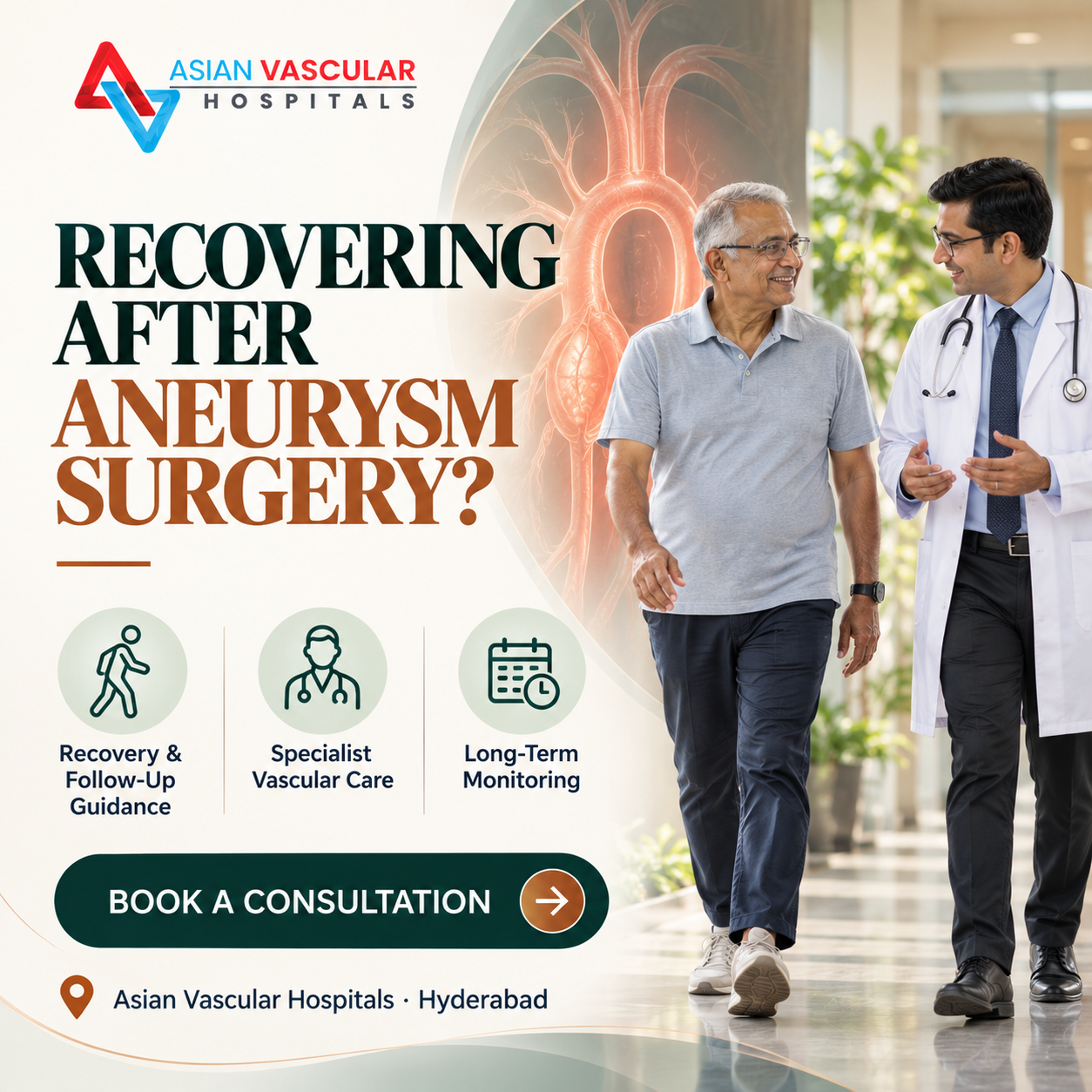
Recovering after aneurysm surgery involves more than healing from an operation. Patients also need to understand activity restrictions, medication instructions, follow-up imaging and the warning signs that may require medical attention.
The recovery process can differ significantly depending on whether the aneurysm was repaired using endovascular aneurysm repair (EVAR), thoracic endovascular aortic repair (TEVAR), or open surgery. Your overall health, the location of the aneurysm and whether complications occur can also influence recovery.
If you or a family member has undergone aneurysm repair, understanding what happens next can help you prepare for recovery and follow your vascular team’s advice.
At Asian Vascular Hospitals in Banjara Hills, Hyderabad, patients can enquire about specialist assessment for aneurysm treatment and follow-up care.
Need advice about aneurysm treatment or follow-up? Explore aneurysm treatment options or call +91 81439 98831 to enquire about a consultation.
What to Expect After Aneurysm Repair
Aneurysm repair aims to reduce the risk associated with the weakened section of the artery. However, the operation is only one part of the overall treatment process. Recovery, monitoring and management of cardiovascular risk factors remain important.
After surgery, the medical team monitors the patient’s condition, manages pain, checks the surgical or access site and assesses when it is appropriate to begin moving around.
Before discharge, patients should receive instructions about wound care, medications, physical activity, follow-up appointments and symptoms that require medical attention.
The recovery plan depends on the procedure performed.
- After EVAR or TEVAR: Recovery from the procedure itself is often shorter than after open surgery, but follow-up imaging remains important.
- After open aneurysm repair: Recovery is generally longer because the operation involves a larger incision and direct surgical access to the aorta.
- After emergency aneurysm repair: Recovery may be more complex because the patient may have experienced significant blood loss, organ stress or other complications.
There is no single recovery timeline that applies to every patient. Your treating surgeon should provide guidance based on your procedure and clinical condition.
Recovery After EVAR vs Open Aneurysm Surgery
Understanding the type of repair you underwent can help you know what to expect during recovery.
Recovery After EVAR
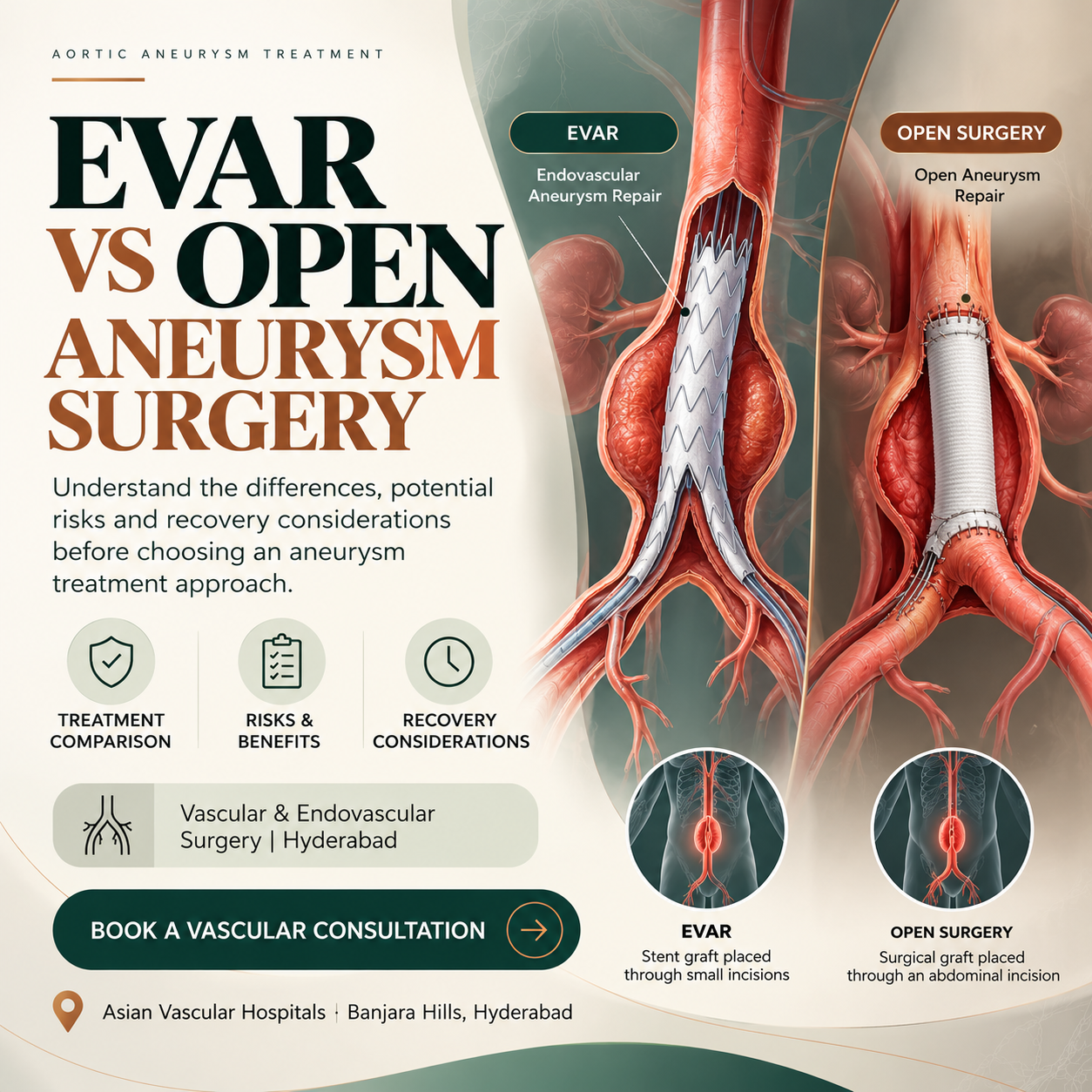
EVAR, or endovascular aneurysm repair, is a minimally invasive procedure in which a stent graft is introduced through blood vessels and positioned inside the aorta.
Because EVAR usually involves smaller incisions or punctures rather than a large abdominal incision, many patients experience a shorter initial recovery than those undergoing open abdominal aneurysm repair.
During the early recovery period, the medical team may monitor:
- The groin access sites for bleeding, swelling or other problems.
- Blood circulation to the legs.
- Kidney function, when clinically indicated.
- Pain, mobility and general condition.
- The patient’s ability to follow discharge instructions safely.
Patients may be encouraged to begin gentle movement when the treating team considers it appropriate. However, strenuous activity and heavy lifting should be avoided until the medical team provides clearance.
An important point about EVAR: A shorter initial recovery does not mean that follow-up is unnecessary. The stent graft and aneurysm sac need appropriate surveillance to identify complications such as an endoleak or changes in the graft’s position.
Recovery After Open Aneurysm Surgery
Open aneurysm repair involves a larger surgical incision and direct access to the affected aorta. It is a major operation, so recovery generally takes longer than after standard EVAR.
The early recovery period may involve:
- Pain management and monitoring of vital signs.
- Gradual return to eating and drinking as permitted.
- Breathing exercises and movement as advised.
- Monitoring of the incision and bowel function.
- Gradual improvement in walking, stamina and daily activities.
Some patients experience fatigue, reduced appetite or discomfort for several weeks as they recover. Progress varies according to the patient’s health, the complexity of the surgery and whether complications occur.
Avoid heavy lifting, strenuous exercise and activities that place pressure on the healing incision until your surgeon confirms that it is safe to resume them.
For a detailed comparison of both procedures, read our upcoming guide to EVAR vs open aneurysm surgery.
How Long Does Recovery After Aneurysm Surgery Take?
There is no fixed recovery period for all aneurysm repairs.
Recovery depends on several factors:
- Whether the procedure was EVAR, TEVAR or open surgery.
- Whether the operation was planned or performed as an emergency.
- The location and complexity of the aneurysm.
- Age, general fitness and existing medical conditions.
- Kidney, heart and lung function.
- Whether complications developed during or after surgery.
Patients who undergo an uncomplicated endovascular procedure may return to some usual activities sooner than those recovering from open surgery. However, full recovery can take longer, particularly when the procedure is complex or the patient has other health conditions.
After open surgery, rebuilding strength and stamina may take several weeks or longer. Your treating team will advise when you can return to work, drive, lift heavier objects or resume exercise.
Do not compare your progress too closely with another patient’s experience. Recovery should be guided by your condition and the instructions provided by your medical team.
Hospital Stay and Returning Home
Before discharge, the healthcare team should confirm that your condition is sufficiently stable for recovery at home and explain the support you may need.
Depending on the procedure and your health, discharge planning may cover:
- Pain relief and other prescribed medications.
- Care of the incision or groin access site.
- Safe walking and movement.
- Dietary guidance, if required.
- Follow-up appointments and imaging.
- Contact information for concerns after discharge.
It may be helpful to arrange for a family member or caregiver to assist with transport, meals, medication schedules and daily activities during the initial recovery period.
Keep your discharge summary and a list of prescribed medicines accessible. If any instruction is unclear, contact your treating team rather than guessing.
Seek medical advice if pain is getting worse instead of improving, the wound appears infected, you develop a fever or you are unable to manage everyday activities as expected.
Resuming Walking and Everyday Activities
Movement is often an important part of recovery, but the timing and level of activity should be individualised.
Walking
Your care team may recommend beginning with short, gentle walks and gradually increasing activity as your condition improves.
Avoid pushing through significant pain, dizziness, breathlessness or unusual weakness. Stop and seek medical advice if new or concerning symptoms develop.
Heavy Lifting and Exercise
Heavy lifting, strenuous exercise and activities that place excessive strain on the surgical area may need to be restricted during recovery, especially after open surgery.
Ask your surgeon when you can safely resume:
- Lifting heavy objects.
- Gym workouts and resistance training.
- Cycling, swimming or other exercise.
- Physically demanding work.
- Long-distance travel.
Do not use a generic online recovery schedule as a substitute for your surgeon’s instructions.
Driving and Returning to Work
Driving may need to be postponed until you can move comfortably, react safely, are no longer affected by medicines that impair alertness and meet any relevant medical or legal requirements.
Returning to work depends on the type of operation, the physical demands of the job and the speed of recovery. Office-based work may require a different recovery plan from work involving lifting or prolonged physical activity.
Ask your treating team for advice before restarting these activities.
Follow-Up Imaging After Aneurysm Repair
Follow-up is one of the most important parts of life after aneurysm repair. Even when you feel well, imaging and clinical reviews may be necessary to check the repair and identify problems before they cause serious symptoms.
Follow-Up After EVAR
After EVAR, imaging is used to assess the stent graft and the aneurysm sac. Depending on the patient’s findings and the treating team’s protocol, tests may include CT angiography or vascular ultrasound.
The medical team may look for:
- An endoleak, where blood continues to flow into the aneurysm sac.
- Enlargement or failure of the aneurysm sac to shrink as expected.
- Movement or other changes affecting the stent graft.
- Narrowing or blockage affecting blood flow through the graft.
- Other changes that may require closer monitoring or additional treatment.
The first follow-up scan is commonly planned within the early postoperative period. The timing and type of subsequent imaging depend on the procedure, initial results, risk of complications and local clinical guidance.
Patients should attend all scheduled appointments, even if they have no symptoms.
Follow-Up After Open Aneurysm Repair
Open repair also requires follow-up, although the imaging schedule may differ from EVAR.
The vascular team may assess recovery, circulation in the legs, the surgical incision and any new symptoms. Imaging may be recommended to monitor the remaining aorta or identify other vascular problems, depending on the patient’s circumstances.
Do not assume that open repair means you will never need another scan.
Why Follow-Up Should Not Be Missed
Some complications after aneurysm repair may not cause obvious symptoms at first. Regular follow-up gives the medical team an opportunity to assess the repair and decide whether additional investigation is necessary.
If you are unable to attend an appointment, contact the clinic to arrange another date. Do not discontinue surveillance simply because you feel healthy.
Medication and Lifestyle Guidance After Aneurysm Surgery
Your medication plan depends on the procedure, your medical history and other cardiovascular conditions.
Your clinician may prescribe or review medicines for blood pressure, cholesterol, blood clot prevention or other conditions. Not every patient needs the same medicines, and some medications may need adjustment during recovery.
Take Prescribed Medicines as Directed
Follow your discharge instructions and ask your doctor or pharmacist if you are unsure about a dose, side effect or interaction.
Do not stop prescribed antiplatelet medicines, blood thinners or blood pressure medication without medical advice.
Monitor Blood Pressure
Blood pressure management may be an important part of long-term vascular care. Follow the monitoring plan recommended by your clinician and discuss readings that are consistently outside your prescribed range.
Avoid Smoking
Smoking is associated with vascular disease and can increase cardiovascular risk. If you smoke, ask your healthcare team about evidence-based support to help you stop.
Follow a Heart-Healthy Lifestyle
Depending on your condition, your clinician may recommend a balanced diet, gradual physical activity, appropriate weight management and control of conditions such as diabetes, high blood pressure and high cholesterol.
Lifestyle measures support general vascular health, but they do not replace postoperative surveillance or specialist care.
Warning Signs After Aneurysm Surgery: When to Seek Medical Help
Knowing which symptoms require urgent attention is an essential part of recovery.
Seek emergency medical care immediately for symptoms such as:
- Sudden, severe abdominal, back or chest pain.
- Fainting, collapse or sudden severe weakness.
- Severe breathlessness or chest pain.
- Sudden loss of movement or sensation in a leg.
- A leg or foot that suddenly becomes cold, pale, very painful or numb.
These symptoms can indicate a serious medical problem and should not be assessed at home.
Contact your treating team promptly if you notice:
- Increasing redness, swelling, warmth or discharge around the wound.
- Persistent or worsening pain.
- Fever or chills.
- New or worsening pain in the legs when walking.
- New swelling in a leg.
- Bleeding or a growing swelling at the groin access site after EVAR.
- A significant change in how you feel during recovery.
Symptoms can have different causes, and not every symptom means the aneurysm repair has failed. However, prompt assessment helps determine whether treatment is needed.
How Family Members Can Support Recovery
Family members can help patients follow their recovery plan and attend important appointments.
Useful ways to provide support include:
- Helping organise medicines and discharge instructions.
- Assisting with transport to follow-up appointments.
- Encouraging gentle activity as approved by the medical team.
- Helping with meals and household tasks while the patient recovers.
- Keeping a record of new symptoms and questions for the surgeon.
- Ensuring follow-up scans and appointments are not missed.
Avoid encouraging the patient to do more than the treating team has recommended. Recovery should progress according to medical advice rather than pressure to return to normal activities quickly.
Frequently Asked Questions About Recovery After Aneurysm Surgery
- All Post
- blog
Related posts:
 Looking for a Vascular Surgeon Near You? Hyderabad’s Trusted Experts Are Here
 Top Vascular Surgeon in Hyderabad – Expert Care That Heals & Protects
 👣 Diabetic Foot Ulcer Symptoms: Don’t Miss These Early Warning Signs!
 👣 Find the Best Diabetic Foot Doctor Near Me – Advanced Care at Asian Vascular Hospitals
 Vascular Surgeon in Nellore: Advanced Vascular Care for Healthy Living
 Vascular Surgeon in Bhongir: Advanced Vein & Artery Care
 👣 Best Podiatrist Doctor in Hyderabad – Complete Foot Care Under One Roof
 🩸 Best Hospital for Varicose Veins Treatment in Hyderabad — Asian Vascular Hospitals