

Looking for a Foot Hospital in Jubilee Hills?
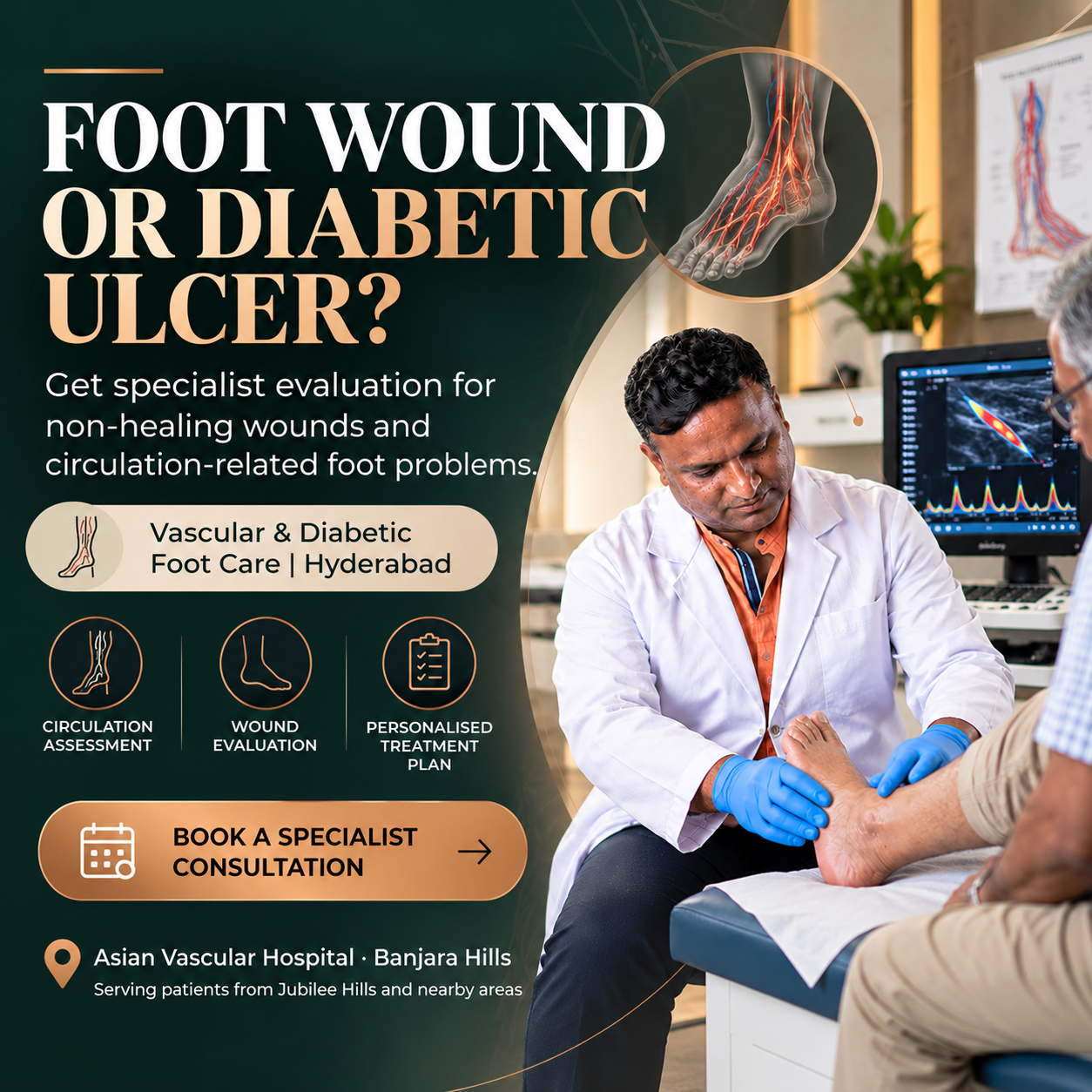
Foot problems can affect your ability to walk, work, exercise, and manage everyday activities. While some conditions improve with appropriate rest and medical treatment, others—particularly diabetic foot wounds, infected ulcers, and problems caused by poor blood circulation—need specialist evaluation.
If you are searching for a foot hospital in Jubilee Hills, the right facility depends on the problem you are experiencing. Foot fractures, sports injuries, joint disorders, diabetic foot ulcers, and wounds caused by poor circulation may require different specialists.
Asian Vascular Hospital is a specialist vascular hospital located on Road No. 12 in Banjara Hills, Hyderabad, serving patients seeking evaluation and treatment for vascular conditions, diabetic foot complications, and non-healing wounds. If you live in Jubilee Hills or nearby areas, you can contact the hospital to discuss whether its services are appropriate for your condition.
The first step is understanding what is causing your foot problem—not simply treating the visible symptoms.
Need an assessment for a diabetic foot wound or a non-healing ulcer?
Call Asian Vascular Hospital: +91 81439 98831
Which Foot Problems Need Specialist Medical Attention?
Not every foot problem requires the same type of care. Understanding your symptoms can help you identify the appropriate specialist and avoid delays in treatment.
1. Diabetic foot ulcers and wounds
People living with diabetes may develop wounds because of reduced sensation, pressure, skin damage, or impaired circulation. A small blister, cut, or crack can go unnoticed when protective sensation is reduced.
A diabetic foot wound needs particular attention if it is not healing, becomes red or swollen, develops discharge, or changes colour. Early assessment can help identify infection, circulation problems, and other factors that may affect healing.
2. Non-healing foot wounds
A wound that remains open despite regular dressing changes may have an underlying cause that needs investigation. Poor arterial blood flow, venous disease, diabetes, infection, and repeated pressure can all interfere with healing.
If your wound repeatedly reopens or shows little improvement, a clinician may recommend a more detailed wound and circulation assessment.
3. Blackened toes or suspected gangrene
Black or darkened tissue can sometimes indicate severe damage, including gangrene or critically reduced blood supply. Not every dark skin change has the same cause, but new blackening—particularly in a person with diabetes—requires urgent medical evaluation.
Do not wait for a routine appointment if the affected area is rapidly deteriorating or accompanied by fever, spreading redness, severe pain, or sudden coldness of the foot.
4. Foot pain associated with poor circulation
Arterial disease can reduce blood supply to the feet. Some people experience calf or foot discomfort while walking, while others develop pain at rest, slow-healing wounds, or changes in skin temperature and colour.
A vascular specialist can assess whether reduced circulation is contributing to your symptoms and whether further testing is needed.
5. Foot and ankle injuries or joint problems
Fractures, ligament injuries, deformities, tendon problems, and many joint conditions may be better assessed by an orthopaedic or foot-and-ankle specialist.
Choosing a provider based on the actual condition is important. A vascular hospital is particularly relevant when the concern involves circulation, diabetic foot complications, vascular disease, or a non-healing wound.
Why Choose a Specialist for Diabetic Foot and Wound Care?
A wound on the foot may look small but still require careful evaluation. This is especially true for people with diabetes, reduced sensation, known arterial disease, or a history of foot ulcers.
At a specialist vascular hospital, the assessment can look beyond the surface of the wound to investigate whether blood flow, infection, or pressure is contributing to the problem.
Depending on your condition, evaluation may include:
- Clinical wound assessment: Checking the wound’s location, depth, appearance, surrounding skin, and signs of infection.
- Circulation examination: Assessing pulses, skin temperature, colour, and other indicators of blood supply.
- Vascular investigations: Doppler ultrasound or other tests when clinically appropriate.
- Infection assessment: Determining whether the wound requires additional investigation or treatment.
- Pressure management: Identifying footwear, walking patterns, or pressure points that may be worsening the wound.
- Individualised treatment planning: Discussing wound care, circulation treatment, infection management, and follow-up based on the findings.
These steps help the treating team identify the issues that need attention rather than relying on repeated dressing changes alone.
For more information, read our guide to Advanced Wound Care and Diabetic Foot Treatment in Hyderabad.
Diabetic Foot Treatment Near Jubilee Hills: What to Expect
If you visit Asian Vascular Hospital for a diabetic foot wound or suspected circulation problem, the assessment and treatment will depend on your symptoms, medical history, and examination findings.
Step 1: Medical history and foot examination
The doctor may ask when the wound started, whether it has changed, which treatments you have already tried, and whether you have diabetes, vascular disease, or other relevant medical conditions.
The examination may include an assessment of the wound, surrounding skin, foot sensation, swelling, and circulation.
Bring previous test reports, current medication details, and records of any earlier wound treatment if available.
Step 2: Circulation assessment
If poor blood supply is suspected, the doctor may recommend vascular investigations. A Doppler ultrasound can help assess blood flow through selected arteries or veins.
Other tests may be needed depending on the clinical findings. The aim is to determine whether a circulation problem could be preventing healing and whether further vascular treatment should be considered.
Step 3: Wound and infection management
Treatment may include appropriate wound cleaning, dressings, pressure relief, and infection management. Some wounds require debridement to remove selected dead or non-viable tissue.
The method and timing of treatment depend on the wound’s condition. For example, the presence of severely reduced blood flow can affect decisions about wound procedures.
Antibiotics are used when clinically indicated rather than automatically for every wound.
Step 4: Treatment for blocked arteries, when appropriate
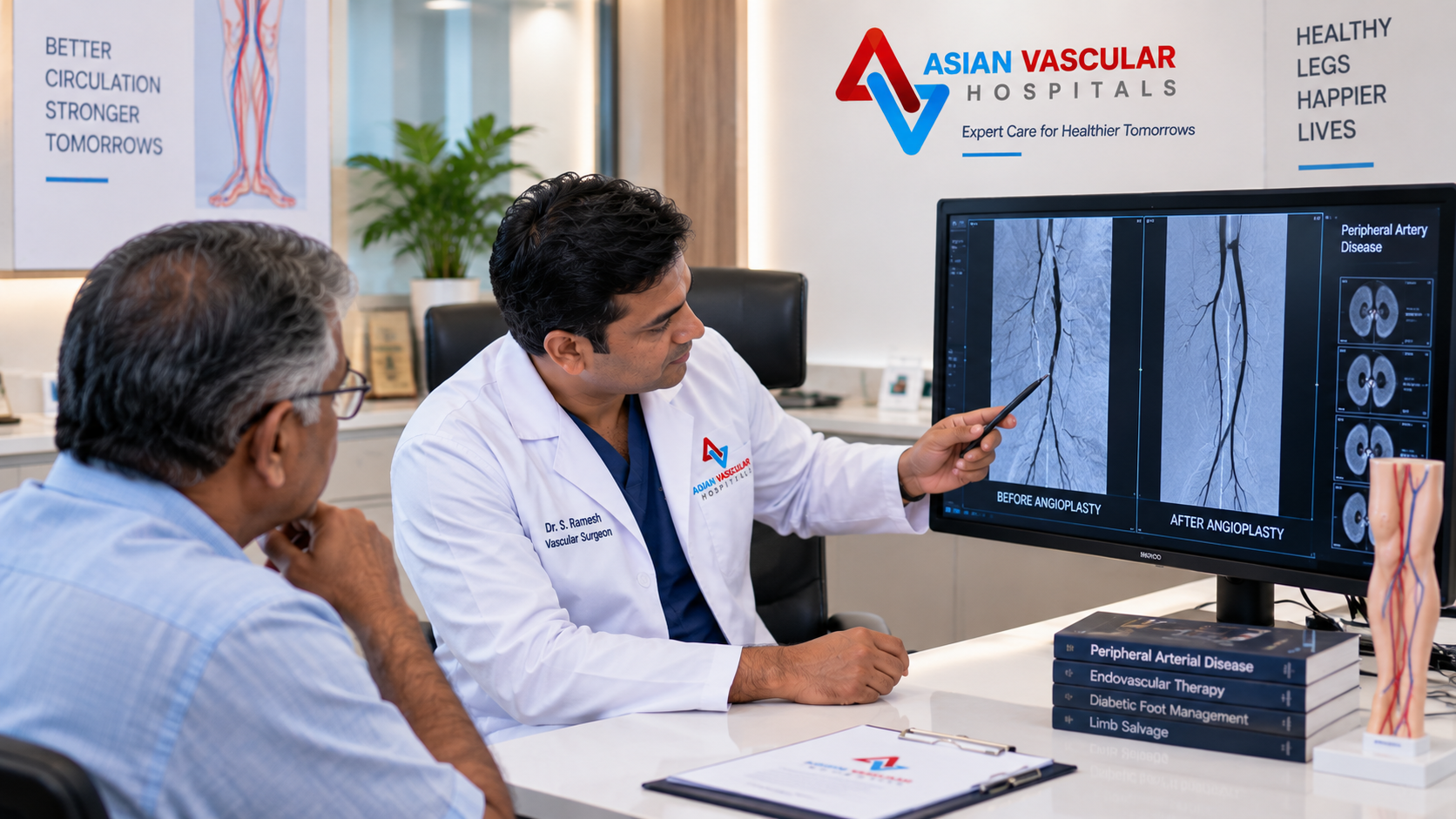
If investigations identify significant arterial narrowing or blockage, the vascular specialist may discuss options such as angioplasty or bypass surgery in selected cases.
Angioplasty uses a catheter and balloon to widen a narrowed artery. Whether it is appropriate depends on the location and severity of the blockage, the patient’s health, and the expected benefits and risks.
Improving circulation may support wound healing, but it does not guarantee a particular outcome. Wound care, infection management, pressure relief, and follow-up may still be necessary.
Step 5: Home care and follow-up
You should receive instructions on dressing care, pressure relief, footwear, and warning signs that require prompt review.
People with diabetes may also need support with blood sugar management and daily foot checks. Follow-up appointments allow the clinical team to assess progress and modify the plan when needed.
When Should You Visit a Foot Hospital Without Delay?
Do not ignore a foot wound simply because it is not painful. Diabetes-related nerve damage can reduce sensation, meaning a serious injury or infection may not cause the expected level of discomfort.
Seek prompt medical assessment if you notice:
- A foot wound that is not healing.
- Increasing redness, warmth, swelling, or discharge.
- New black or blue discolouration of a toe or part of the foot.
- A wound accompanied by fever or feeling unwell.
- A sudden change in foot temperature, colour, or sensation.
- A foot ulcer in a person with diabetes or known circulation problems.
Rapidly spreading infection, severe illness, sudden coldness or discolouration, or suspected gangrene may require emergency assessment. Do not delay urgent care while searching for a particular clinic.
Asian Vascular Hospital: Specialist Care Near Jubilee Hills
Asian Vascular Hospital is located in Banjara Hills, Hyderabad, and focuses on vascular and endovascular care. It may be an appropriate option for patients from Jubilee Hills and surrounding neighbourhoods who need assessment for diabetic foot complications, circulation-related wounds, or other vascular conditions.
The hospital’s vascular services are associated with Dr. G.V. Praveen Kumar, MS, DNB (Vascular Surgery), Founder Chairman and Chief Consultant in Vascular and Endovascular Surgery.
When choosing a hospital for a foot problem, consider whether the facility’s specialty matches your symptoms. Patients with fractures or sports injuries may need orthopaedic assessment, while people with diabetic foot ulcers, non-healing wounds, or suspected circulation problems may benefit from vascular evaluation.
Before travelling, call the hospital to confirm appointment availability, the appropriate department, and whether your particular condition can be assessed there.
Hospital: Asian Vascular Hospital
Location: Road No. 12, Sai Enclave, Sri Ram Nagar Colony, Banjara Hills, Hyderabad, Telangana 500034
Phone: +91 81439 98831
Book an assessment: Contact the hospital to discuss your symptoms and arrange an appointment.
You can also explore the hospital’s diabetic foot and advanced wound care information before your visit.
Frequently Asked Questions
- All Post
- blog




Related posts:
 Aneurysm Treatment in Hyderabad: Expert Care for Your Vascular Health
 Best Vascular Surgeon – Everything You Need to Know Before Choosing One
 Varicose Veins Treatment Cost – Affordable Laser Surgery in Hyderabad
 Peripheral Neuropathy: Causes, Symptoms, and Treatment Options
 🦶 Diabetic Foot Care at Asian Vascular Hospitals, Hyderabad
 Vascular Surgeon in Karimnagar: Advanced Vascular Care for Healthier Living
 Vascular Surgeon in Bhuvanagiri: Advanced Vein & Artery Care
 Varicose Veins Medical Treatment – Advanced Options for Lasting Relief