

A diabetic foot wound needs more than wound dressing when blood cannot reach the affected area properly. Diabetes can increase the risk of peripheral artery disease (PAD), in which arteries supplying the legs and feet become narrowed or blocked, reducing blood flow and making wounds harder to heal.
When significant PAD is contributing to a non-healing diabetic foot wound, angioplasty may be one of the minimally invasive options used to restore blood flow. Revascularisation can be an important part of limb-salvage treatment when inadequate circulation threatens the viability of the foot.
What Is Peripheral Artery Disease in Diabetic Patients?
Peripheral artery disease occurs when arteries supplying the legs become narrowed or blocked, reducing blood flow to the lower limbs. Diabetes is one of the recognised risk factors for PAD, along with conditions such as high blood pressure, high cholesterol and chronic kidney disease.
In a person with diabetes, PAD can become particularly concerning when a foot ulcer develops because adequate blood flow is important for tissue healing and recovery.
Why Does Poor Blood Flow Make a Diabetic Foot Wound Difficult to Heal?
Poor circulation can reduce the delivery of oxygen and nutrients to tissues that need to repair themselves. When a diabetic foot ulcer occurs in a limb with significant arterial disease, the wound may remain open or deteriorate despite appropriate wound care.
This is why evaluating circulation is an important part of managing a diabetic foot wound when PAD is suspected.
Signs that may suggest reduced circulation include:
- Foot or leg pain during walking that improves with rest
- Coldness of the foot
- Changes in skin colour
- Reduced or absent pulses
- Slow-growing toenails
- A wound that is not healing
- Pain in the foot at rest in advanced disease
- Tissue loss or gangrene
Not everyone with PAD experiences obvious symptoms. Some people may have PAD without recognising the condition until a foot problem develops.
How Can Diabetes Lead to Blocked Arteries?
Diabetes is associated with an increased risk of atherosclerosis, a process in which fatty deposits and other changes within artery walls can contribute to narrowing and reduced blood flow.
Over time, arterial disease can affect the vessels supplying the lower leg and foot. When blood flow becomes severely restricted, even a relatively small wound may become difficult to heal.
Diabetic neuropathy can add another problem: reduced sensation may allow an injury to remain unnoticed while poor circulation interferes with healing.
When Should a Diabetic Foot Patient Be Evaluated for PAD?
A diabetic patient with a non-healing foot ulcer, tissue loss, gangrene, or symptoms suggesting reduced circulation should be assessed for PAD. A vascular evaluation helps determine whether inadequate blood flow is contributing to the wound and whether revascularisation should be considered.
The 2024 ACC/AHA guideline recognises chronic limb-threatening ischemia as a serious PAD presentation and recommends revascularisation to help prevent limb loss in appropriate patients.
How Is Blood Flow Checked Before Angioplasty?
Doctors generally begin with a clinical examination and vascular assessment. The ankle-brachial index (ABI) is one established test used to help detect PAD, while additional vascular imaging may be required to understand the location and severity of arterial narrowing.
Depending on the patient’s condition, assessment may include:
- Examination of foot pulses
- Ankle-brachial index
- Doppler or duplex ultrasound
- CT angiography
- MR angiography
- Catheter-based angiography when intervention is being considered
The purpose is not simply to find a blockage. Doctors need to understand the overall arterial anatomy and determine whether restoring blood flow could improve the clinical situation.
What Is Angioplasty for a Diabetic Foot?
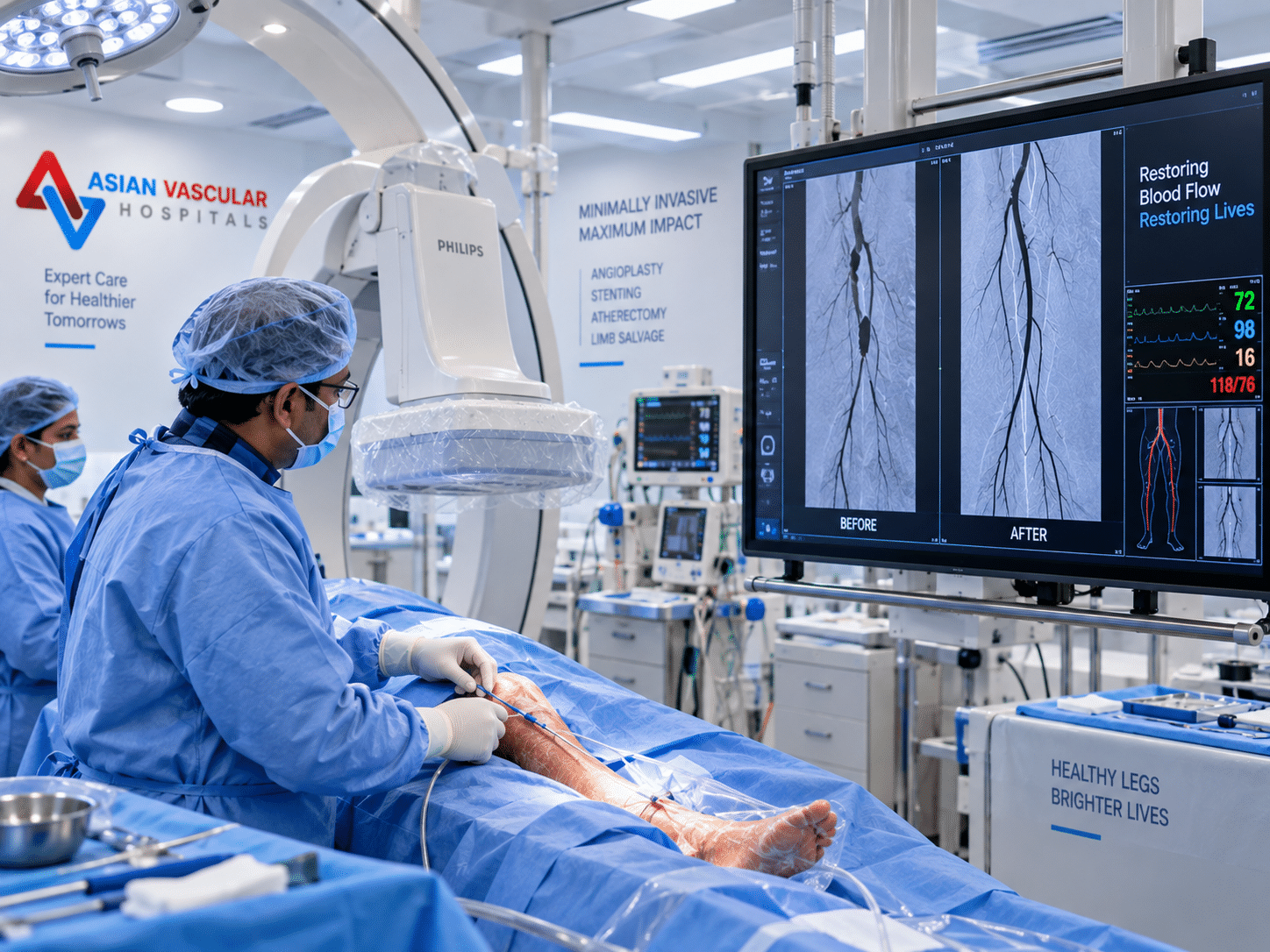
Angioplasty is a minimally invasive endovascular procedure used to improve blood flow through a narrowed or blocked artery. A catheter is guided through the blood vessels to the affected area, where a balloon may be used to widen the narrowed segment.
In some cases, other endovascular techniques or stent placement may also be considered depending on the artery involved and the characteristics of the blockage.
The specific technique depends on the patient’s vascular anatomy, the location and extent of disease, symptoms, tissue condition, and treatment goals.
How Can Angioplasty Help a Non-Healing Diabetic Foot?
When inadequate arterial blood flow is contributing to a diabetic foot wound, restoring circulation may improve the blood supply available to the affected tissues. Revascularisation is therefore an important component of treatment for selected patients with limb-threatening ischemia.
However, angioplasty does not directly treat the infection or replace wound care.
A diabetic foot with PAD may require several components of treatment:
Restore blood flow → Control infection → Remove non-viable tissue when necessary → Protect the wound → Support healing
This is why diabetic foot management often requires coordinated vascular, wound and medical care.
When Is Angioplasty Considered?
Angioplasty may be considered when clinically significant arterial disease is contributing to symptoms or threatening tissue viability and an endovascular approach is appropriate.
It may become particularly relevant when a patient has:
- A non-healing diabetic foot ulcer with PAD
- Tissue loss associated with inadequate blood flow
- Gangrene related to severe ischemia
- Chronic limb-threatening ischemia
- Significant arterial narrowing or blockage identified on vascular imaging
The decision should be individualised. Current PAD guidance emphasises considering the patient’s anatomy, clinical presentation, treatment goals and other factors when selecting between endovascular treatment, surgical bypass or other approaches.
Is Angioplasty Always Better Than Bypass Surgery?
No single revascularisation method is appropriate for every patient. Depending on the location and complexity of arterial disease, available blood vessels, medical conditions and treatment goals, doctors may consider endovascular treatment, surgical bypass, or a combination of approaches.
The 2024 ACC/AHA guideline specifically notes that anatomy, available conduit, comorbidities and patient preferences should be considered when selecting an initial revascularisation strategy for chronic limb-threatening ischemia.
This means angioplasty should be viewed as one important tool in vascular limb-salvage care, rather than a universal solution for every diabetic foot problem.
What Happens If a Diabetic Foot Has Both Infection and Blocked Arteries?
A diabetic foot with infection and significant ischemia can be particularly challenging because both problems may need to be addressed.
In this situation, treatment may involve:
- Infection assessment and appropriate antibiotics
- Wound care
- Removal of infected or dead tissue when required
- Assessment of arterial circulation
- Revascularisation when indicated
- Pressure offloading
- Diabetes management
- Ongoing wound monitoring
The sequence and urgency depend on the patient’s clinical condition. Severe infection or limb-threatening ischemia requires prompt specialist assessment.
Can Angioplasty Prevent Amputation?
Angioplasty cannot guarantee that amputation will be avoided. However, when inadequate arterial blood flow is contributing to chronic limb-threatening ischemia, appropriate revascularisation is an important limb-preservation strategy. The 2024 ACC/AHA guideline recommends revascularisation in patients with chronic limb-threatening ischemia to prevent limb loss.
The overall goal is to identify the cause of tissue loss, control infection where present, improve circulation when appropriate, and preserve viable tissue.
Early diagnosis and coordinated multidisciplinary care are important because PAD is associated with an increased risk of major limb complications, including amputation.
What Are the Warning Signs of Poor Blood Flow in a Diabetic Foot?
A diabetic patient should seek medical assessment if a foot wound is not healing or if there are signs that blood flow may be inadequate.
Important warning signs include:
- A wound that remains open despite treatment
- Blackening of a toe or part of the foot
- Unusually cold feet
- Pale, bluish or dark skin colour
- Foot pain at rest
- Leg pain when walking that improves with rest
- Reduced pulses
- Gangrene
- Increasing tissue loss
A diabetic foot ulcer accompanied by significant circulation problems should not be treated as a simple skin wound.
What Is the Goal of Limb-Salvage Treatment?
The goal of limb-salvage treatment is to preserve viable tissue and foot function whenever medically possible while controlling infection and addressing the underlying cause of tissue damage.
For a patient with PAD and a diabetic foot wound, this may involve a combination of vascular intervention, wound care, infection management and pressure relief.
Discover how minimally invasive procedures like Angioplasty for Diabetic Foot restore blood flow.
Diabetic Foot and Vascular Care at Asian Vascular Hospitals
At Asian Vascular Hospitals in Banjara Hills, Hyderabad, diabetic foot problems can be assessed from a vascular perspective, particularly when poor circulation may be contributing to delayed wound healing.
A vascular-focused evaluation can help determine whether PAD is present, how severely blood flow is affected, and whether a revascularisation procedure may be appropriate.
The treatment approach depends on the patient’s individual condition and may include medical management, wound care, endovascular treatment, surgery, or a combination of these approaches.

Frequently Asked Questions
- All Post
- blog