


A small cut, blister, or wound on the foot can become a serious problem when you have diabetes. Nerve damage can reduce your ability to feel pain, while poor blood circulation can slow healing and make it harder for your body to fight infection.
Recognising diabetic foot infection symptoms early is therefore extremely important. Finding timely diabetic foot treatment in Hyderabad can help doctors identify infection, assess blood flow, treat damaged tissue, and take appropriate steps to protect the affected limb.
If you notice increasing redness, swelling, discharge, a foul smell, skin colour changes, blackening toes, or a wound that is not healing, do not wait for the problem to resolve on its own.
Why Are Diabetic Foot Infections So Serious?
Diabetic foot infections can become serious because diabetes-related nerve damage and poor circulation may mask symptoms and interfere with healing. Peripheral neuropathy can reduce sensation in the foot, while peripheral artery disease (PAD) can reduce blood flow and oxygen delivery to damaged tissue.
A wound that initially appears small may become infected and extend into deeper tissues, including muscles, joints, or bone. Severe infections may require urgent surgical treatment, particularly when there is gangrene, deep infection, or severe limb ischaemia.
What Are the Warning Signs of a Diabetic Foot Infection?
The most important warning signs include persistent redness, swelling, warmth, discharge, foul odour, increasing wound size, skin discolouration, and blackening of the toes or foot. However, people with diabetic neuropathy may have surprisingly little pain even when an infection is serious.
1. Persistent Redness Around a Wound
Persistent or spreading redness around a foot wound can indicate an inflammatory response associated with infection. Neuropathy may reduce the pain that would normally draw attention to the problem, allowing the infection to progress unnoticed.
If redness is increasing, spreading beyond the wound, or accompanied by swelling or discharge, the foot should be medically assessed rather than monitored at home.
2. Swelling That Does Not Improve
New or worsening swelling around an ulcer, wound, toe, or part of the foot can occur when tissues become inflamed or infected. Diabetes-related neuropathy can make the underlying injury difficult to notice, while PAD may interfere with normal tissue healing.
Swelling should receive particular attention when it occurs together with redness, drainage, skin breakdown, or increasing wound size.
3. Foul-Smelling Discharge From the Wound
Foul-smelling drainage can be a warning sign of an infected or deteriorating wound and should not be ignored. A diabetic foot infection is diagnosed clinically by looking for signs of inflammation and infection rather than relying only on a wound culture.
If pus, cloudy drainage, blood-stained discharge, or a strong unpleasant odour develops, seek medical evaluation promptly.
4. A Wound That Is Not Healing
A diabetic foot wound that remains open or repeatedly breaks down requires proper assessment. Neuropathy can allow repeated pressure or minor trauma to continue, while PAD can reduce the blood supply required for tissue repair.
Poor circulation is particularly important because infection occurring alongside PAD is associated with poorer outcomes and increased risk of limb loss.
5. Blackening Toes or Black Skin
Blackening of a toe or area of the foot can indicate severe tissue damage, including gangrene, and requires urgent medical assessment. In people with diabetes, this can be associated with severe infection, inadequate blood supply, or a combination of infection and PAD.
Do not wait for blackened tissue to become painful before seeking help. Neuropathy may significantly reduce sensation, meaning a serious problem can develop with little or no pain.
6. Increasing Pain — or Unexpectedly Little Pain
Pain can occur with an infected diabetic foot, but the absence of pain does not mean the condition is mild. Diabetic peripheral neuropathy can reduce sensation, allowing ulcers and infections to progress without the expected warning of pain.
Any new wound, colour change, swelling, discharge, or other abnormality should therefore be assessed even if the foot does not hurt.
7. Fever, Chills, or Feeling Unwell
Fever, chills, or significant systemic illness can indicate that an infection is becoming more severe. Systemic symptoms are not present in every diabetic foot infection, but when they occur, they can indicate a potentially limb-threatening or life-threatening infection.
Seek urgent medical attention if a foot infection is accompanied by fever, chills, weakness, confusion, or a rapid deterioration in general health.
When Should You Seek Urgent Medical Help?
Urgent medical assessment is particularly important when there is extensive gangrene, rapidly worsening infection, suspected deep abscess, severe tissue damage, or severe reduction in blood flow to the leg or foot. Current IWGDF/IDSA guidance recommends urgent surgical consultation for severe infections and for moderate infections complicated by extensive gangrene, deep abscess, necrotising infection, compartment syndrome, or severe lower-limb ischaemia.
You should seek prompt medical attention if you notice:
- Blackening of a toe or part of the foot
- Rapidly spreading redness or swelling
- Pus or foul-smelling discharge
- A rapidly worsening ulcer
- Exposed or visible deeper tissue
- Severe or increasing foot pain
- New loss of sensation or significant colour change
- Fever, chills, or feeling seriously unwell
- A wound that is not healing, particularly if you have known PAD
If you notice signs of severe infection, consult specialists immediately for advanced Diabetic Foot Treatment in Hyderabad to prevent amputation.
Why Do Neuropathy and Poor Circulation Make Diabetic Foot Problems Worse?
Neuropathy can reduce protective sensation, making it easier for pressure injuries, blisters, cuts, and ulcers to go unnoticed. PAD can reduce blood flow to the affected limb, limiting the oxygen and nutrients needed for healing and reducing the body’s ability to respond effectively to infection.
This combination is one reason diabetic foot wounds require more than simply applying a dressing and waiting for them to heal.
A proper evaluation may need to consider the wound itself, the severity of infection, circulation to the foot, and whether deeper structures such as bone are involved.
How Is a Diabetic Foot Infection Evaluated?
Evaluation generally begins with a careful examination of the wound and surrounding tissue to determine whether infection is present and how severe it is. Doctors may also investigate blood flow and look for evidence that infection has extended into deeper tissues or bone.
Depending on the clinical situation, assessment may involve:
- Detailed examination of the ulcer or wound
- Assessment of circulation and peripheral pulses
- Vascular studies such as Doppler-based testing when PAD is suspected
- Blood tests when clinically indicated
- Wound or tissue sampling when infection requires microbiological evaluation
- X-ray or other imaging when deeper infection or bone involvement is suspected
- MRI when osteomyelitis remains uncertain after initial evaluation
The exact investigations depend on the patient’s symptoms, wound characteristics, circulation, and clinical findings.
What Does Diabetic Foot Treatment Involve?
Treatment depends on the severity and type of infection, the condition of the wound, the blood supply, and whether deeper tissues or bone are affected. Management may include wound care, pressure relief, appropriate antibiotics for confirmed infection, removal of infected or dead tissue when necessary, and treatment of significant circulation problems.
For patients with diabetes, PAD, and an infected foot ulcer or gangrene, current guidance recommends urgent assessment by both surgical and vascular specialists to determine whether drainage, surgery, and/or revascularisation is needed.
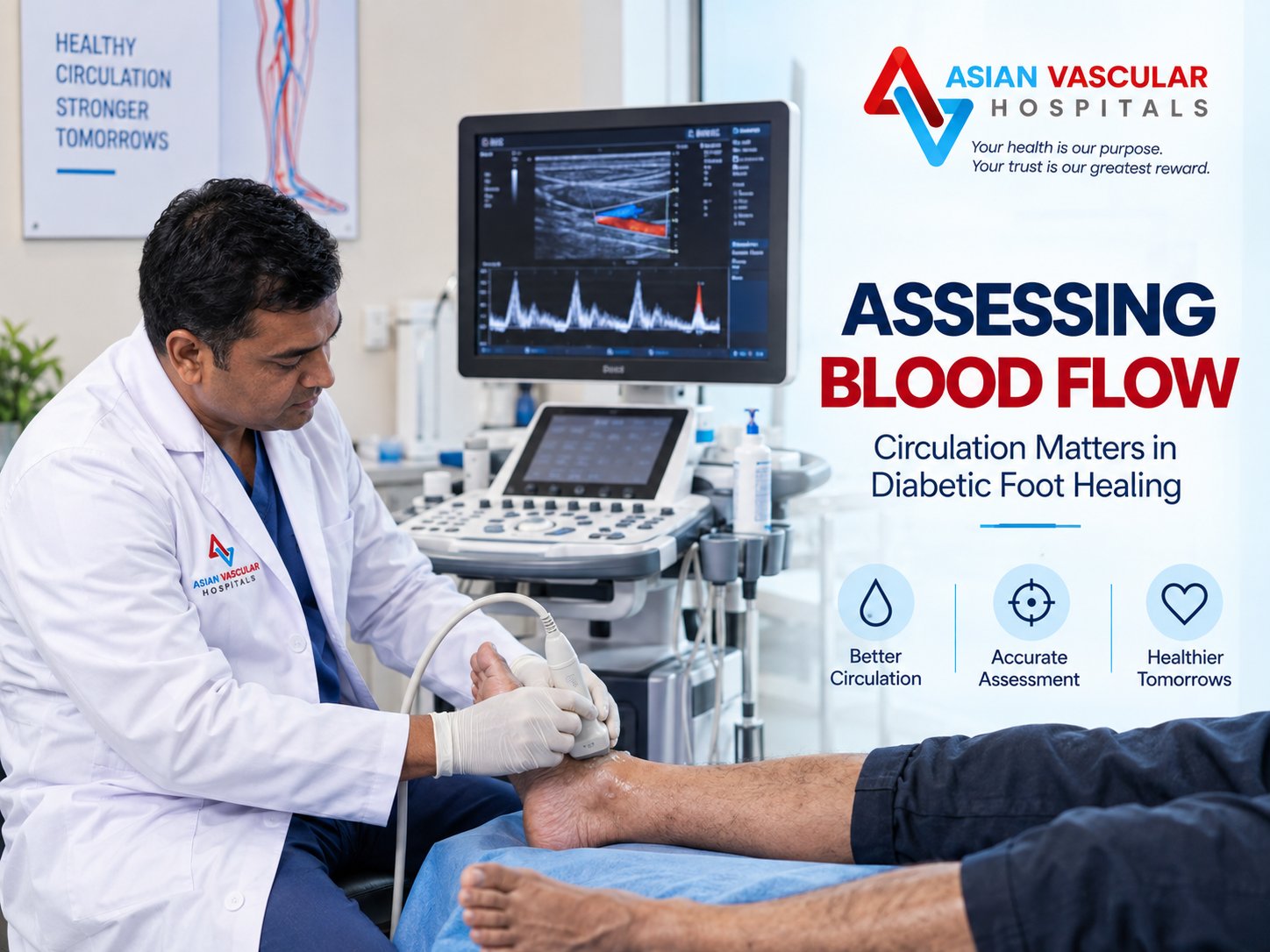
Why Is Blood Flow Assessment Important?
An infected wound cannot be evaluated properly without considering circulation when PAD is possible. Poor blood flow can make infection more difficult to control and can significantly impair wound healing.
This is why vascular assessment can be an important part of limb-salvage care when an infected diabetic foot is accompanied by reduced circulation.
Can Diabetic Foot Infection Lead to Amputation?
A serious diabetic foot infection can sometimes lead to amputation, particularly when infection, extensive tissue damage, gangrene, or severe PAD cannot be controlled or when tissue has become non-viable. However, early recognition and appropriate multidisciplinary management are important components of efforts to control infection and preserve the limb.
The goal of specialist diabetic foot care is not simply to treat the infection. It is to address the underlying factors contributing to the problem, protect viable tissue, restore adequate circulation when necessary, and support wound healing.
Diabetic Foot Care at Asian Vascular Hospitals, Hyderabad
At Asian Vascular Hospitals, patients with complex diabetic foot problems can receive specialist vascular assessment and limb-salvage focused care. The hospital is located in Banjara Hills, Hyderabad, and provides vascular evaluation for conditions involving poor circulation and limb-threatening foot problems.
When infection and circulation problems occur together, timely assessment can be especially important because both issues may need to be addressed for successful healing.
Do Not Ignore Changes in a Diabetic Foot
A diabetic foot infection does not always begin with severe pain. It may start with a small wound, persistent redness, mild swelling, or drainage that appears insignificant.
Because neuropathy can reduce sensation and PAD can impair healing, visual inspection of the feet every day is particularly important for people with diabetes. If you notice blackening, foul-smelling discharge, spreading redness, swelling, or a wound that is not healing, seek medical attention promptly.
Early specialist assessment can help determine how serious the infection is and whether wound care, infection treatment, vascular intervention, surgery, or a combination of approaches is required.

Frequently Asked Questions
- All Post
- blog









Related posts:
 Looking for a Vascular Surgeon Near You? Hyderabad’s Trusted Experts Are Here
 Top Vascular Surgeon in Hyderabad – Expert Care That Heals & Protects
 👣 Diabetic Foot Ulcer Symptoms: Don’t Miss These Early Warning Signs!
 👣 Find the Best Diabetic Foot Doctor Near Me – Advanced Care at Asian Vascular Hospitals
 Vascular Surgeon in Nellore: Advanced Vascular Care for Healthy Living
 Vascular Surgeon in Bhongir: Advanced Vein & Artery Care
 👣 Best Podiatrist Doctor in Hyderabad – Complete Foot Care Under One Roof
 🩸 Best Hospital for Varicose Veins Treatment in Hyderabad — Asian Vascular Hospitals