

Why Is My AV Fistula Not Maturing?
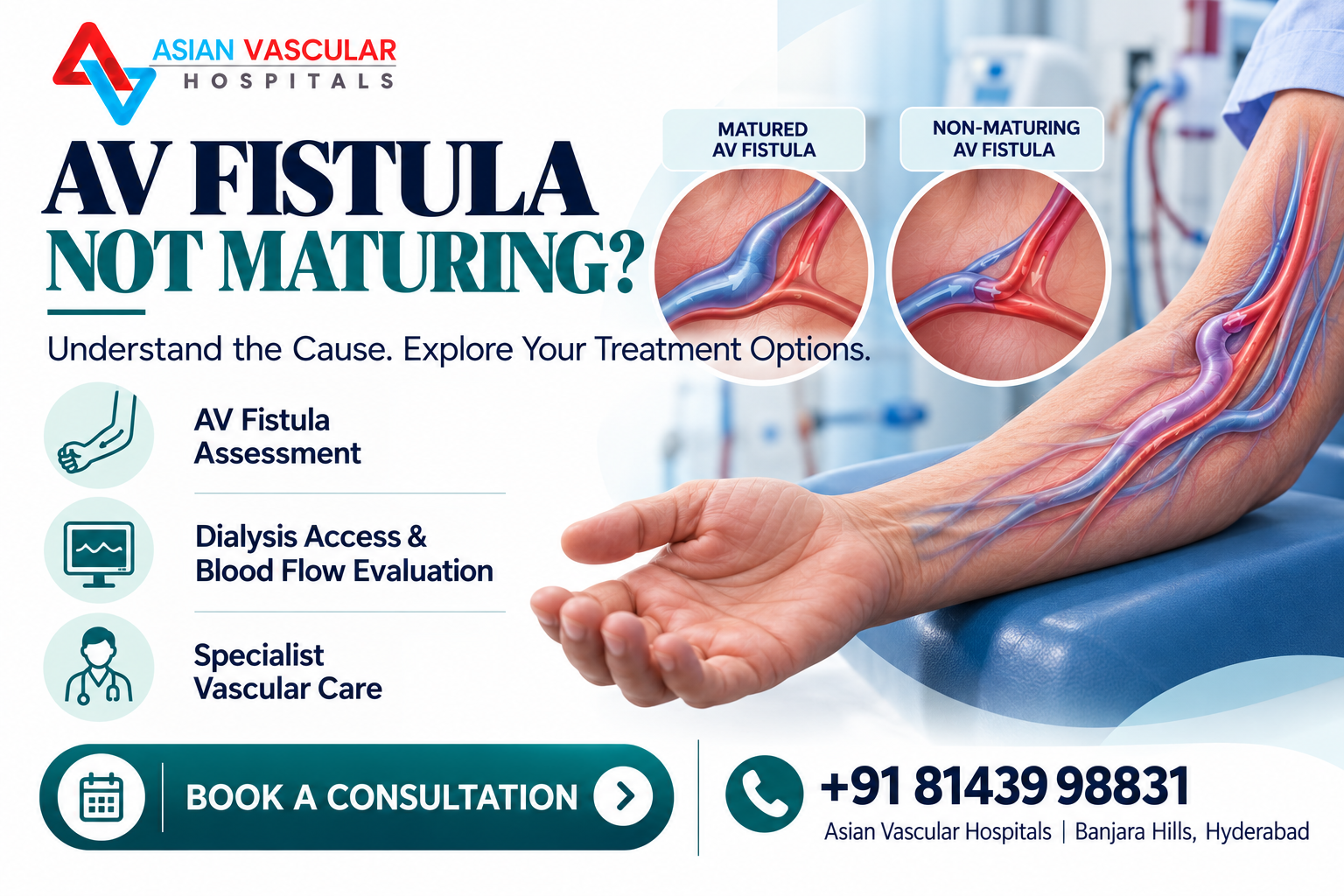
An arteriovenous (AV) fistula is a surgically created connection between an artery and a vein, usually in the arm. It allows more blood to flow through the vein, helping it enlarge and become suitable for haemodialysis.
However, an AV fistula does not always mature as expected. It may remain too small, have inadequate blood flow, lie too deep beneath the skin, or develop a narrowing that prevents it from functioning properly.
A fistula that is not ready for dialysis does not necessarily mean the surgery has failed permanently. In some cases, a treatable problem can be identified and addressed. In others, additional surgery or a different dialysis-access plan may be needed.
The important step is to identify why the fistula is not developing or working as expected rather than waiting indefinitely or attempting to use it before the dialysis team considers it ready.
At Asian Vascular Hospitals in Banjara Hills, Hyderabad, vascular assessment can help determine whether a fistula-related problem requires further investigation or treatment. The appropriate next step depends on the patient’s clinical findings and dialysis requirements.
How Long Does an AV Fistula Take to Mature?
An AV fistula commonly needs around 6–8 weeks to mature sufficiently for use, although the time varies between patients. Some fistulas take longer, and a fistula may not become usable without additional treatment.
During maturation, the vein gradually enlarges and its wall adapts to the increased blood flow from the artery. The vein must become large and accessible enough for dialysis needles, while providing adequate blood flow for effective treatment.
A vascular specialist and dialysis team assess whether the fistula is ready based on clinical examination and, when indicated, ultrasound findings.
What does a mature AV fistula need?
A fistula generally needs to:
- Provide adequate blood flow for haemodialysis.
- Have a vein that is sufficiently enlarged for safe needle placement.
- Be accessible beneath the skin.
- Support reliable cannulation by trained dialysis staff.
- Function without significant complications that compromise dialysis.
The passage of time alone does not confirm that a fistula is ready for dialysis. Its development and function need to be assessed.
If the fistula has not matured as expected, a vascular specialist may investigate whether an underlying problem is preventing it from becoming usable.
What Causes an AV Fistula Not to Mature?
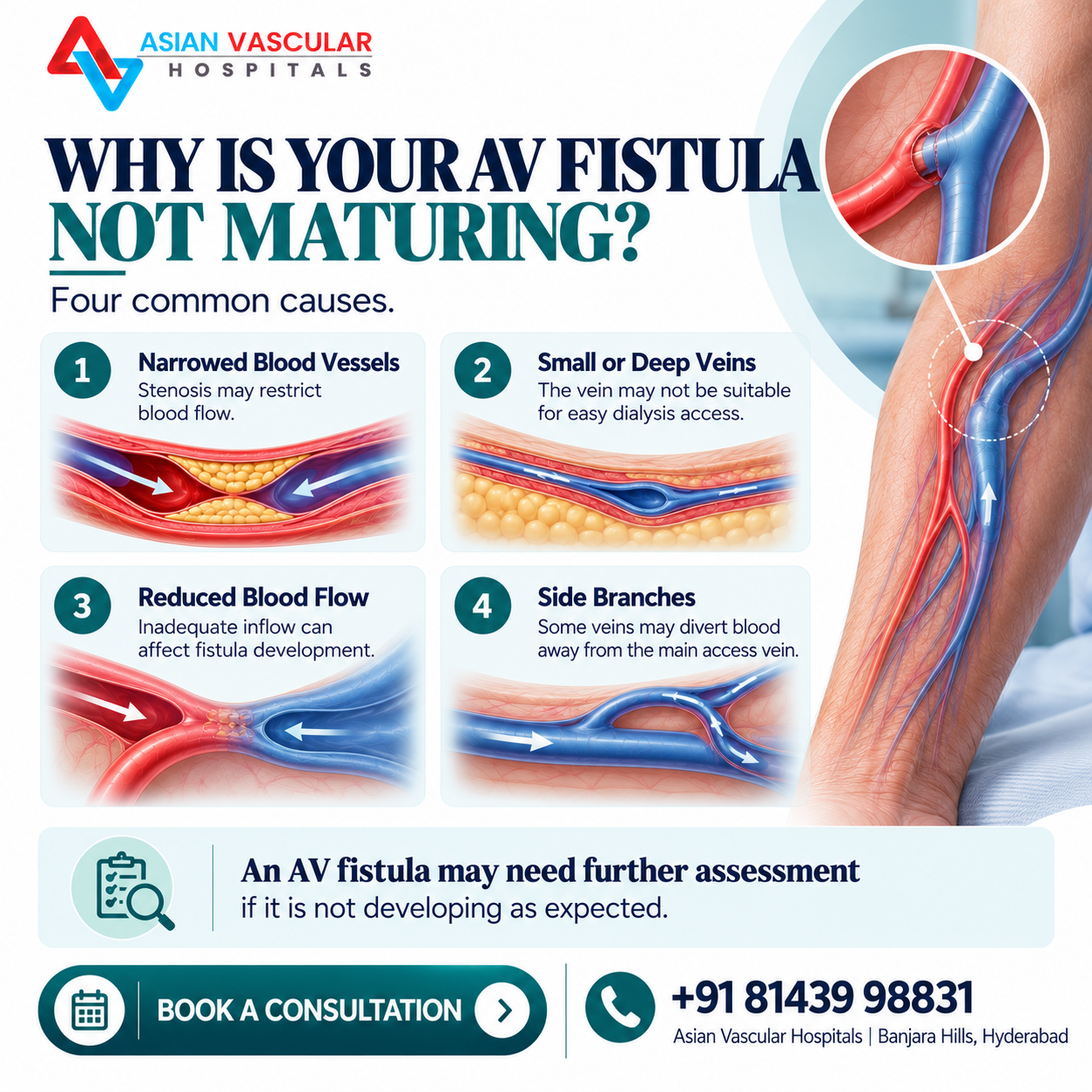
Several factors can prevent a newly created fistula from developing adequately. More than one problem may be present in the same patient.
1. Narrowing of the Blood Vessel (AV Fistula Stenosis)
Stenosis means narrowing of a blood vessel. It can restrict blood flow through the fistula and interfere with maturation or ongoing function.
A narrowing may occur near the surgical connection, within the outflow vein, or in another part of the venous drainage pathway.
Possible consequences include:
- Insufficient blood flow through the developing fistula.
- Limited enlargement of the vein.
- Difficulty using the fistula for dialysis.
- Increasing pressure within the access during dialysis.
- Swelling in the arm when venous drainage is impaired.
The location and clinical significance of the narrowing need to be assessed before treatment is selected.
2. A Vein That Is Too Deep or Too Small
Even when blood flows through the fistula, the vein may remain difficult to access.
A vein that is too deep beneath the skin can make needle placement difficult. A vein that has not enlarged sufficiently may not safely accommodate dialysis needles or provide the required access.
In these situations, the issue is not always complete blockage. The fistula may need further assessment to determine whether it can mature adequately or whether an intervention could improve its usability.
3. Side Branches Diverting Blood Flow
Some veins have side branches that direct blood away from the main vein intended for dialysis access.
In selected cases, these branches may divert enough flow to interfere with the enlargement of the main outflow vein.
A vascular assessment can help determine whether a significant side branch is contributing to the problem and whether treatment is appropriate.
4. Inadequate Blood Flow Into the Fistula
The artery supplying the fistula and the vessels connected to it influence how much blood flows through the access.
If the inflow is inadequate, the fistula may not enlarge or provide sufficient blood flow for dialysis.
The cause may relate to the patient’s blood vessels, the location of the access, or a narrowing in the inflow pathway.
A clinical examination and appropriate vascular imaging can help identify the problem.
5. Clot Formation
A blood clot can partially or completely obstruct a fistula.
A clot may develop in an access affected by narrowing or other blood-flow problems. If the fistula’s usual vibration suddenly disappears, this may indicate that blood flow has stopped or become severely reduced.
A sudden loss of the normal fistula vibration requires urgent medical assessment. Contact the dialysis team or vascular access service immediately rather than waiting for the next scheduled appointment.
For more information about this specific problem, read our article on what happens if an AV fistula gets blocked.
6. Swelling or Other Postoperative Problems
Swelling around a newly created fistula may temporarily make assessment or access more difficult. However, persistent or worsening swelling should not automatically be considered part of normal healing.
A collection of blood, wound complications, infection or impaired venous drainage may need to be ruled out.
The treating team can determine whether the fistula is developing normally or whether further evaluation is necessary.
What Are the Signs of an AV Fistula Not Working Properly?
An AV fistula may have problems before it becomes completely blocked. Recognising changes early can help the dialysis team investigate the cause.
Watch for the following signs.
The vibration becomes weaker
A working fistula usually has a palpable vibration called a thrill. Patients are commonly taught how to check it.
A noticeably weaker thrill or a change from the usual pattern should be reported promptly. If the thrill disappears, seek urgent assessment.
Dialysis needles are difficult to place
Repeated difficulty with cannulation may indicate that the vein is too deep, has not matured adequately, or has developed another access problem.
Needle placement should be performed by trained dialysis staff. Do not attempt to insert needles yourself.
Blood-flow problems occur during dialysis
The dialysis team may notice that the access cannot provide the prescribed blood flow or that machine pressure readings have changed.
These findings can indicate a problem with the access, although other causes also need to be considered.
The arm or hand becomes swollen
Swelling may occur when blood cannot drain adequately through the veins. Persistent or increasing swelling around the access or throughout the arm warrants prompt medical review.
The fistula becomes painful, red or hot
Pain, redness, warmth, discharge or fever may indicate infection or another complication. Contact the dialysis team or treating clinician promptly.
The hand becomes cold, painful or numb
In some patients, the fistula can divert blood away from the hand, reducing circulation to the fingers. New or worsening hand pain, coldness, colour change, numbness or weakness needs urgent assessment.
How Is an AV Fistula That Is Not Maturing Diagnosed?
The aim of assessment is to establish whether the fistula is developing normally, identify the cause of poor function and determine whether the problem can be treated.
The evaluation may involve several steps.
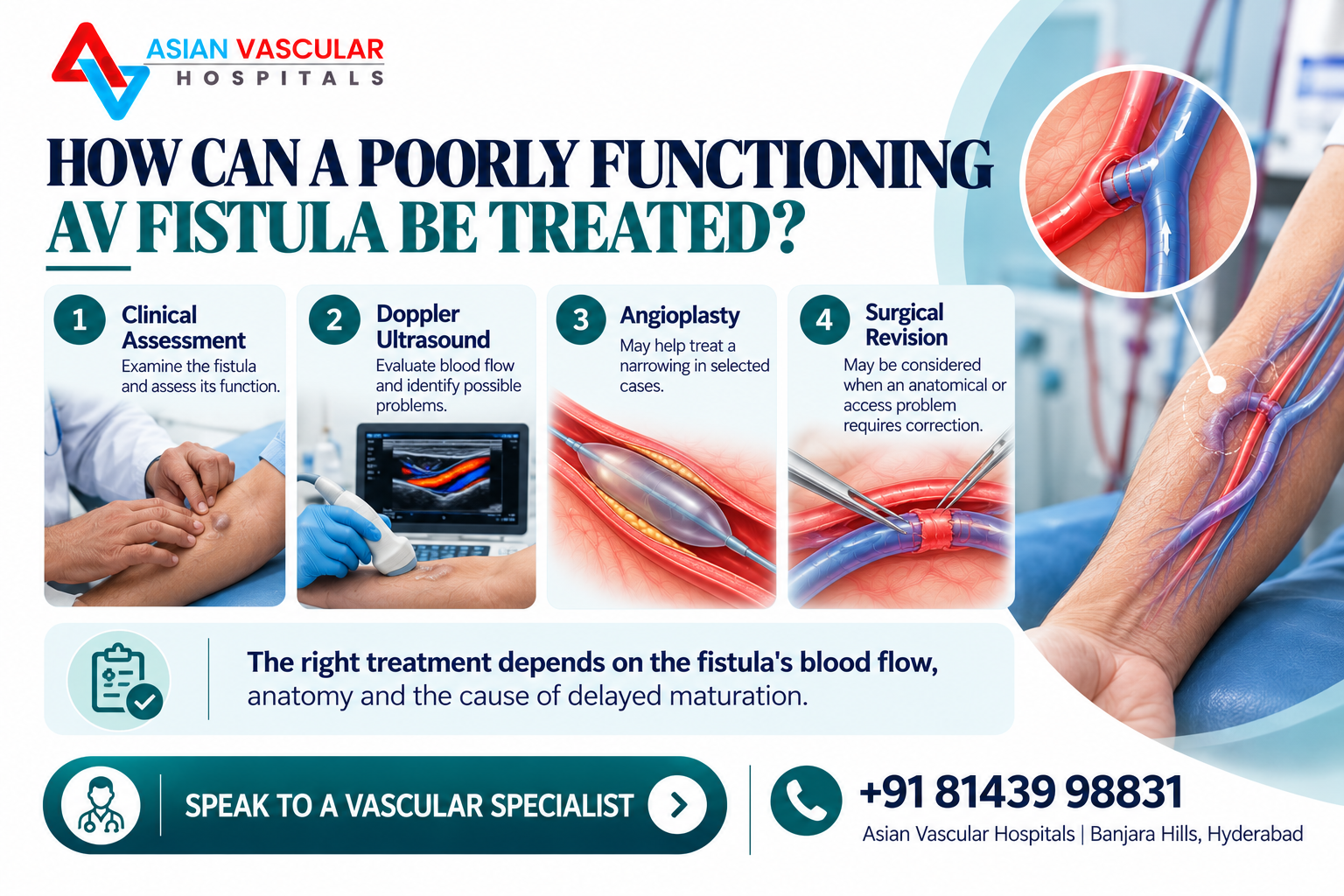
1. Clinical Examination
The vascular specialist may examine the fistula to assess:
- The strength and pattern of the thrill.
- The course and size of the vein.
- The depth and accessibility of the vein.
- Swelling in the arm or surrounding tissues.
- Signs of infection or other postoperative complications.
- The temperature, sensation and circulation of the hand.
The findings help determine whether further investigation is needed.
2. Duplex Doppler Ultrasound
Duplex ultrasound is a non-invasive investigation that provides information about blood flow and the structure of the vessels.
It may help identify:
- Narrowing within the fistula or its outflow veins.
- Reduced blood flow.
- A deep or inadequately enlarged vein.
- Significant side branches.
- A clot or another structural problem.
- The location of a suspected obstruction.
The findings can help the vascular team decide whether observation, an intervention or another access strategy is appropriate.
3. Additional Vascular Imaging
Some patients need further imaging when ultrasound findings are incomplete or a more complex problem is suspected.
The choice of investigation depends on the clinical question, the vessels involved and the patient’s overall condition.
Not every patient needs every test. The vascular specialist determines which investigations are likely to provide useful information.
Treatment Options for an AV Fistula Not Maturing
Treatment depends on the cause of the problem, the condition of the vessels and whether the fistula can be made suitable for dialysis.
There is no single procedure that is appropriate for every immature fistula.
1. Monitoring and Follow-Up
If the fistula is still developing and there is no significant problem requiring intervention, the vascular and dialysis teams may recommend continued monitoring.
This should involve a clear follow-up plan rather than simply assuming that the fistula will eventually mature.
The team may reassess the access clinically and arrange ultrasound if maturation remains inadequate or concerning signs develop.
2. Angioplasty for a Significant Narrowing
When a clinically significant stenosis is identified, balloon angioplasty may be considered.
During angioplasty, a catheter is guided to the narrowed section of the vessel. A balloon is then inflated to widen the affected area and improve blood flow.
Angioplasty may be appropriate for selected fistula narrowings, but it is not required for every immature access. The decision depends on the location and severity of the narrowing and the overall access problem.
3. Surgical Revision
Some fistulas require a surgical procedure to address an anatomical or blood-flow problem.
Depending on the findings, revision may involve correcting a narrowing, improving the flow pathway, addressing a problematic side branch or modifying the access to make it more usable.
Surgical revision is not the same as creating an entirely new fistula. Whether the existing fistula can be preserved depends on its condition and the available treatment options.
4. Treatment of a Deep or Difficult-to-Access Vein
If the fistula has adequate blood flow but the vein is too deep for reliable needle placement, a procedure to improve access may be considered in selected patients.
The approach depends on the vein’s anatomy, its size and the patient’s overall access plan.
The objective is to make the vein accessible for dialysis while preserving its function.
5. Treatment for a Blocked Fistula
If a clot has obstructed the fistula, urgent assessment is needed to determine whether blood flow can be restored.
Treatment may involve an endovascular procedure, surgery or a combination of approaches, depending on the cause and severity of the blockage.
The underlying problem, such as a significant narrowing, may also need to be addressed to help maintain access function.
If dialysis is urgently required and the fistula cannot be used, the kidney and vascular teams will determine the safest temporary access plan while the fistula problem is managed.
6. Creating an Alternative Dialysis Access
In some cases, the existing fistula cannot be made suitable for reliable dialysis. The treating team may then discuss another access option, such as creating a new fistula, considering an AV graft or using a catheter when clinically necessary.
The choice depends on the patient’s veins, dialysis needs, medical condition and long-term vascular access plan.
Preserving suitable blood vessels for future access is an important part of treatment planning.
Can an Immature AV Fistula Be Saved?
In some patients, yes. If the problem is caused by a correctable narrowing, a significant side branch or another treatable anatomical issue, an intervention may help the fistula become usable.
However, not every immature fistula can be salvaged, and treatment cannot guarantee successful maturation.
The likelihood of success depends on the underlying cause, the condition of the blood vessels and the available treatment options.
Early assessment is useful because it can identify potentially treatable problems before the access is abandoned or dialysis planning becomes more difficult.
What Should Dialysis Patients Do While Waiting for Fistula Maturation?
Follow the instructions provided by your vascular surgeon and dialysis team. General precautions may include:
- Check the fistula’s usual vibration as you have been taught.
- Keep scheduled postoperative and vascular follow-up appointments.
- Report a noticeable reduction in the thrill or any other change promptly.
- Keep the access site clean and follow wound-care instructions.
- Avoid blood-pressure cuffs, routine blood draws, IV lines or tight clothing on the fistula arm unless a healthcare professional directs otherwise in an emergency.
- Ask the care team which arm movements or exercises are appropriate for your situation.
- Do not allow the fistula to be used for dialysis until the dialysis team confirms that it is ready.
Do not massage the fistula, attempt to clear a suspected blockage or change medicines on your own.
When Should You Contact a Vascular Specialist?
Arrange a review if:
- The fistula has not matured as expected.
- The dialysis team repeatedly has difficulty inserting needles.
- The prescribed dialysis blood flow cannot be achieved.
- The fistula’s vibration has become noticeably weaker.
- Swelling around the access or in the arm persists.
- The fistula is becoming increasingly difficult to use.
Seek urgent medical assessment if the normal thrill suddenly disappears, the access becomes acutely painful or swollen, the hand becomes cold or weak, or there are signs of infection.
If the fistula is bleeding heavily or the bleeding does not stop, treat it as an emergency and obtain immediate medical help. Apply firm direct pressure while emergency help is arranged, following any instructions previously provided by your dialysis team.
AV Fistula Evaluation and Management in Hyderabad
An AV fistula that is not maturing or is not working properly needs assessment to determine the cause and the safest next step.
Asian Vascular Hospitals in Banjara Hills, Hyderabad, provides vascular care, including AV fistula creation and management. The appropriate assessment and treatment depend on the patient’s clinical findings and dialysis-access needs.
Asian Vascular Hospitals
Banjara Hills, Hyderabad
Phone: +91 81439 98831
For details about the hospital’s service, visit the AV fistula creation and management page.
If you are already receiving dialysis, contact your dialysis unit promptly about a change in fistula function so that the dialysis and vascular teams can coordinate your care.
Frequently Asked Questions
- All Post
- blog






Related posts:
 Aneurysm Treatment in Hyderabad: Expert Care for Your Vascular Health
 Best Vascular Surgeon – Everything You Need to Know Before Choosing One
 Varicose Veins Treatment Cost – Affordable Laser Surgery in Hyderabad
 Peripheral Neuropathy: Causes, Symptoms, and Treatment Options
 🦶 Diabetic Foot Care at Asian Vascular Hospitals, Hyderabad
 Vascular Surgeon in Karimnagar: Advanced Vascular Care for Healthier Living
 Vascular Surgeon in Bhuvanagiri: Advanced Vein & Artery Care
 Varicose Veins Medical Treatment – Advanced Options for Lasting Relief