
Sudden Leg Pain or a Cold Foot? Seek Emergency Medical Care
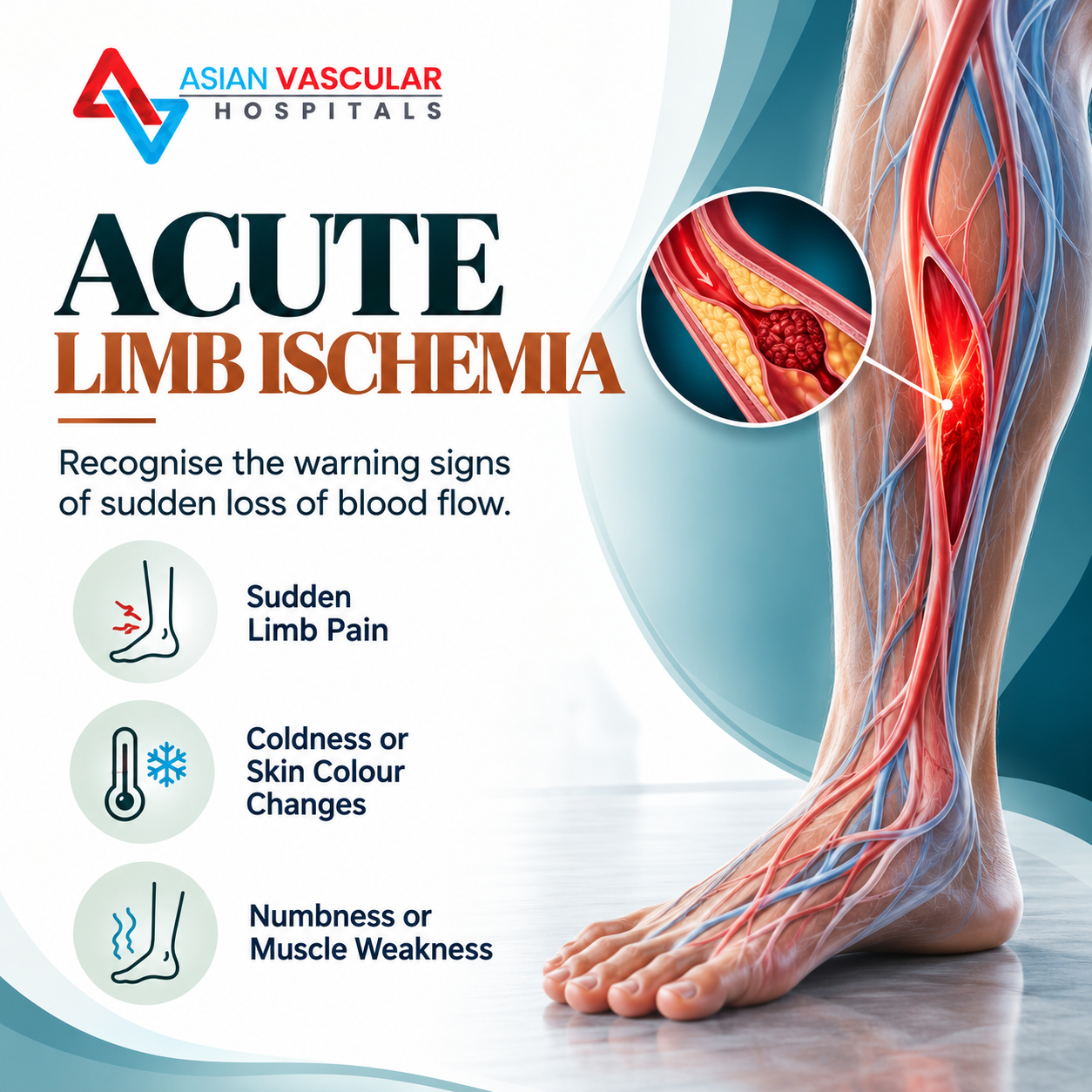
Acute limb ischemia is a medical emergency that occurs when blood flow to an arm or leg suddenly becomes severely reduced or blocked. It can cause sudden pain, coldness, colour changes, numbness and difficulty moving the affected limb.
A blood clot or another arterial blockage may prevent oxygen-rich blood from reaching the tissues. Without timely assessment and appropriate treatment, acute limb ischemia can cause permanent nerve and muscle damage and, in severe cases, limb loss.
If you or someone around you develops sudden, unexplained limb pain with coldness, paleness, numbness or weakness, seek emergency medical care immediately. Do not wait for a routine appointment or rely on an online assessment.
At Asian Vascular Hospitals in Banjara Hills, Hyderabad, patients can contact the hospital at +91 81439 98831 for information about emergency vascular care. If acute limb ischemia is suspected, do not delay emergency assessment while waiting for a callback; use the nearest emergency department or local emergency services.
What Is Acute Limb Ischemia?
Acute limb ischemia (ALI) is a sudden reduction in arterial blood supply to an arm or leg, generally developing over a short period. Arteries carry oxygenated blood from the heart to the body’s tissues. When an artery becomes blocked, the affected muscles, nerves and skin may not receive enough oxygen to function normally.
The condition may develop in a previously healthy artery or in an artery already narrowed by peripheral artery disease (PAD). It can also occur when a blood clot blocks a previously treated artery, stent or bypass graft.
Acute limb ischemia is different from chronic limb-threatening ischemia, which usually develops over time and may cause persistent rest pain, non-healing wounds or tissue damage. Both conditions require specialist vascular care, but acute limb ischemia needs immediate emergency evaluation.
Acute Limb Ischemia Symptoms: Warning Signs You Should Not Ignore
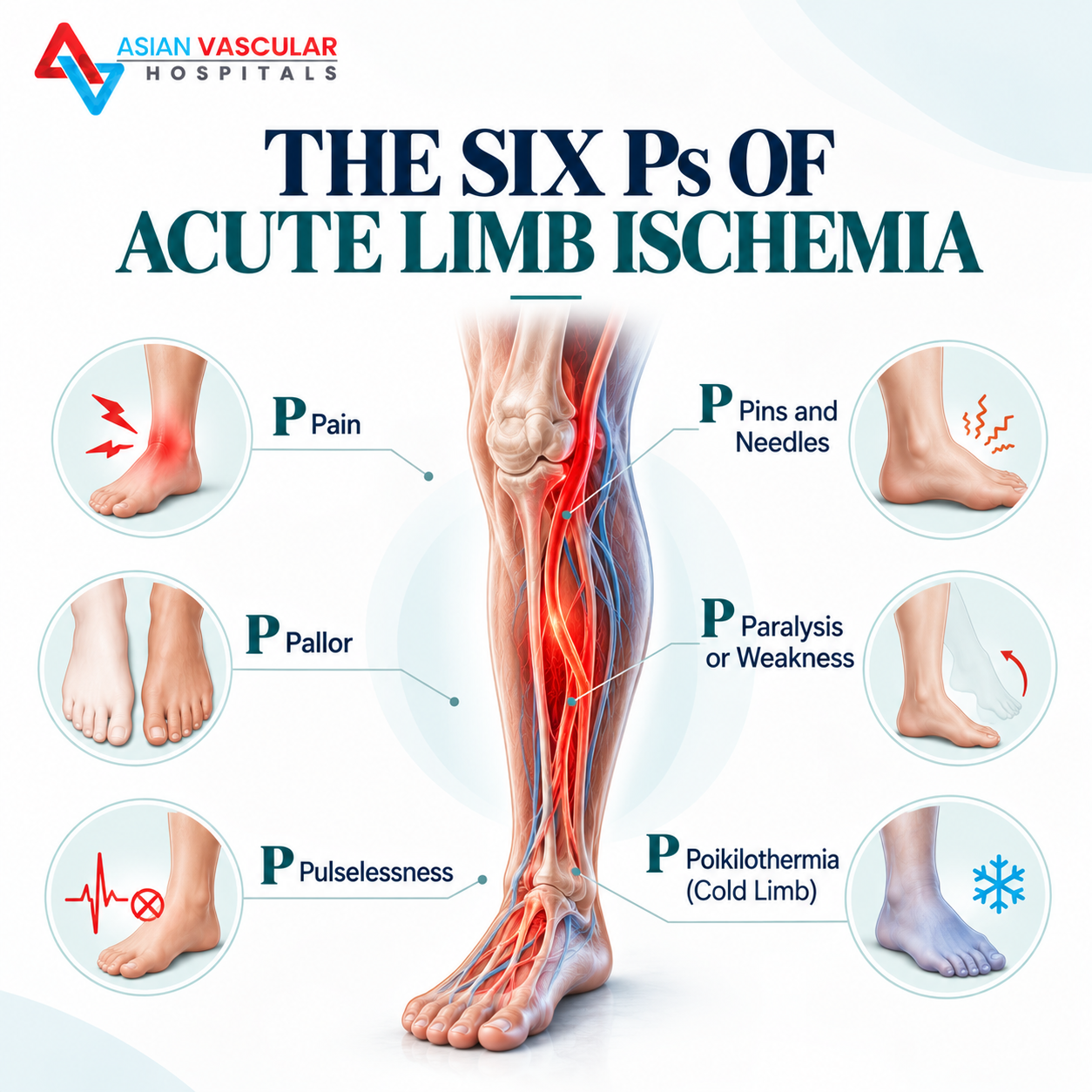
Symptoms can begin suddenly and may worsen quickly. A commonly used clinical description is the “six Ps” of acute limb ischemia.
1. Sudden, Severe Pain
The affected leg or arm may develop intense pain, including pain at rest. It may feel very different from ordinary muscle soreness or pain caused by exercise.
2. Pallor or a Change in Skin Colour
The affected foot, leg, hand or arm may appear unusually pale. In some cases, the skin may develop a bluish or mottled appearance.
3. Pulselessness
The pulse below the blockage may become weak or absent. This requires clinical assessment; patients should not attempt to diagnose arterial blockage by checking their own pulse.
4. Paraesthesia: Tingling or Numbness
Reduced blood supply can affect nerve function, causing pins and needles, tingling or loss of sensation in the affected limb.
5. Paralysis or Muscle Weakness
Difficulty moving the toes, foot, fingers or hand is a particularly concerning sign. New weakness or loss of movement may indicate that the limb is immediately threatened.
6. Poikilothermia: Unusual Coldness
The affected limb may feel noticeably colder than the opposite limb. A suddenly cold foot accompanied by pain, colour change or numbness should be treated as an emergency warning sign.
Important: You do not need to experience all six symptoms. The absence of one or more signs does not rule out acute limb ischemia. Seek immediate emergency care if the symptoms suggest a sudden loss of circulation.
What Causes a Sudden Blocked Leg Artery?
Several conditions can cause acute limb ischemia. Identifying the underlying cause helps the treating team determine the appropriate treatment and reduce the risk of another event.
Blood Clot From the Heart or Another Artery
A clot may travel through the bloodstream and become lodged in a limb artery. Certain heart conditions, including atrial fibrillation, can increase the risk of blood clots forming in the heart.
Acute Thrombosis in an Artery Affected by PAD
Peripheral artery disease causes narrowing of arteries, commonly because of atherosclerosis. A clot can form within an already narrowed artery and suddenly reduce blood flow further.
Blockage of a Previous Stent or Bypass Graft
People who have previously undergone arterial angioplasty, stenting or bypass surgery can sometimes develop a blockage in the treated vessel or graft.
Arterial Injury or Other Vascular Conditions
Trauma and certain other arterial disorders can interfere with blood flow. An aneurysm-related clot or material travelling from an aneurysm can also obstruct blood flow to a limb.
Risk factors can include established cardiovascular disease, a history of PAD, certain heart rhythm disorders, previous vascular procedures and smoking. However, acute limb ischemia can occur in different clinical circumstances, so symptoms require urgent assessment regardless of a person’s known risk factors.
How Is Acute Limb Ischemia Diagnosed?
Diagnosis is time-sensitive. The immediate priority is to determine whether the limb is receiving sufficient blood, assess whether its tissues are threatened and decide how urgently blood flow needs to be restored.
1. Emergency Clinical Examination
The medical team assesses the onset and progression of symptoms, skin colour and temperature, sensation, muscle movement and pulses. A handheld Doppler device may be used to assess arterial and venous blood-flow signals.
2. Doppler Ultrasound
Duplex ultrasound may help identify reduced blood flow and locate an arterial blockage. Whether it is appropriate depends on the patient’s condition and how quickly a treatment decision must be made.
3. CT Angiography or Other Vascular Imaging
CT angiography or another imaging method may be used to define the location and extent of the blockage and help plan treatment. However, imaging must not delay urgent treatment when the clinical assessment indicates that immediate intervention is necessary.
4. Assessment of the Underlying Cause
The treating team may investigate possible causes, including heart rhythm problems or other sources of blood clots. These investigations help guide further management but should not delay necessary limb-saving treatment.
Acute Limb Ischemia Treatment: Emergency Options
The goal of acute limb ischemia treatment is to restore blood flow as quickly as clinically appropriate, protect viable tissue and address the cause of the blockage.
Treatment depends on the location of the obstruction, the severity and duration of reduced blood flow, the condition of the limb, the patient’s medical history and the available clinical expertise.
1. Emergency Medication
In hospital, a clinician may administer an anticoagulant such as unfractionated heparin to limit further clot formation, unless it is contraindicated. Anticoagulation is not suitable for every patient and does not, by itself, necessarily remove an existing blockage.
Patients should not start aspirin, blood thinners or clot-dissolving medicines on their own.
2. Catheter-Based Thrombectomy
A specialist may use a catheter-based technique to remove a blood clot from the affected artery. The method depends on the clot, its location and the patient’s clinical condition.
3. Catheter-Directed Thrombolysis
In selected cases, clot-dissolving medication may be delivered through a catheter to the site of the blockage. This approach has specific indications and bleeding risks, so it is not appropriate for everyone.
4. Angioplasty and Stenting
If an underlying narrowing contributes to the blockage, angioplasty or stenting may be considered to improve blood flow. The decision depends on the arterial anatomy and the cause of the obstruction.
5. Surgical Thrombectomy or Arterial Bypass
Open surgery may be required to remove a clot or bypass a blocked arterial segment. The vascular team selects the approach according to the urgency, anatomy, limb viability and the patient’s overall condition.
6. Monitoring After Blood Flow Is Restored
Even after blood flow improves, patients may require close monitoring for complications, including swelling, compartment syndrome, muscle injury and kidney problems. Further treatment may be needed depending on the extent of tissue damage.
Not every patient needs the same procedure. Some limbs may not be salvageable by the time of presentation, and severe irreversible tissue damage may require amputation. Early emergency assessment is important because delays can reduce treatment options.
Why Immediate Treatment Matters
When blood flow is interrupted, muscles and nerves begin to suffer from a lack of oxygen. The degree of damage depends on factors such as the severity and duration of the blockage and the availability of alternative blood-flow pathways.
Delayed treatment can increase the risk of:
- Permanent nerve damage or loss of sensation.
- Muscle injury and reduced limb function.
- Tissue death and gangrene.
- Major procedures or amputation in severe cases.
- Systemic complications associated with extensive tissue injury.
Prompt treatment can improve the opportunity to restore circulation when the limb remains salvageable, but no treatment can guarantee limb preservation or complete recovery.
Acute Limb Ischemia vs Chronic Limb-Threatening Ischemia
Both conditions involve critically reduced blood supply, but the onset and presentation differ.
| Feature | Acute Limb Ischemia | Chronic Limb-Threatening Ischemia |
|---|---|---|
| Onset | Sudden or rapidly developing | Persistent or progressive |
| Common warning signs | Sudden pain, coldness, pallor, numbness or weakness | Persistent rest pain, non-healing wounds or tissue loss |
| Urgency | Immediate emergency assessment | Urgent specialist vascular assessment |
| Treatment goal | Restore blood flow urgently when appropriate | Improve circulation, address wounds and reduce tissue-loss risk |
These conditions cannot be reliably distinguished by symptoms alone. A sudden deterioration in someone with existing PAD or chronic limb-threatening ischemia should also be treated as a possible emergency.
For more information about the chronic condition, read our guide to chronic limb-threatening ischemia treatment in Hyderabad.
When Should You Go to the Emergency Department?
Seek emergency medical care immediately if you experience:
- Sudden, severe pain in a leg, foot, arm or hand.
- A limb that becomes unexpectedly cold or pale.
- New numbness, tingling or loss of sensation with other circulation symptoms.
- Sudden weakness or difficulty moving the foot, toes, hand or fingers.
- A rapid change in the colour or function of a limb, particularly if you have known PAD or a history of vascular procedures.
Do not wait to see whether symptoms improve overnight. Do not use a routine appointment, a home remedy or an online consultation as a substitute for emergency assessment.
Emergency Vascular Care in Hyderabad
Acute limb ischemia requires prompt assessment by a clinical team experienced in vascular emergencies. Treatment decisions depend on how severely blood flow is affected, whether the limb remains viable and which approach is most appropriate for the individual patient.
Asian Vascular Hospitals is located in Banjara Hills, Hyderabad. For information about its vascular services, contact the hospital at +91 81439 98831. If acute limb ischemia is suspected, proceed directly to emergency care rather than waiting for a routine consultation or confirmation of appointment availability.
Explore the hospital’s peripheral artery disease treatment service and learn more about peripheral vascular surgery in Hyderabad.
For information about care for severe circulation problems and tissue damage, visit the wound healing and limb-salvage service.
Frequently Asked Questions
- All Post
- blog
Related posts:
 Aneurysm Treatment in Hyderabad: Expert Care for Your Vascular Health
 Best Vascular Surgeon – Everything You Need to Know Before Choosing One
 Varicose Veins Treatment Cost – Affordable Laser Surgery in Hyderabad
 Peripheral Neuropathy: Causes, Symptoms, and Treatment Options
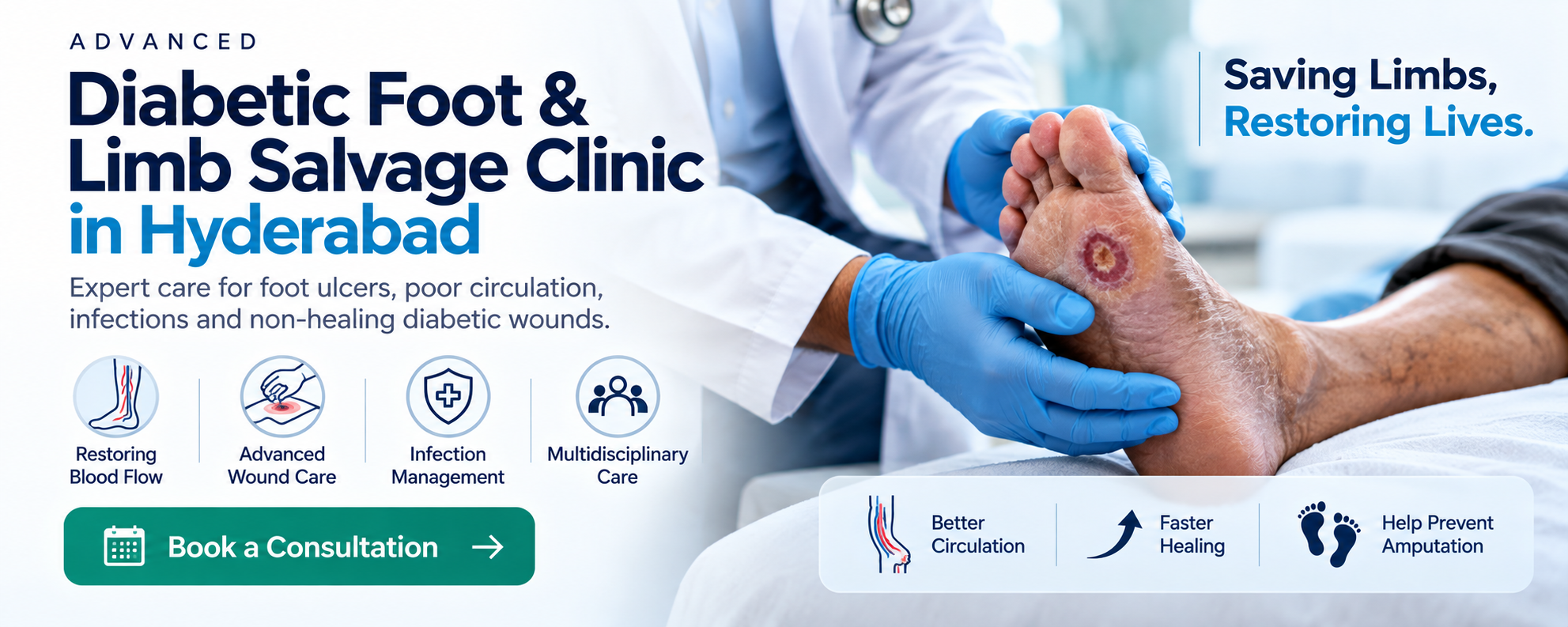
 🦶 Diabetic Foot Care at Asian Vascular Hospitals, Hyderabad
 Vascular Surgeon in Karimnagar: Advanced Vascular Care for Healthier Living
 Vascular Surgeon in Bhuvanagiri: Advanced Vein & Artery Care
 Varicose Veins Medical Treatment – Advanced Options for Lasting Relief