

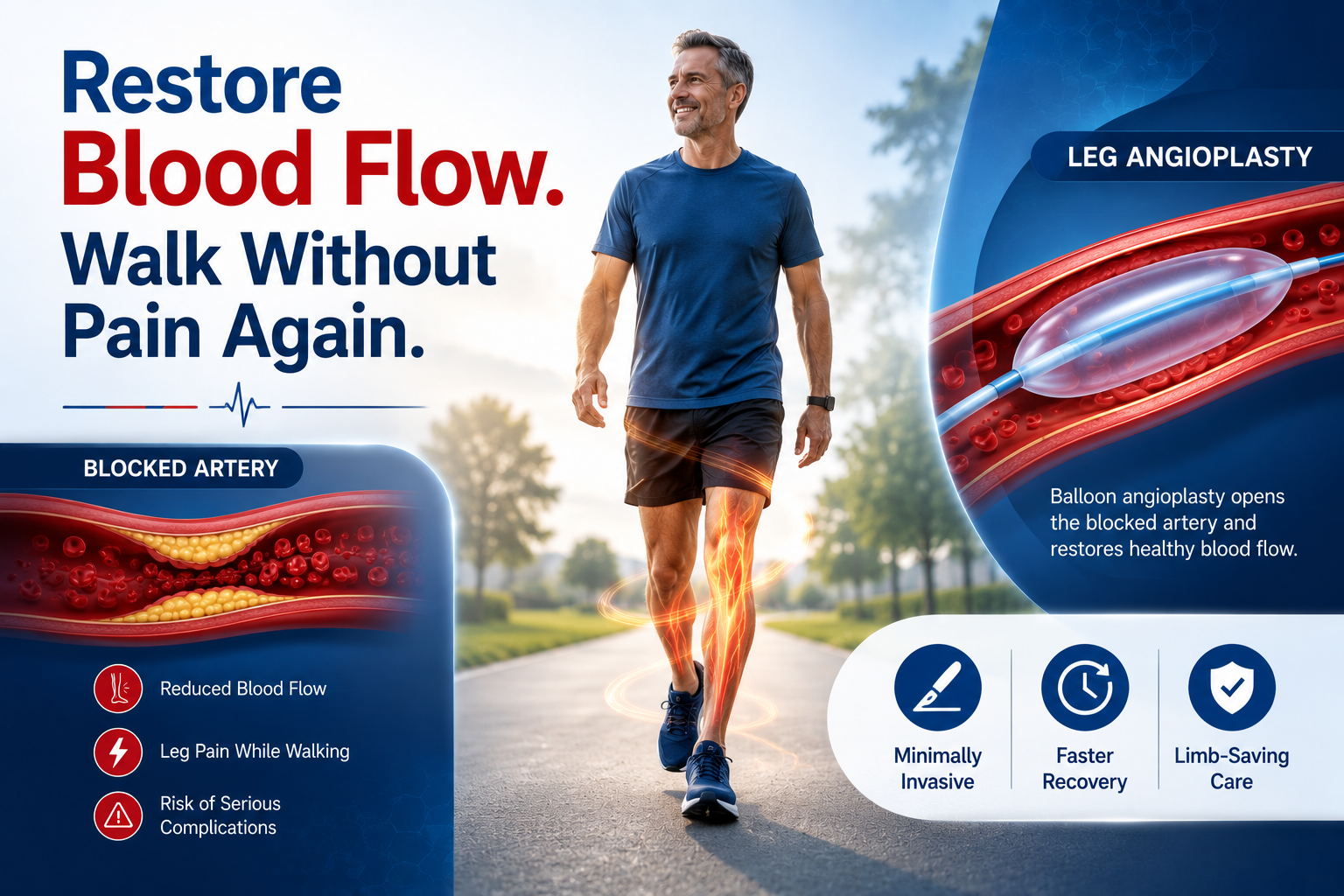
Blocked arteries in the legs can reduce blood flow and cause pain, numbness, slow wound healing, and difficulty walking. Modern vascular care now allows many patients to avoid major surgery through leg angioplasty — a minimally invasive procedure that restores circulation quickly and safely.
Understanding how the procedure works can help patients seek treatment before circulation problems become severe.
What Is Leg Angioplasty?
Leg angioplasty is a minimally invasive vascular procedure used to open narrowed or blocked arteries in the legs. A small balloon is inserted through a catheter to improve blood flow, and in some cases a stent is placed to keep the artery open long-term.
Why Patients Choose Leg Angioplasty
Many patients worry that blocked arteries always require major surgery. However, modern balloon angioplasty leg procedures are designed to restore circulation with:
- Smaller incisions
- Faster recovery
- Minimal pain
- Shorter hospital stay
For many patients, leg angioplasty improves walking ability and helps prevent serious complications like ulcers or limb loss.
Signs You May Need Leg Angioplasty
Doctors may recommend leg angioplasty if you experience:
- Leg pain while walking
- Cramping in calves or thighs
- Cold feet
- Non-healing foot wounds
- Reduced walking distance
- Severe circulation problems
Patients with diabetes and smoking history are at particularly high risk of blocked leg arteries.
How Blocked Leg Arteries Affect Circulation
When plaque builds inside arteries, blood flow to the legs becomes restricted.
This may lead to:
- Muscle pain during walking
- Poor oxygen supply to tissues
- Slow wound healing
- Increased infection risk
Without timely treatment, severe circulation loss can threaten limb health.
How the Leg Angioplasty Procedure Works
Modern leg angioplasty is performed using catheter-based vascular techniques.
Step-by-step procedure:
- A small catheter is inserted through the groin or arm
- The catheter is guided to the blocked artery
- A balloon is inflated to open the blockage
- Blood flow improves immediately
This balloon angioplasty leg procedure is usually completed without major surgical cuts.
When Is Stent Placement Needed?
In some patients, doctors perform stent placement leg procedures after angioplasty.
A stent is:
- A small mesh tube
- Placed inside the artery
- Designed to keep the vessel open long-term
Stents are commonly used when:
- Arteries are severely narrowed
- Blockages are long
- Re-narrowing risk is high
Modern stent placement leg procedures improve long-term circulation outcomes.
Benefits of Leg Angioplasty
Compared to traditional surgery, leg angioplasty offers several advantages:
✔ Minimally invasive treatment
✔ Faster recovery time
✔ Less pain and scarring
✔ Short hospital stay
✔ Improved walking ability
✔ Better wound healing
Most patients return to routine activities relatively quickly after treatment.
Recovery After Leg Angioplasty
Recovery after leg angioplasty is usually smooth when patients follow medical guidance.
Recovery recommendations:
- Walk regularly
- Avoid smoking
- Control diabetes and cholesterol
- Take prescribed blood thinners
- Attend follow-up vascular visits
Proper lifestyle management improves long-term results after balloon angioplasty leg treatment.
Risks of Delaying Treatment
Ignoring blocked arteries may lead to:
- Severe circulation loss
- Non-healing ulcers
- Infections
- Gangrene
- Amputation risk
Early leg angioplasty helps restore blood flow before irreversible damage develops.
Who Is a Good Candidate for Leg Angioplasty?
Doctors may recommend leg angioplasty for patients with:
- Peripheral Artery Disease (PAD)
- Severe walking pain
- Poor circulation
- Diabetic foot wounds
- Artery blockages confirmed on scans
A vascular specialist determines whether stent placement leg treatment is also required.
A diabetic patient with severe calf pain and a non-healing toe wound was diagnosed with blocked leg arteries. After minimally invasive leg angioplasty, blood flow improved immediately and the wound healed successfully over the following weeks.
When Should You Consult a Vascular Specialist?
Seek evaluation if you experience:
- Pain while walking short distances
- Foot wounds that heal slowly
- Coldness in one foot
- Persistent numbness or weakness
- Leg pain that worsens over time
Early treatment can protect circulation and prevent major complications.
📞 Advanced Leg Angioplasty Treatment in Hyderabad
If you are experiencing symptoms of blocked leg arteries, early treatment can restore circulation and improve mobility.
At Asian Vascular Hospitals, advanced leg angioplasty, balloon angioplasty leg, and stent placement leg procedures are performed using modern minimally invasive vascular technology.
Led by Dr. G. V. Praveen Kumar, the hospital specializes in limb-saving vascular care and complex artery disease management.
📞 Call Now: +91 81439 98831
🌐 Visit: asianvascularhospitals.com
🚑 24/7 vascular emergency care available
Early circulation treatment can help save your limb and improve your quality of life.
- All Post
- blog
Related posts:
 Vascular Surgeon Vijayawada – Advanced Care by Dr. G.V. Praveen Kumar
 Early Stage Diabetic Foot Ulcer – Catch It Before It Gets Serious
 🧠 Peripheral Neuropathy Test – Detect Nerve Damage Early & Protect Your Health
 Laser Treatment for Varicose Veins Near Me – Asian Vascular Hospitals
 🌟 Best Treatment for Peripheral Neuropathy – Asian Vascular Hospitals
 Vascular Surgeon in Medchal: Advanced Care for Healthy Circulation
 Diabetic Foot Shoes: Comfort & Protection for Every Step
 👣 Podiatrist Hyderabad – Expert Foot & Ankle Care at Asian Vascular Hospitals