

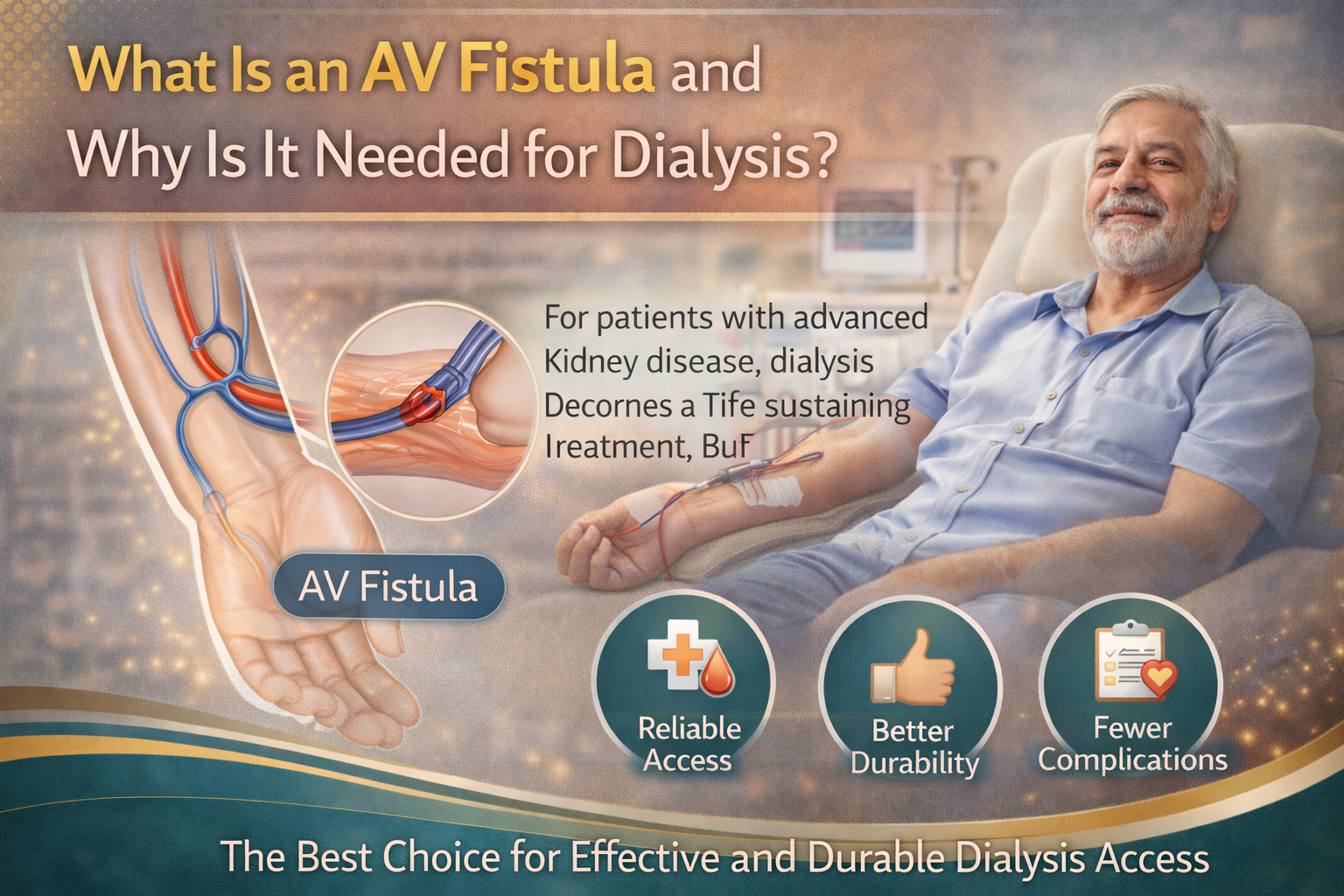
For patients with advanced kidney disease, dialysis becomes a life-sustaining treatment. But dialysis requires a safe and reliable way to access the bloodstream. That’s where an AV fistula for dialysis plays a crucial role—it is the most preferred and long-lasting access option.
What Is an AV Fistula for Dialysis?
An AV fistula for dialysis is a surgically created connection between an artery and a vein, usually in the arm. This connection increases blood flow, making the vein stronger and suitable for repeated needle access during dialysis.
Unlike temporary solutions, an AV fistula for dialysis provides a durable, low-risk pathway for efficient blood filtration.
Why Is an AV Fistula Needed for Dialysis?
Dialysis requires blood to flow out of the body, get filtered, and return safely. An AV fistula for dialysis supports this process by providing:
- High blood flow for effective dialysis
- Strong veins that can handle repeated use
- Lower risk of infection compared to catheters
Because of these benefits, doctors consider an AV fistula for dialysis the best long-term option for patients undergoing regular dialysis.
What Are the Different Dialysis Access Types?
There are three main dialysis access types used in kidney failure treatment:
1. AV Fistula
- Created using your own blood vessels
- Long-lasting and safest option
- Preferred by specialists
2. AV Graft
- Uses a synthetic tube to connect artery and vein
- Faster to use than fistula
- Slightly higher risk of infection
3. Dialysis Catheter
- Temporary access placed in a large vein
- Used in emergencies
- Higher complication risk
Among all dialysis access types, an AV fistula for dialysis offers the best long-term outcomes.
Fistula vs Graft: What’s the Difference?
Patients often ask about fistula vs graft options.
AV Fistula:
- Made from natural vessels
- Lower infection risk
- Longer lifespan
AV Graft:
- Synthetic connection
- Can be used sooner
- Higher maintenance needed
While both are used in kidney failure treatment, doctors usually recommend an AV fistula for dialysis whenever possible.
When Should You Get an AV Fistula?
An AV fistula for dialysis should ideally be created before dialysis starts.
Early placement allows:
- Time for the fistula to mature (4–8 weeks)
- Better preparation for long-term dialysis
- Reduced need for temporary catheters
Planning ahead improves outcomes in kidney failure treatment.
Benefits of Choosing AV Fistula
Choosing an AV fistula for dialysis offers:
- Lower infection risk
- Better dialysis efficiency
- Fewer hospital visits
- Long-term reliability
These benefits make it the most recommended option among all dialysis access types.
Expert Dialysis Access Care in Hyderabad
If you or your loved one is preparing for dialysis, early planning is essential. At Asian Vascular Hospitals, specialized care is available for AV fistula for dialysis, including advanced evaluation and fistula creation.
Led by Dr. G. V. Praveen Kumar, the team provides expert guidance on choosing the right access type for safe and effective treatment.
📞 Call: +91 81439 98831
🌐 Visit: asianvascularhospitals.com
🚑 24/7 vascular care available
Plan early—better dialysis outcomes start with the right access.
- All Post
- blog






Related posts:
 Aneurysm Treatment in Hyderabad: Expert Care for Your Vascular Health
 Best Vascular Surgeon – Everything You Need to Know Before Choosing One
 Varicose Veins Treatment Cost – Affordable Laser Surgery in Hyderabad
 Peripheral Neuropathy: Causes, Symptoms, and Treatment Options
 🦶 Diabetic Foot Care at Asian Vascular Hospitals, Hyderabad
 Vascular Surgeon in Karimnagar: Advanced Vascular Care for Healthier Living
 Vascular Surgeon in Bhuvanagiri: Advanced Vein & Artery Care
 Varicose Veins Medical Treatment – Advanced Options for Lasting Relief