

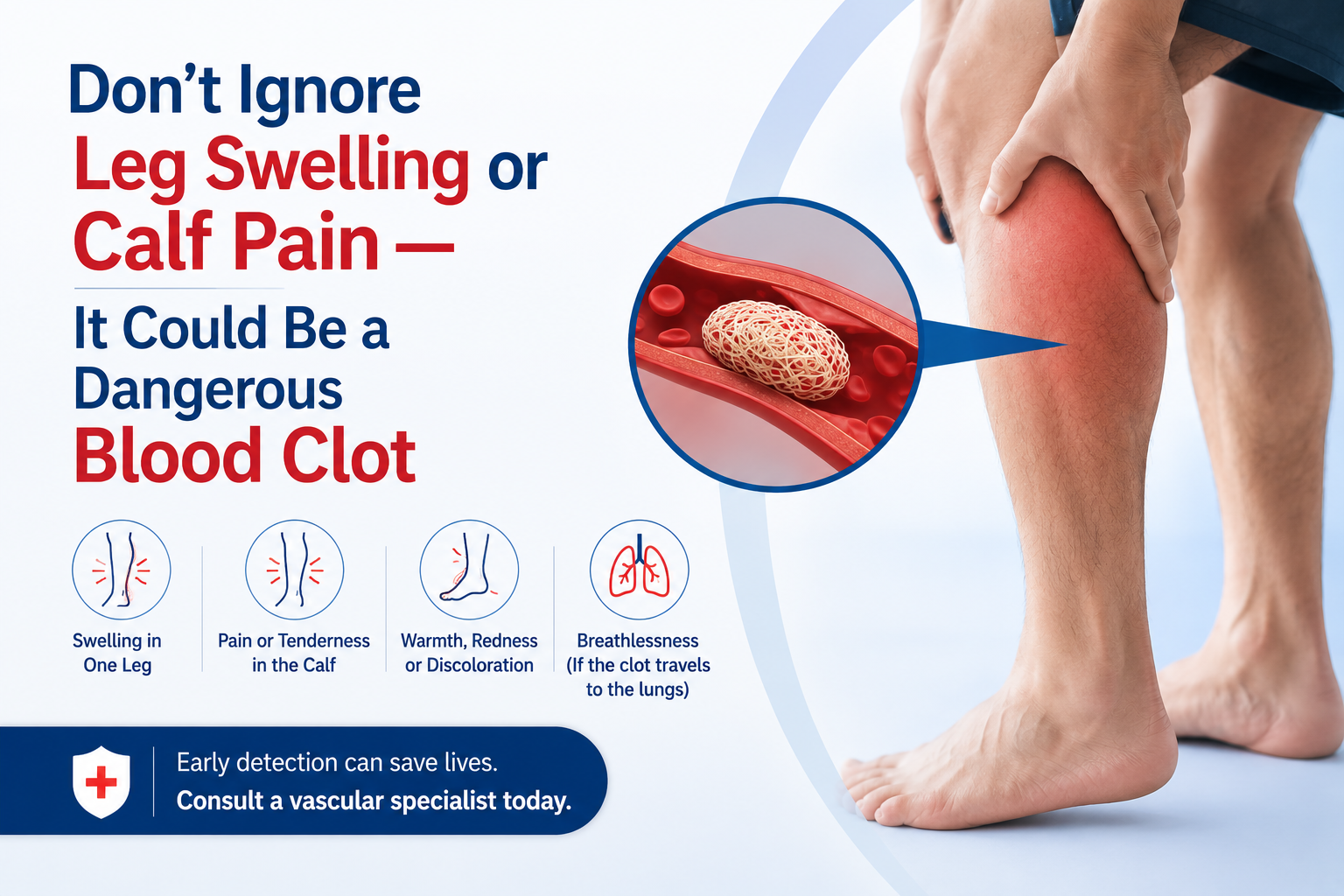
A blood clot in leg can become dangerous if ignored. While some leg pain or swelling may seem harmless, certain symptoms can indicate a deep vein thrombosis (DVT)—a condition where a clot blocks blood flow inside a deep vein.
Early diagnosis is critical because a blood clot in leg can travel to the lungs and become life-threatening.
When Is a Blood Clot in Leg Dangerous?
A blood clot in leg becomes serious when it causes sudden swelling, persistent calf pain, warmth, redness, or breathing difficulty. These signs may indicate DVT and require immediate medical attention.
What Does a Blood Clot in Leg Feel Like?
The symptoms of a blood clot in leg often develop gradually, but they can also appear suddenly.
Common warning signs include:
- Swelling in one leg
- Calf pain or tenderness
- Warm skin over the affected area
- Red or darkened skin color
- Tightness while walking
Many people mistake early dvt symptoms in leg for muscle strain or fatigue.
How to Differentiate a Blood Clot from Normal Leg Pain
Not every leg cramp is dangerous. However, a blood clot in leg usually has specific patterns.
Typical clot-related symptoms:
- Pain in only one leg
- Swelling that does not improve
- Pain worsening while standing or walking
- Persistent calf tightness
Unlike routine soreness, leg pain clot symptoms often continue even after rest.
What Causes Blood Clots in the Leg?
Several conditions increase the risk of developing a blood clot in leg.
Common causes include:
- Long travel or prolonged sitting
- Recent surgery or hospitalization
- Smoking
- Obesity
- Pregnancy
- Diabetes or vascular disease
In many patients, unexplained swelling in calf causes concern only after symptoms worsen.
Why You Should Never Ignore DVT Symptoms
Ignoring a blood clot in leg can lead to serious complications.
Risks include:
- Pulmonary embolism (clot reaching lungs)
- Chronic leg swelling
- Skin damage and ulcers
- Long-term circulation problems
Early recognition of dvt symptoms in leg can prevent emergency situations.
When Should You See a Specialist Immediately?
Seek urgent medical care if you have:
- Sudden swelling in one leg
- Severe calf pain without injury
- Warmth and redness in the leg
- Shortness of breath with leg pain
These symptoms may indicate a dangerous blood clot in leg requiring immediate treatment.
How Is a Blood Clot Diagnosed?
Doctors diagnose a blood clot in leg using:
- Doppler ultrasound
- Blood tests
- CT imaging in selected cases
Early imaging helps confirm dvt symptoms in leg and guides the right treatment quickly.
A middle-aged office worker ignored persistent calf pain after a long flight, assuming it was muscle fatigue. A Doppler scan later confirmed a blood clot in leg. Early treatment prevented the clot from reaching the lungs.
❓ FAQs
1. Can a blood clot in leg go away on its own?
Some clots may stabilize, but untreated DVT can become dangerous. Medical evaluation is essential.
2. Is calf pain always a blood clot?
No, but persistent one-sided pain with swelling should be checked for dvt symptoms in leg.
3. What is the first sign of a blood clot in leg?
Swelling and calf discomfort are often the earliest warning signs.
Get Immediate DVT Evaluation in Hyderabad
If you notice symptoms of a blood clot in leg, early diagnosis can prevent life-threatening complications. At Asian Vascular Hospitals, advanced Doppler evaluation and emergency vascular care are available for DVT and circulation disorders.
Led by Dr. G. V. Praveen Kumar, the hospital specializes in rapid diagnosis and minimally invasive clot management.
📞 Call Now: +91 81439 98831
🌐 Visit: asianvascularhospitals.com
🚑 24/7 emergency vascular care available
Don’t ignore warning signs—early treatment can save your life.
- All Post
- blog


Related posts:
 Vascular Surgeon Vijayawada – Advanced Care by Dr. G.V. Praveen Kumar
 Early Stage Diabetic Foot Ulcer – Catch It Before It Gets Serious
 🧠 Peripheral Neuropathy Test – Detect Nerve Damage Early & Protect Your Health
 Laser Treatment for Varicose Veins Near Me – Asian Vascular Hospitals
 🌟 Best Treatment for Peripheral Neuropathy – Asian Vascular Hospitals
 Vascular Surgeon in Medchal: Advanced Care for Healthy Circulation
 Diabetic Foot Shoes: Comfort & Protection for Every Step
 👣 Podiatrist Hyderabad – Expert Foot & Ankle Care at Asian Vascular Hospitals