


A diabetic foot wound does not automatically mean that surgery is required. However, when an infection spreads into deeper tissues, dead tissue develops, an abscess forms, bone becomes infected, or blood flow to the foot is severely reduced, antibiotics and wound care alone may not be enough.
Knowing when diabetic foot surgery is necessary is important because delaying appropriate intervention can allow infection and tissue damage to progress. At the same time, the goal of modern diabetic foot care is to use the least extensive procedure appropriate for the patient’s condition while protecting as much healthy tissue and function as possible.
When Does a Diabetic Foot Infection Need Surgery?
A diabetic foot infection may require surgery when infected or dead tissue needs to be removed, an abscess needs to be drained, or infection has spread into deeper structures. Urgent surgical assessment is recommended for severe infections and for moderate infections complicated by extensive gangrene, deep abscess, necrotising infection, compartment syndrome, or severe lower-limb ischaemia.
Surgery may be considered when:
- Infection is spreading despite appropriate medical treatment
- There is extensive dead or necrotic tissue
- Gangrene is present
- A deep abscess has developed
- Infection has spread beneath the fascia
- Bone or joint infection requires surgical management
- There is severe tissue damage
- Severe peripheral artery disease is preventing adequate healing
- Infected tissue needs to be removed to control the source of infection
The exact decision depends on the infection’s severity, circulation, wound depth, overall health, and the amount of viable tissue remaining.
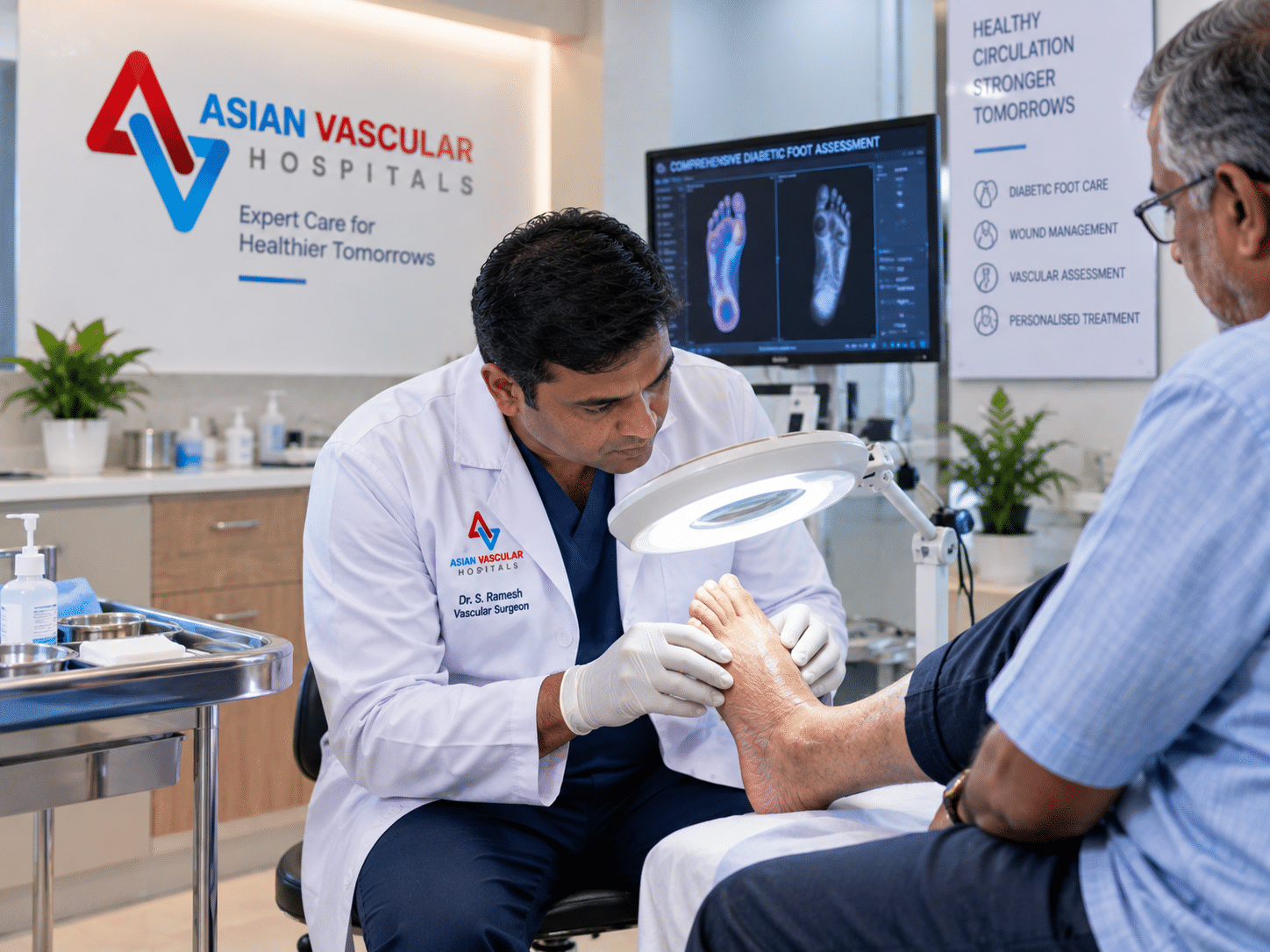
Why Aren’t Antibiotics Always Enough?
Antibiotics can treat susceptible bacteria causing a diabetic foot infection, but they cannot replace the physical removal or drainage of infected and necrotic tissue when source control is required. In moderate and severe infections, current IWGDF/IDSA guidance recommends considering early surgery combined with antibiotics to remove infected and necrotic tissue.
Think of treatment as addressing two different problems:
Antibiotics → Treat the bacterial infection
Surgery → Remove or drain infected, dead, or damaged tissue when necessary
In some patients, both are required.
What Are the Warning Signs That Surgery May Be Needed?
Rapidly worsening infection, gangrene, deep swelling, foul-smelling drainage, extensive tissue death, or signs of severe circulation problems can indicate that a diabetic foot needs urgent specialist assessment. Severe infection can spread through the interconnected compartments of the foot and may progress rapidly if not properly treated.
Blackening Toes or Gangrene
Blackening of a toe or part of the foot can indicate tissue death and requires urgent medical evaluation. Gangrene may occur in association with severe infection, inadequate blood supply, or both.
When gangrene is extensive or accompanied by infection, surgical and vascular specialists may need to assess the foot urgently to determine whether drainage, tissue removal, and/or restoration of blood flow is necessary.
Deep Abscess or Pus Collection
A deep abscess is a collection of infected material within tissue and may require surgical drainage because antibiotics may not adequately control an undrained collection. The IWGDF/IDSA guideline recommends urgent surgical consultation when a diabetic foot infection is associated with signs suggesting a deep abscess.
Dead or Necrotic Tissue
Necrotic tissue can provide an environment where infection persists and can prevent healthy tissue from healing properly. Removing non-viable tissue may therefore be an important part of infection control and wound management.
The amount of tissue that needs to be removed depends on the extent of infection and the boundary between viable and non-viable tissue.
Infection That Is Spreading
Rapidly spreading redness, swelling, increasing drainage, systemic illness, or worsening tissue destruction can indicate a more serious infection.
Severe infections require urgent assessment because diabetic foot infections can extend from superficial tissues into fascia, muscles, joints, and bone.

What Types of Diabetic Foot Surgery Are Available?
Diabetic foot surgery is not one single procedure. The operation depends on what is causing the problem and how much tissue is affected.
1. Surgical Debridement
Debridement involves removing infected, damaged, or non-viable tissue to help control infection and create a healthier wound environment.
For moderate and severe diabetic foot infections, early surgery combined with antibiotics may be considered to remove infected and necrotic tissue.
The objective is not simply to remove tissue. Where clinically appropriate, surgeons aim to preserve viable tissue and maintain as much foot function as possible.
2. Abscess Drainage
If infection has produced a collection of pus deep within the foot, drainage may be necessary to control the source of infection.
An undrained deep abscess can continue to place pressure on surrounding tissues and allow infection to spread.
3. Surgery for Infected Bone
When infection reaches the bone, the condition is known as diabetic foot osteomyelitis. Some carefully selected cases can be treated with antibiotics alone, but surgical removal of infected bone may be considered depending on the location, extent of infection, circulation, exposed bone, and presence of other complications.
Current guidance notes that antibiotic-only treatment may be considered in selected forefoot osteomyelitis cases when there is no PAD, no exposed bone, and no immediate need for drainage.
This is why the decision cannot be based on the wound’s appearance alone.
4. Limited Toe or Forefoot Procedures
When infection or tissue death is confined to a specific toe or part of the forefoot, a limited procedure may sometimes be considered instead of a more extensive operation.
The exact approach depends on the extent of non-viable tissue, infection, circulation, and the ability of the remaining tissue to heal.
5. Vascular Procedures Before or Alongside Foot Surgery
Poor blood circulation can significantly affect whether a diabetic foot wound heals after treatment. When PAD is present alongside an infected ulcer or gangrene, current guidance recommends urgent assessment by both surgical and vascular specialists to determine whether drainage and/or revascularisation is required.
This is particularly important when there is severe ischaemia.
Restoring adequate blood flow may be an essential part of a limb-salvage strategy in appropriately selected patients.
Does Every Diabetic Foot Ulcer Need Surgery?
No. A diabetic foot ulcer does not automatically require an operation. Some ulcers and infections can be managed with appropriate wound care, pressure relief, infection treatment, blood-sugar management, and monitoring when there is no indication for urgent surgical intervention.
The decision changes when there is deep infection, extensive gangrene, an abscess, necrotic tissue, severe ischaemia, or other complications.
For example, current guidance allows consideration of antibiotic treatment without surgery for selected forefoot osteomyelitis when there is no PAD, no exposed bone, and no immediate need for incision and drainage.
What Happens Before Diabetic Foot Surgery?
Before deciding on surgery, doctors assess the infection, wound depth, blood supply, tissue viability, and whether deeper structures are involved. This helps determine whether medical treatment alone is appropriate or whether an intervention is required.
Assessment may include:
- Detailed examination of the wound
- Evaluation of infection severity
- Assessment of foot circulation
- Vascular studies when PAD is suspected
- Blood tests when clinically indicated
- Wound or tissue sampling for microbiological assessment
- X-rays when bone involvement is suspected
- MRI when osteomyelitis remains uncertain after initial assessment
The treatment plan should be based on the individual patient’s findings rather than simply the size or appearance of the ulcer.
Why Is Blood Circulation So Important Before Surgery?
Adequate blood flow is essential for tissue healing. If significant PAD is present, simply treating the infection or removing damaged tissue may not address the underlying problem.
This is why a diabetic foot with infection and PAD may require both vascular and surgical assessment. The IWGDF/IDSA guideline specifically recommends urgent consultation with surgical and vascular specialists when PAD occurs alongside an infected foot ulcer or gangrene.
Depending on the patient’s vascular anatomy and clinical condition, revascularisation may be considered to improve blood flow.
What Is Limb-Salvage Surgery?
Limb salvage refers to treatment strategies designed to control infection, preserve viable tissue, address poor circulation when necessary, and avoid unnecessary loss of the limb.
The approach can involve a combination of:
- Infection control
- Surgical debridement
- Abscess drainage
- Limited removal of infected tissue
- Treatment of infected bone when necessary
- Vascular assessment
- Revascularisation when indicated
- Wound management
- Pressure offloading
- Diabetes management
The objective is to treat the underlying problem while preserving as much functional tissue as medically possible.
Learn more about our approach to Limb Salvage and Diabetic Foot Care in Hyderabad.
Can Early Treatment Reduce the Risk of Major Amputation?
Early recognition and appropriate treatment are important because severe diabetic foot infections can progress and cause extensive tissue damage. Evidence-based guidelines emphasise prompt assessment, appropriate antibiotics, source control when required, and vascular evaluation when PAD is present.
This does not mean that every patient can avoid amputation. In some cases, extensive non-viable tissue or uncontrolled infection makes amputation medically necessary.
However, timely specialist assessment provides an opportunity to determine whether the infection can be controlled and whether the limb can be preserved.
When Should You Seek Emergency Medical Attention?
A diabetic foot should receive urgent medical assessment when there is rapid deterioration, blackening of tissue, extensive gangrene, severe swelling, spreading infection, deep wound involvement, foul-smelling discharge, or symptoms suggesting severe circulation problems.
Seek urgent medical attention if you notice:
- Blackening of the toes or foot
- Rapidly spreading redness or swelling
- Foul-smelling or increasing discharge
- Severe or rapidly worsening pain
- A deep or rapidly enlarging ulcer
- Exposed bone or tendon
- Fever, chills, confusion, or significant weakness
- Sudden changes in foot colour or temperature
- A known diabetic foot wound combined with severe circulation problems
Do not wait for severe pain before seeking care. Diabetic neuropathy can reduce protective sensation and allow serious foot problems to progress with surprisingly little pain.
Diabetic Foot Surgery at Asian Vascular Hospitals, Hyderabad
At Asian Vascular Hospitals in Banjara Hills, Hyderabad, diabetic foot problems can be assessed from both a wound and vascular perspective, particularly when poor circulation may be contributing to delayed healing.
The hospital’s limb-salvage focused approach considers the condition of the wound, infection, blood supply, and viability of the surrounding tissue when determining an appropriate treatment strategy.
For patients with complex diabetic foot problems, the aim is to identify the problem early and determine whether conservative treatment, surgical intervention, vascular treatment, or a combination is appropriate.
Frequently Asked Questions
- All Post
- blog









Related posts:
 Trusted Vascular Hospital in Hyderabad: Where Advanced Care Meets Compassion
 Best Vascular Surgeon Near Me – Expert Care at Asian Vascular Hospitals
 Surgical Treatment for Varicose Veins – Walk Pain-Free Again
 Peripheral Neuropathy Doctors Near Me: How to Find the Right Specialist
 Best Vascular Surgeon in Warangal: Advanced Vascular Care You Can Trust
 Vascular Surgeon in Vikarabad: Advanced Care for Vein & Artery Health
 👣 Diabetic Foot Ulcer Treatment – Save Limbs with Expert Care at Asian Vascular Hospitals
 👣 Foot Specialist Doctor in Hyderabad – Expert Foot & Vascular Care at Asian Vascular Hospitals