

Pain while walking, cold feet, or non-healing wounds may not be simple aging problems. In many patients, these are warning signs of blocked leg arteries—a serious circulation condition that reduces blood flow to the legs and feet.
Early diagnosis and timely treatment can prevent severe complications including ulcers, infections, and limb loss.
What Are Blocked Leg Arteries?
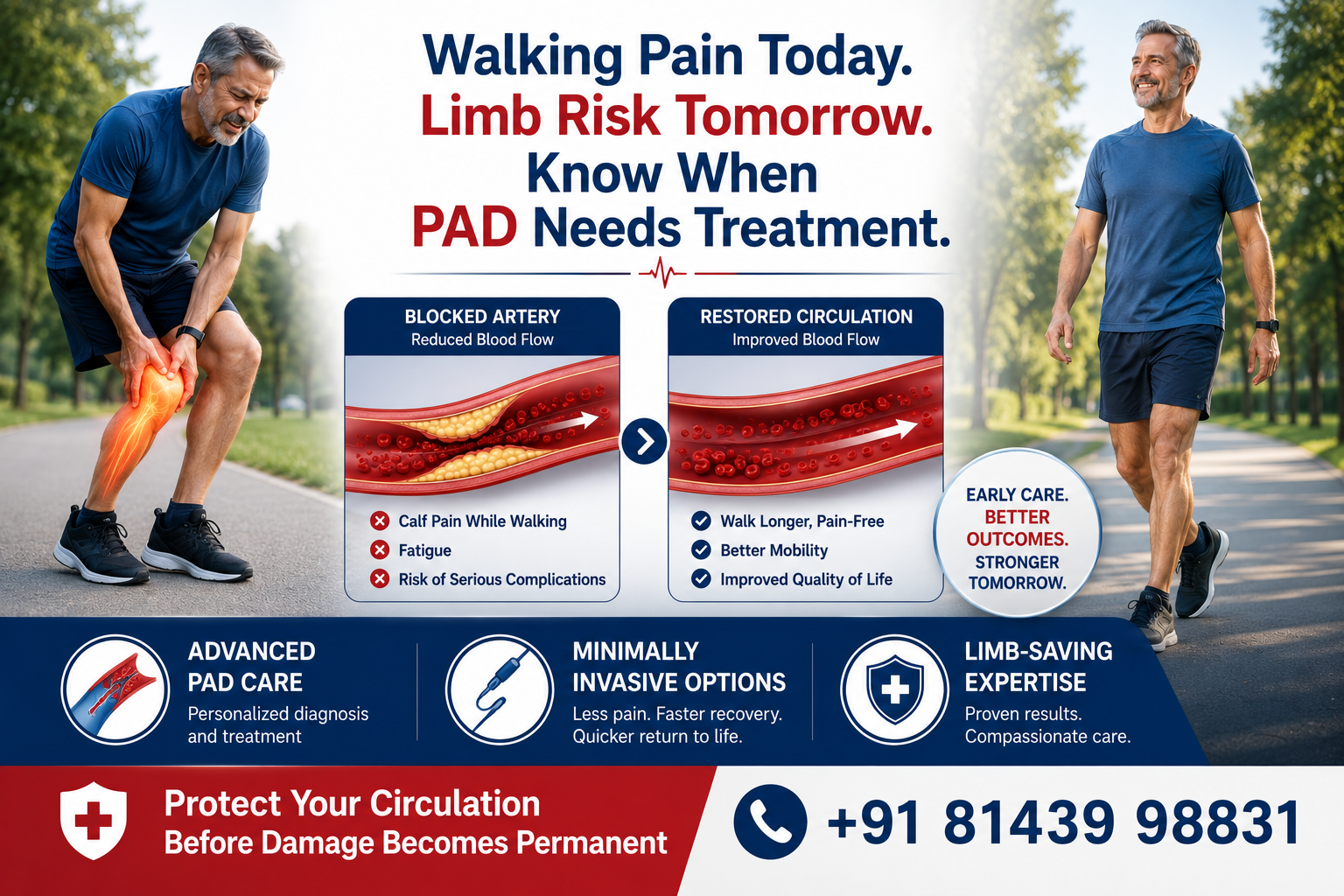
Blocked leg arteries occur when fatty deposits narrow or obstruct blood vessels supplying the legs. This reduced circulation can cause pain, numbness, slow wound healing, and severe mobility problems if left untreated.
Why Blocked Leg Arteries Should Never Be Ignored
Poor blood flow affects the muscles, skin, and tissues of the legs.
Without treatment, artery blockage in legs can lead to:
- Severe walking pain
- Non-healing ulcers
- Tissue damage (gangrene)
- Increased amputation risk
Early vascular treatment can restore circulation before permanent damage develops.
Early Symptoms Most Patients Miss
The earliest signs of blocked leg arteries are often mild and gradual.
Common symptoms include:
- Leg pain while walking
- Cramping in calves or thighs
- Cold feet
- Numbness or weakness
- Reduced walking distance
- Slow-healing foot wounds
Many people ignore these circulation problems until symptoms become severe.
What Does PAD-Related Leg Pain Feel Like?
Pain caused by blocked leg arteries is different from normal muscle strain.
Typical warning pattern:
- Pain starts during walking
- Improves with rest
- Returns repeatedly with activity
This is called claudication and is one of the most important signs of artery blockage in legs.
Who Is at Higher Risk?
Certain conditions significantly increase the risk of blocked leg arteries.
High-risk groups include:
- Diabetic patients
- Smokers
- People with high cholesterol
- Patients with high blood pressure
- Individuals above 50 years
- Patients with obesity or heart disease
Patients with diabetes should be especially careful because reduced sensation may hide serious circulation problems.
Advanced Symptoms That Need Immediate Care
As blood flow worsens, symptoms become more dangerous.
Serious warning signs include:
- Pain even at rest
- Blackening of toes
- Non-healing ulcers
- Severe coldness in the foot
- Sudden weakness or numbness
Advanced blocked leg arteries require urgent vascular evaluation to avoid limb-threatening complications.
What Causes Artery Blockage in Legs?
The most common cause is atherosclerosis, where plaque builds inside the artery walls.
Other contributing factors:
- Smoking
- Diabetes
- High cholesterol
- High blood pressure
- Sedentary lifestyle
Over time, these conditions worsen circulation problems and reduce oxygen supply to the legs.
How Blocked Leg Arteries Are Diagnosed
A vascular specialist evaluates blood flow using advanced tests.
Diagnostic methods include:
- Doppler ultrasound
- Ankle-Brachial Index (ABI)
- CT angiography
- Vascular imaging scans
Early diagnosis helps determine the severity of artery blockage in legs and guides treatment planning.
Treatment Options for Blocked Leg Arteries
Modern vascular care offers both non-surgical and minimally invasive solutions.
1. Lifestyle & Medical Management
Early-stage blocked leg arteries may improve with:
- Walking exercise programs
- Smoking cessation
- Cholesterol management
- Blood thinner medications
These approaches help improve circulation and reduce disease progression.
2. Angioplasty for Leg Arteries
A minimally invasive balloon procedure opens narrowed arteries.
Benefits:
- Improved blood flow
- Faster recovery
- Reduced leg pain
- Better wound healing
This is one of the most effective treatments for severe circulation problems.
3. Stent Placement
A small mesh tube is inserted to keep arteries open after angioplasty.
Recommended when:
- Blockages are severe
- Arteries repeatedly narrow
- Long-term blood flow support is needed
4. Bypass Surgery
In advanced cases, bypass surgery creates a new pathway around the blockage.
This may be recommended when minimally invasive procedures are not suitable.
Why Early Treatment Matters
Delayed treatment increases the risk of:
- Chronic pain
- Infection
- Tissue death
- Amputation
Early care for blocked leg arteries improves mobility, circulation, and long-term limb preservation.
A diabetic patient ignored calf pain and foot numbness for months, assuming it was related to aging. A vascular scan later revealed severe artery blockage in legs. After minimally invasive angioplasty, circulation improved and a non-healing foot wound recovered successfully.
When Should You Consult a Vascular Specialist?
You should seek evaluation if you have:
- Persistent walking pain
- Cold feet or numbness
- Foot wounds that heal slowly
- One leg colder than the other
- Reduced walking capacity
These symptoms may indicate worsening circulation problems requiring immediate treatment.
📞 Advanced Treatment for Blocked Leg Arteries in Hyderabad
If you are experiencing symptoms of poor circulation, early vascular treatment can prevent serious complications and improve mobility.
At Asian Vascular Hospitals, advanced diagnosis and minimally invasive treatment are available for blocked leg arteries, PAD, and severe circulation disorders.
Led by Dr. G. V. Praveen Kumar, the hospital specializes in limb-saving vascular care and complex artery disease management.
📞 Call Now: +91 81439 98831
🌐 Visit: asianvascularhospitals.com
🚑 24/7 vascular emergency care available
Early treatment can restore circulation and help save your limb.
- All Post
- blog
Related posts:
 Aneurysm Treatment in Hyderabad: Expert Care for Your Vascular Health
 Best Vascular Surgeon – Everything You Need to Know Before Choosing One
 Varicose Veins Treatment Cost – Affordable Laser Surgery in Hyderabad
 Peripheral Neuropathy: Causes, Symptoms, and Treatment Options
 🦶 Diabetic Foot Care at Asian Vascular Hospitals, Hyderabad
 Vascular Surgeon in Karimnagar: Advanced Vascular Care for Healthier Living
 Vascular Surgeon in Bhuvanagiri: Advanced Vein & Artery Care
 Varicose Veins Medical Treatment – Advanced Options for Lasting Relief