

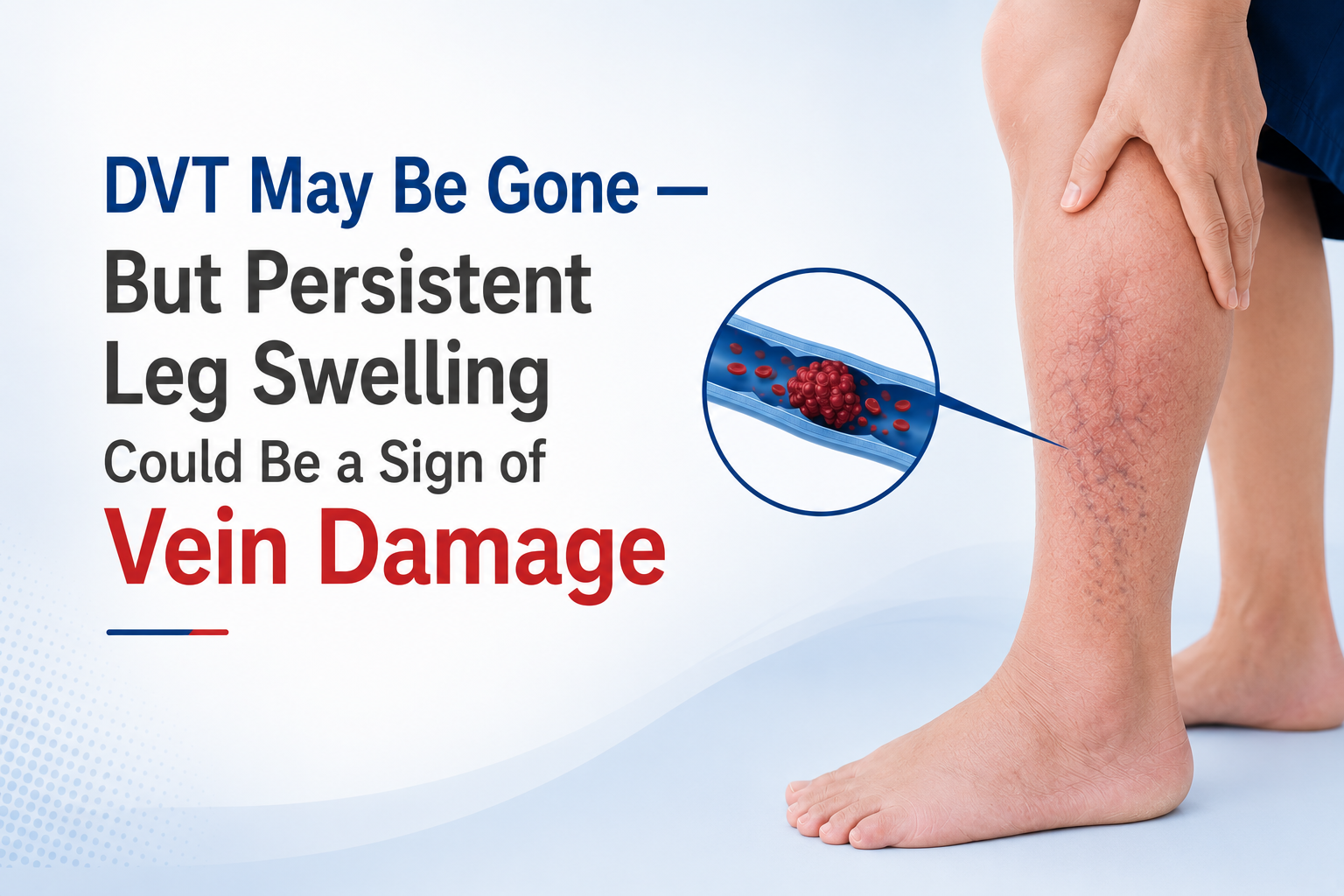
Many patients recover from Deep Vein Thrombosis (DVT) and assume the problem is completely resolved. However, some continue to experience long-term leg discomfort, swelling, and circulation problems months after treatment. This condition is called post thrombotic syndrome and is one of the most common long-term dvt complications.
Early diagnosis and proper vascular care can help control symptoms and improve quality of life.
What Is Post Thrombotic Syndrome?
Post thrombotic syndrome is a chronic circulation problem that develops after Deep Vein Thrombosis damages the veins and valves in the leg. It commonly causes persistent swelling, heaviness, pain, skin discoloration, and discomfort while standing or walking.
Why Post Thrombotic Syndrome Happens After DVT
When a blood clot forms in a deep vein, it can damage the vein walls and valves—even after the clot is treated.
As a result:
- Blood flow becomes inefficient
- Pressure builds inside leg veins
- Fluid collects in the lower limb
- Chronic swelling and pain develop
This ongoing vein damage is why post thrombotic syndrome is considered one of the major long-term dvt complications.
Early Signs Patients Often Ignore
Many patients mistake symptoms for normal recovery after DVT.
Common early symptoms include:
- Persistent heaviness in the leg
- Mild swelling after standing
- Tightness in the calf
- Burning or aching sensation
- Fatigue while walking
Over time, leg swelling after dvt may gradually worsen if circulation problems are not addressed early.
Advanced Symptoms That Need Medical Attention
As post thrombotic syndrome progresses, symptoms can become more severe.
Advanced warning signs:
- Severe leg swelling
- Skin darkening around the ankle
- Hardening of skin tissues
- Pain during daily activities
- Venous ulcers or non-healing wounds
Patients with advanced chronic venous insufficiency may struggle with mobility and long-term discomfort.
How Common Is Post Thrombotic Syndrome?
Studies show many patients develop some degree of post thrombotic syndrome after DVT, especially when:
- Treatment was delayed
- Clots were extensive
- Compression therapy was not used properly
- Multiple DVT episodes occurred
This is why proper follow-up after DVT treatment is extremely important.
The Connection Between DVT and Chronic Venous Insufficiency
One major complication of untreated or severe DVT is chronic venous insufficiency, where veins fail to return blood efficiently toward the heart.
This causes:
- Long-term pressure buildup
- Persistent swelling
- Skin changes
- Reduced circulation
Patients with severe leg swelling after dvt often develop signs of venous insufficiency over time.
How Post Thrombotic Syndrome Is Diagnosed
A vascular specialist evaluates symptoms and circulation using:
- Doppler ultrasound
- Venous blood flow assessment
- Physical examination
- Evaluation of previous DVT history
Early diagnosis helps prevent worsening vein damage and chronic disability.
Treatment Options for Post Thrombotic Syndrome
While damaged veins may not fully recover, modern treatment can significantly improve symptoms.
Treatment approaches include:
- Compression stockings
- Medications to improve circulation
- Lifestyle modifications
- Exercise and walking therapy
- Minimally invasive venous procedures
- Advanced vascular interventions in selected cases
Managing post thrombotic syndrome early reduces progression and improves daily comfort.
Lifestyle Changes That Help Improve Symptoms
Patients can often reduce symptoms with long-term circulation care.
Helpful habits include:
- Walking regularly
- Avoiding prolonged sitting
- Elevating legs during rest
- Maintaining healthy body weight
- Using prescribed compression therapy consistently
These steps help control leg swelling after dvt and improve circulation.
Why Early DVT Treatment Reduces Future Complications
One of the best ways to prevent post thrombotic syndrome is early and effective DVT management.
Timely treatment:
- Reduces clot burden
- Protects vein valves
- Improves long-term blood flow
- Lowers risk of chronic venous insufficiency
Patients treated early by experienced vascular specialists often have better long-term outcomes.
A patient treated for DVT continued experiencing swelling and heaviness in one leg months later. A vascular evaluation confirmed post thrombotic syndrome caused by vein valve damage. With compression therapy and minimally invasive vascular care, symptoms improved and ulcer formation was prevented.
When Should You See a Vascular Specialist?
You should seek evaluation if you experience:
- Persistent leg swelling after dvt
- Chronic heaviness or aching
- Skin darkening near the ankle
- Pain while standing or walking
- Non-healing wounds
Early treatment helps prevent worsening chronic venous insufficiency and long-term mobility issues.
📞 Advanced Post-Thrombotic Syndrome Care in Hyderabad
If you continue experiencing swelling or discomfort after DVT, specialized vascular care can help improve circulation and prevent complications.
At Asian Vascular Hospitals, advanced evaluation and minimally invasive treatment are available for post thrombotic syndrome, venous insufficiency, and long-term DVT complications.
Led by Dr. G. V. Praveen Kumar, the hospital specializes in chronic vein disorders and limb-preserving vascular care.
📞 Call Now: +91 81439 98831
🌐 Visit: asianvascularhospitals.com
🚑 24/7 vascular care available
Early circulation care can prevent long-term vein damage and improve quality of life.
- All Post
- blog

Related posts:
 Looking for a Vascular Surgeon Near You? Hyderabad’s Trusted Experts Are Here
 Top Vascular Surgeon in Hyderabad – Expert Care That Heals & Protects
 👣 Diabetic Foot Ulcer Symptoms: Don’t Miss These Early Warning Signs!
 👣 Find the Best Diabetic Foot Doctor Near Me – Advanced Care at Asian Vascular Hospitals
 Vascular Surgeon in Nellore: Advanced Vascular Care for Healthy Living
 Vascular Surgeon in Bhongir: Advanced Vein & Artery Care
 👣 Best Podiatrist Doctor in Hyderabad – Complete Foot Care Under One Roof
 🩸 Best Hospital for Varicose Veins Treatment in Hyderabad — Asian Vascular Hospitals