

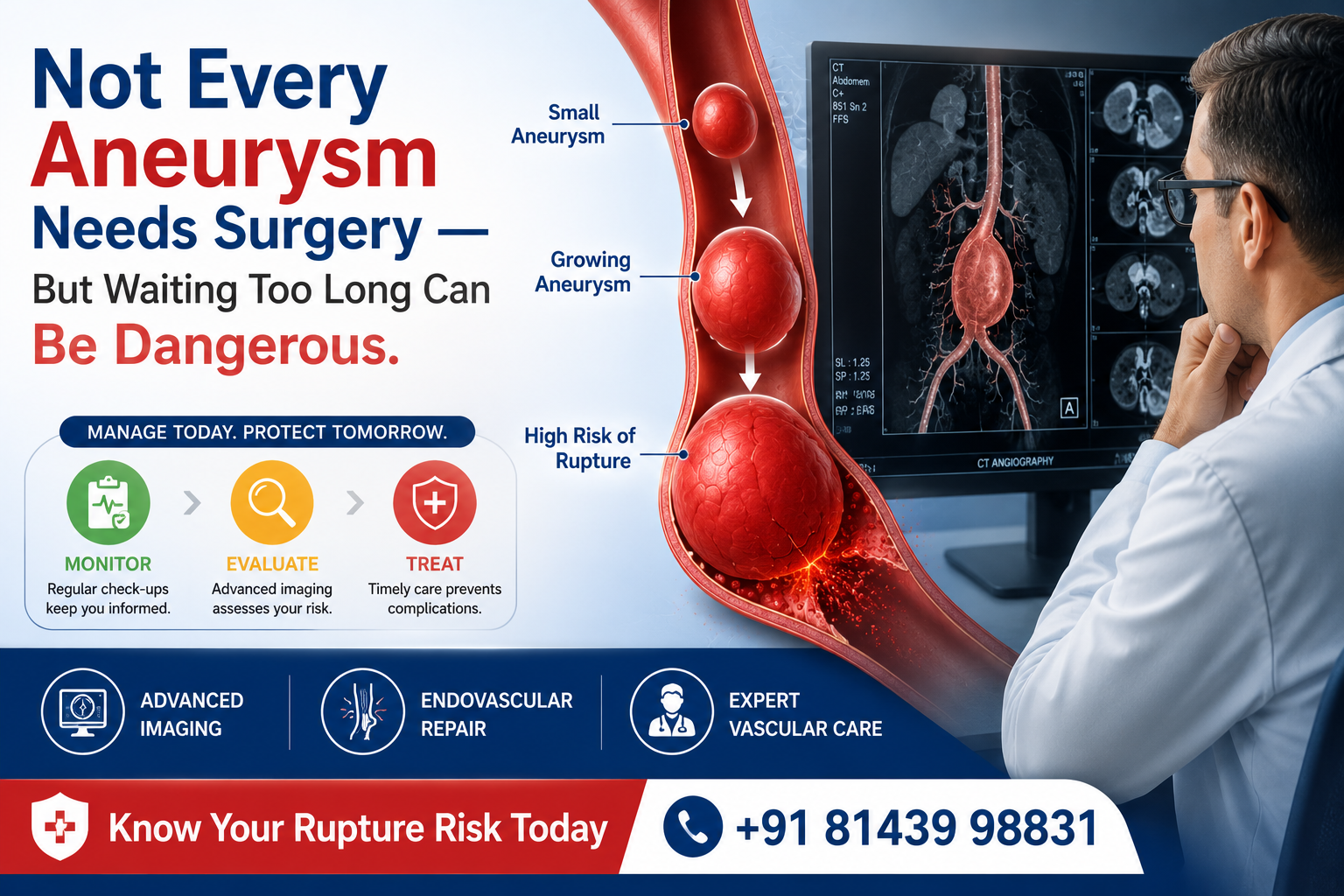
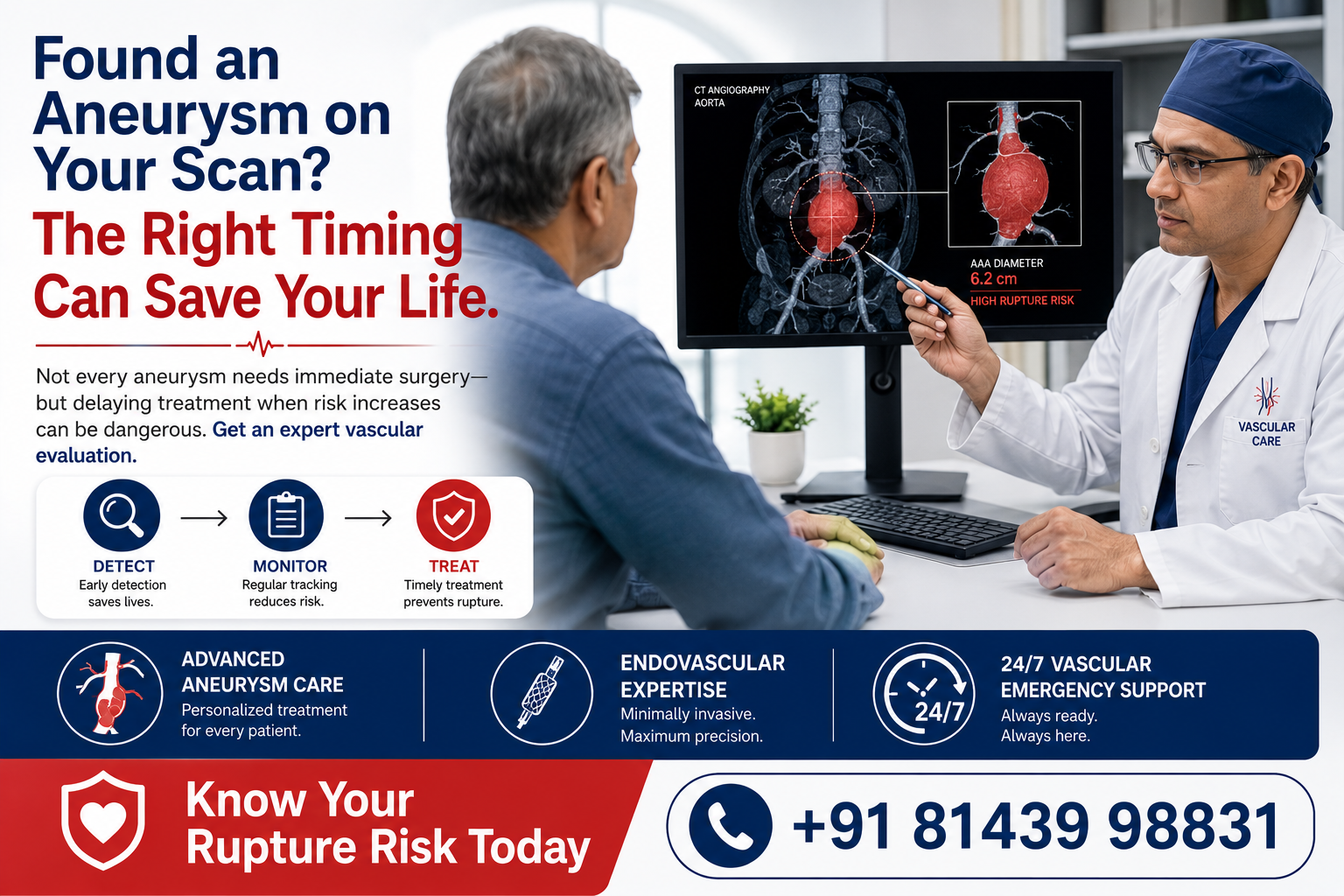
An aneurysm often develops silently without causing symptoms. Many patients discover it accidentally during a scan and immediately ask the same question:
“Do I need aneurysm surgery right away?”
The answer depends on several factors, including the aneurysm’s size, growth rate, location, and risk of rupture. While some aneurysms can be monitored safely, others require urgent intervention to prevent life-threatening complications.
At Asian Vascular Hospitals, patients receive advanced aneurysm evaluation and personalized treatment planning to determine the safest course of action.
🚨 The Most Important Question: Is My Aneurysm Dangerous?
Not every aneurysm needs immediate treatment.
However, certain aneurysms carry a significantly higher risk of rupture.
Factors doctors evaluate include:
✔ Aneurysm size
✔ Growth over time
✔ Symptoms present
✔ Location of the aneurysm
✔ Overall health condition
✔ Family history
The goal is to identify high-risk aneurysms before they become an emergency.
What Exactly Is an Aneurysm?
An aneurysm occurs when a weakened section of an artery wall begins to bulge outward due to blood pressure.
Think of it like a weak spot on a tire.
Over time, that bulge may:
- Remain stable
- Continue enlarging
- Rupture unexpectedly
When rupture occurs, severe internal bleeding can follow, making early detection critical.
When Does an Aneurysm Need Surgery?
Aneurysm surgery is typically recommended when the aneurysm reaches a size associated with higher rupture risk, grows rapidly, causes symptoms, or shows signs of instability. Treatment decisions are based on aneurysm size risk, location, and patient-specific factors.
Understanding Aneurysm Size Risk
One of the strongest predictors of rupture is aneurysm size risk.
Generally:
Lower Risk
- Small aneurysms
- Stable on follow-up scans
- No symptoms
Moderate Risk
- Gradually enlarging aneurysms
- Multiple cardiovascular risk factors
Higher Risk
- Large aneurysms
- Rapid enlargement
- Pain or pressure symptoms
- Evidence of vessel wall weakness
The larger the aneurysm becomes, the higher the potential danger.
Warning Signs That Should Never Be Ignored
Many aneurysms produce no symptoms until complications occur.
However, some patients experience:
Possible warning signs:
- Deep abdominal pain
- Back pain
- Pulsating sensation in the abdomen
- Chest discomfort
- Unexplained leg circulation problems
If symptoms suddenly worsen, emergency medical evaluation is essential.
Why Waiting Too Long Can Be Risky
One of the biggest misconceptions is:
“If I’m not having symptoms, I’m safe.”
Unfortunately, aneurysm rupture can occur without significant warning.
Potential complications include:
- Internal bleeding
- Organ damage
- Circulatory collapse
- Emergency surgery
- Life-threatening outcomes
This is why regular monitoring and timely aneurysm surgery decisions are crucial.
Modern Treatment Options for Aneurysms
Treatment has evolved dramatically over the last decade.
Today, many patients avoid traditional open surgery through minimally invasive vascular procedures.
Treatment options may include:
Endovascular Aneurysm Repair (EVAR)
A catheter-based procedure that places a graft inside the artery.
Benefits:
- Smaller incisions
- Faster recovery
- Reduced hospital stay
Open Aneurysm Surgery
Recommended for selected complex cases.
Benefits:
- Durable long-term repair
- Suitable for certain anatomical conditions
The best treatment depends on the patient’s anatomy and aneurysm size risk profile.
What Happens During Aneurysm Evaluation?
Before recommending aneurysm surgery, vascular specialists assess:
Advanced diagnostic testing:
- CT Angiography
- Doppler Ultrasound
- Vascular Imaging
- Blood flow assessment
This helps determine:
- Exact aneurysm location
- Size measurements
- Growth pattern
- Rupture risk
Recovery After Aneurysm Surgery
Recovery varies depending on treatment type.
After minimally invasive repair:
- Shorter hospital stay
- Earlier walking
- Faster return to routine activities
After open surgery:
- Longer recovery period
- Additional monitoring
- Gradual rehabilitation
Most patients experience significant improvement once the aneurysm is successfully treated.
Real Patient Scenario
A 64-year-old patient underwent a routine health screening and was found to have an enlarging abdominal aneurysm. Although symptom-free, imaging showed increasing aneurysm size risk over successive scans.
Rather than waiting for complications, the patient underwent planned endovascular aneurysm surgery. Recovery was smooth, and the aneurysm was repaired before rupture risk increased further.
This highlights why monitoring alone is not always enough.
Why Specialized Vascular Care Matters
Aneurysm treatment requires experience, advanced imaging, and precise decision-making.
At Asian Vascular Hospitals, patients benefit from:
✔ Dedicated vascular specialists
✔ Advanced aneurysm imaging
✔ Endovascular treatment expertise
✔ Minimally invasive vascular procedures
✔ Emergency vascular care
✔ Personalized treatment planning
📞 Consult an Aneurysm Specialist Before It Becomes an Emergency
If you have been diagnosed with an aneurysm—or have been told you need monitoring—early specialist evaluation can help determine the safest treatment strategy.
Led by Dr. G. V. Praveen Kumar, Asian Vascular Hospitals provides advanced aneurysm diagnosis, surveillance, and surgical management for complex vascular conditions.
📞 Call Now: +91 81439 98831
🌐 Visit: asianvascularhospitals.com
🚑 24/7 Emergency Vascular Care Available
- All Post
- blog


Related posts:
 Aneurysm Treatment in Hyderabad: Expert Care for Your Vascular Health
 Best Vascular Surgeon – Everything You Need to Know Before Choosing One
 Varicose Veins Treatment Cost – Affordable Laser Surgery in Hyderabad
 Peripheral Neuropathy: Causes, Symptoms, and Treatment Options
 🦶 Diabetic Foot Care at Asian Vascular Hospitals, Hyderabad
 Vascular Surgeon in Karimnagar: Advanced Vascular Care for Healthier Living
 Vascular Surgeon in Bhuvanagiri: Advanced Vein & Artery Care
 Varicose Veins Medical Treatment – Advanced Options for Lasting Relief