

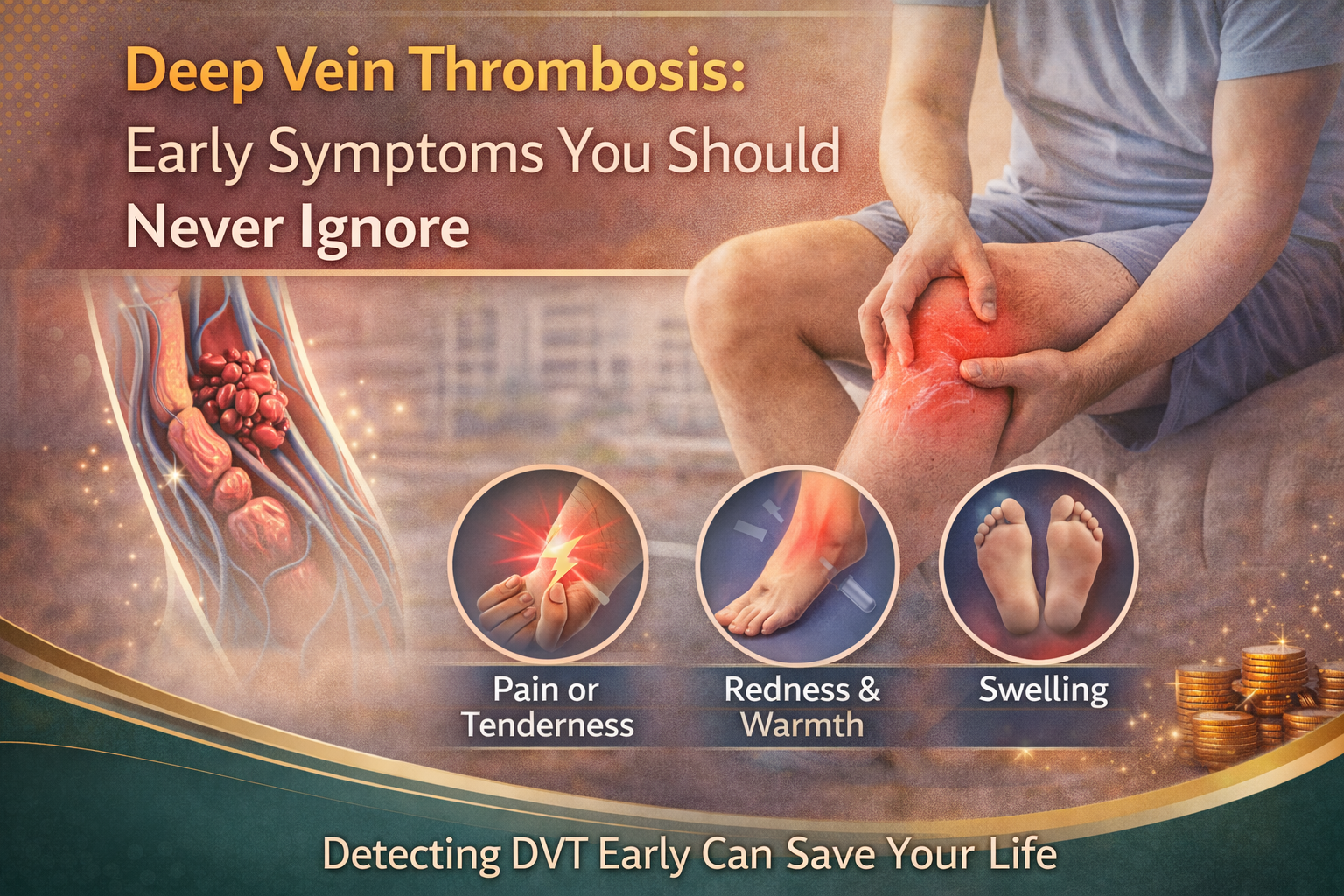
Deep vein thrombosis (DVT) is a serious condition where a blood clot forms in a deep vein, usually in the leg. Recognizing deep vein thrombosis symptoms early can prevent life-threatening complications like pulmonary embolism.
What Are Deep Vein Thrombosis Symptoms?
Deep vein thrombosis symptoms often start subtly but can worsen quickly. The most common signs include leg swelling, pain, warmth, and skin discoloration.
Many patients ignore early dvt signs, mistaking them for muscle strain or fatigue. However, identifying deep vein thrombosis symptoms early is critical for safe and effective treatment.
Early Warning Signs You Should Not Ignore
Watch for these dvt warning signs, especially in one leg:
- Sudden swelling in the calf or thigh
- Persistent leg pain or cramping
- Warmth in the affected area
- Red or darkened skin
- Visible surface veins
These leg blood clot symptoms may appear gradually or suddenly. If you notice any combination of these, seek medical attention immediately.
Why Does DVT Happen?
DVT occurs when blood flow slows down or becomes abnormal. Common causes include:
- Prolonged sitting or bed rest
- Recent surgery or injury
- Pregnancy or hormonal changes
- Obesity or smoking
- Underlying medical conditions
In many cases, swelling in leg causes confusion, but not all swelling is harmless. Persistent or unexplained swelling should be evaluated for deep vein thrombosis symptoms.
Who Is at Higher Risk?
You may be at higher risk of developing deep vein thrombosis symptoms if you:
- Travel long distances frequently
- Have a sedentary lifestyle
- Have a history of blood clots
- Are recovering from surgery
- Have diabetes or vascular disease
Recognizing early dvt signs in high-risk individuals can prevent serious complications.
What Happens If DVT Is Ignored?
Ignoring deep vein thrombosis symptoms can lead to:
- Pulmonary embolism (clot reaching lungs)
- Chronic leg swelling
- Skin damage and ulcers
- Long-term vein damage
This is why early detection of leg blood clot symptoms is essential for preventing life-threatening outcomes.
When Should You See a Doctor?
You should seek immediate medical care if you notice:
- Sudden leg swelling with pain
- Difficulty walking due to discomfort
- Skin color changes with warmth
- Unexplained swelling in one leg
Prompt diagnosis using scans can confirm deep vein thrombosis symptoms and allow early treatment.
Get Immediate Evaluation for DVT
If you notice any deep vein thrombosis symptoms, don’t delay care. Early treatment can prevent serious complications. At Asian Vascular Hospitals, advanced diagnostics and emergency care are available for DVT management.
Led by Dr. G. V. Praveen Kumar, the team specializes in early detection and minimally invasive clot management.
📞 Call: +91 81439 98831
🌐 Visit: asianvascularhospitals.com
🚑 24/7 emergency vascular care available
Don’t ignore the signs—early action can save your life.
- All Post
- blog
Related posts:
 Trusted Vascular Hospital in Hyderabad: Where Advanced Care Meets Compassion
 Best Vascular Surgeon Near Me – Expert Care at Asian Vascular Hospitals
 Surgical Treatment for Varicose Veins – Walk Pain-Free Again
 Peripheral Neuropathy Doctors Near Me: How to Find the Right Specialist
 Best Vascular Surgeon in Warangal: Advanced Vascular Care You Can Trust
 Vascular Surgeon in Vikarabad: Advanced Care for Vein & Artery Health
 👣 Diabetic Foot Ulcer Treatment – Save Limbs with Expert Care at Asian Vascular Hospitals
 👣 Foot Specialist Doctor in Hyderabad – Expert Foot & Vascular Care at Asian Vascular Hospitals