

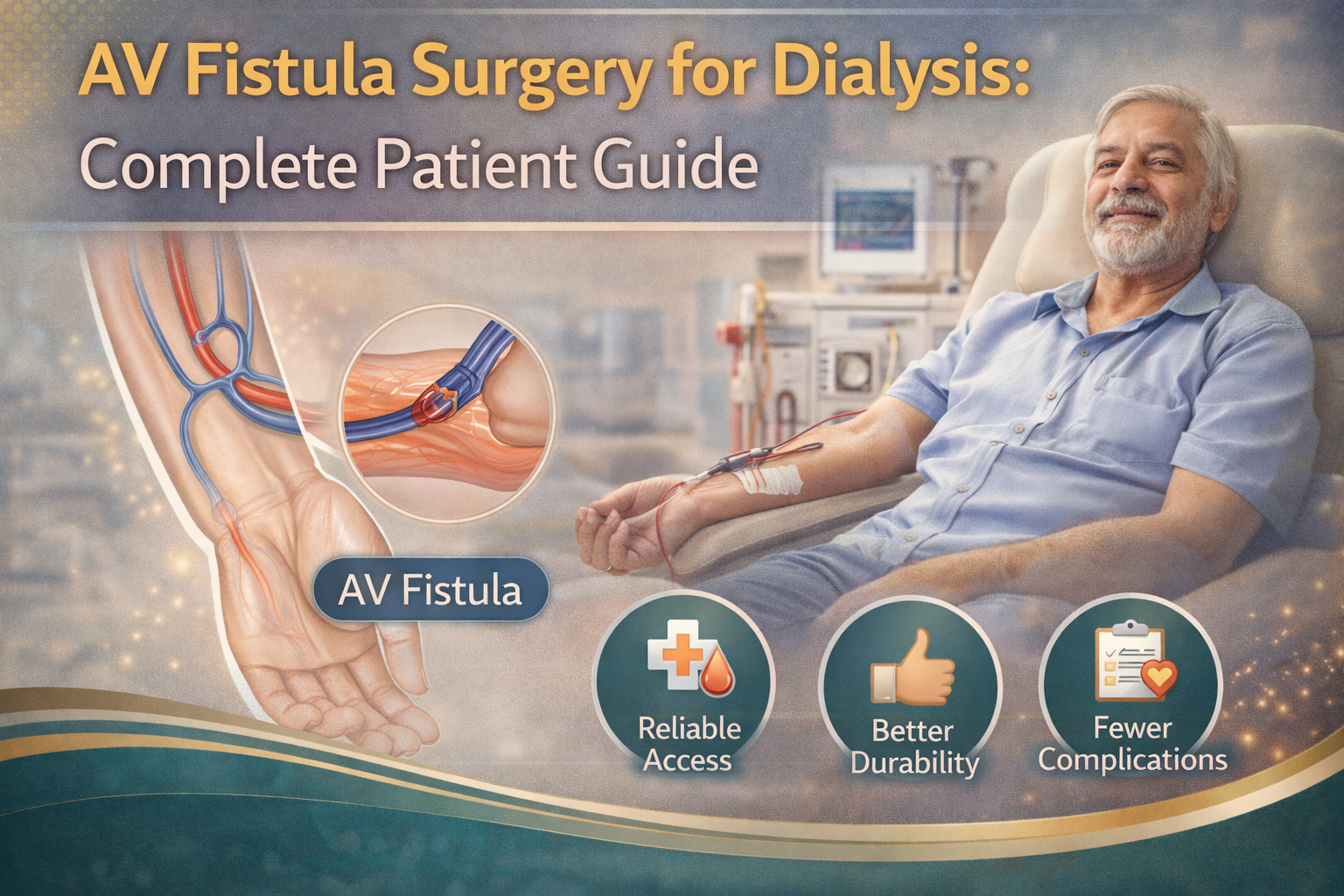
For patients with kidney failure, long-term dialysis requires a reliable access point to the bloodstream. AV fistula surgery is the most preferred and safest method for this purpose, offering better durability and fewer complications compared to other options.
What Is AV Fistula Surgery?
AV fistula surgery is a minor vascular access surgery where an artery and vein are connected—usually in the arm—to create a strong, high-flow vessel for dialysis.
This connection (called fistula creation) allows:
- Efficient blood flow during dialysis
- Repeated needle access
- Lower risk of infection compared to catheters
It is considered the gold standard dialysis fistula procedure for long-term kidney care.
Why Is AV Fistula Preferred for Dialysis?
Among all access types, AV fistula surgery offers the best long-term outcomes.
Key advantages:
- Lower infection risk
- Better blood flow efficiency
- Longer lifespan (years vs months)
- Fewer complications
This makes AV fistula surgery the most recommended option for patients starting or planning dialysis.
How the Procedure Is Performed
AV fistula surgery is usually done under local anesthesia and takes about 1–2 hours.
Step-by-step overview:
- A vascular surgeon identifies suitable blood vessels
- The artery and vein are surgically connected
- Blood flow increases through the vein
- The vein gradually strengthens over time
This dialysis fistula procedure is typically a day-care surgery, meaning patients can go home the same day.
What Happens After Surgery? (Maturation Phase)
After AV fistula surgery, the fistula needs time to mature before it can be used.
Typical timeline:
- 4 to 8 weeks for full maturation
- Vein becomes thicker and stronger
- Regular monitoring is required
Proper care after fistula creation ensures long-term success and smooth dialysis sessions.
Possible Risks and How They Are Managed
Like any vascular access surgery, AV fistula surgery carries some risks, though complications are relatively low.
Possible issues include:
- Infection
- Clotting (blockage)
- Poor maturation
- Swelling or pain
Early detection and follow-up help manage these effectively.
Care Tips After AV Fistula Surgery
To protect your fistula after AV fistula surgery, follow these simple guidelines:
- Avoid heavy lifting with the affected arm
- Keep the area clean and dry
- Do not allow blood pressure checks on that arm
- Check for pulse (thrill) daily
- Report swelling or redness immediately
Proper care improves the success of your dialysis fistula procedure.
When Should You Consider AV Fistula Surgery?
Doctors recommend AV fistula surgery when:
- You are diagnosed with advanced kidney failure
- Dialysis is planned in the near future
- Long-term vascular access is required
Early fistula creation is important to avoid emergency catheter use.
Expert AV Fistula Surgery in Hyderabad
If you or your loved one needs dialysis access, choosing the right team is critical. At Asian Vascular Hospitals, advanced AV fistula surgery is performed with precision and long-term success in mind.
Led by Dr. G. V. Praveen Kumar, the hospital specializes in vascular access surgery and complex fistula creation procedures.
📞 Call: +91 81439 98831
🌐 Visit: asianvascularhospitals.com
🚑 24/7 vascular care available
Plan early for dialysis—safe access begins with expert care.
- All Post
- blog






Related posts:
 Vascular Surgeon Vijayawada – Advanced Care by Dr. G.V. Praveen Kumar
 Early Stage Diabetic Foot Ulcer – Catch It Before It Gets Serious
 🧠 Peripheral Neuropathy Test – Detect Nerve Damage Early & Protect Your Health
 Laser Treatment for Varicose Veins Near Me – Asian Vascular Hospitals
 🌟 Best Treatment for Peripheral Neuropathy – Asian Vascular Hospitals
 Vascular Surgeon in Medchal: Advanced Care for Healthy Circulation
 Diabetic Foot Shoes: Comfort & Protection for Every Step
 👣 Podiatrist Hyderabad – Expert Foot & Ankle Care at Asian Vascular Hospitals