

Medical reviewer: Dr. G.V. Praveen Kumar, MS, DNB (Vascular Surgery) – Founder Chairman & Chief Consultant, Asian Vascular Hospitals, Hyderabad.
Hearing that an artery in your leg is blocked can be frightening. The concern becomes even greater when a doctor mentions angioplasty, bypass surgery or the possibility of amputation because of a non-healing foot wound.
Naturally, patients and families begin asking questions. Is open surgery really necessary? Can the blockage be treated through a small catheter instead? Is a stent enough? Is there still a way to protect the foot?
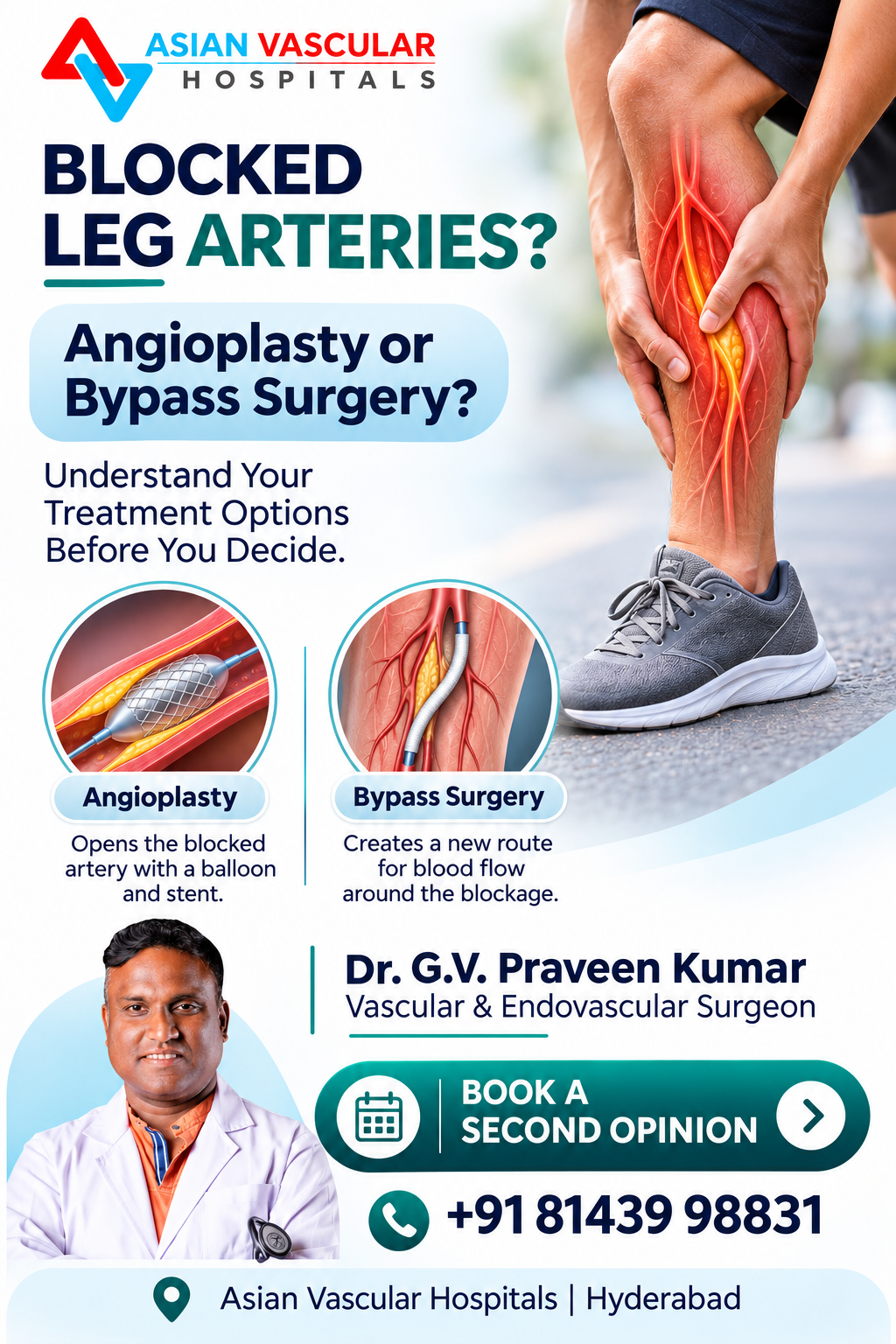
One of the most important decisions is understanding peripheral angioplasty vs bypass surgery. Both procedures aim to improve blood flow to the leg and foot, but they work differently and are suitable for different clinical situations.
The right treatment depends on the location and length of the blockage, the condition of the surrounding arteries, the patient’s general health and whether there is an active wound or threatened tissue.
A recommendation for bypass surgery does not automatically mean angioplasty is impossible. Equally, a minimally invasive procedure is not always the safest or most durable choice. A careful review of the vascular anatomy is essential before deciding.
At Asian Vascular Hospitals, Banjara Hills, Hyderabad, patients can seek specialist evaluation for blocked leg arteries and peripheral artery disease (PAD) with Dr. G.V. Praveen Kumar, Founder Chairman and Chief Consultant in Vascular & Endovascular Surgery.
Need another opinion before deciding on treatment?
Call +91 81439 98831 to enquire about a vascular consultation.
Learn more about peripheral artery disease (PAD) treatment in Hyderabad.
1. What Are Peripheral Angioplasty and Bypass Surgery?
Peripheral artery disease occurs when arteries supplying blood to the legs become narrowed or blocked. A common cause is atherosclerosis, in which fatty deposits build up within the artery walls.
As blood flow decreases, the muscles and tissues may not receive enough oxygen-rich blood.
Depending on the severity of the disease, patients may experience:
- Calf pain while walking that improves with rest.
- Reduced walking distance.
- Pain in the feet or toes while resting.
- Cold feet or changes in skin colour.
- Slow-healing wounds on the toes or feet.
- Tissue damage or gangrene in advanced cases.
When symptoms are severe or the limb is at risk, a vascular specialist may consider a procedure to restore circulation. This is called revascularisation.
Two important approaches are peripheral angioplasty and surgical bypass.
What is peripheral angioplasty?
Peripheral angioplasty is a minimally invasive endovascular procedure used to open a narrowed or blocked artery.
Instead of making a large surgical incision to reach the artery, the specialist guides a thin catheter through a blood vessel, commonly accessed through the groin or another suitable site.
The procedure may involve:
Vascular access: A small puncture is made to introduce the catheter.
Imaging: Contrast dye and X-ray imaging may be used to identify the affected artery and guide the procedure.
Balloon angioplasty: A small balloon is positioned across the narrowed section and inflated to widen the artery.
Stent placement: A metal mesh tube may be placed to help keep the artery open when clinically appropriate.
Completion assessment: Blood flow is checked after the intervention.
Not every angioplasty requires a stent. The choice depends on the artery involved, the characteristics of the blockage and the procedural findings.
What is peripheral bypass surgery?
Peripheral bypass surgery is an open surgical procedure that creates an alternative route for blood to travel around a blocked section of an artery.
The surgeon uses a graft to connect healthy blood vessels above and below the blockage.
The graft may be:
- A suitable vein taken from another part of the patient’s body, commonly the great saphenous vein.
- A synthetic graft, when appropriate for the location and clinical situation.
The bypass allows blood to travel around the obstructed segment rather than through it.
A bypass may be considered when the blockage is extensive, when the artery anatomy is unsuitable for an endovascular approach, or when a surgical bypass is expected to provide a more appropriate result for that patient.
The decision also depends on whether a suitable vein graft is available and whether the patient can safely undergo open surgery.
2. Peripheral Angioplasty vs. Bypass Surgery: What Is the Difference?
Both procedures aim to improve blood supply to the leg, but they differ in how they restore circulation.
| Comparison | Peripheral Angioplasty and Stenting | Peripheral Bypass Surgery |
|---|---|---|
| Procedure approach | A catheter, balloon and sometimes a stent are used to open the narrowed artery from inside. | A vein or synthetic graft creates an alternative route around the blocked artery. |
| Incisions | Usually performed through a small vascular access puncture. | Requires surgical incisions to expose the vessels and place the bypass graft. |
| Hospital stay and recovery factors | Recovery may be shorter in selected patients, depending on the access site, procedure and general health. | Recovery generally involves healing of surgical wounds and a longer period of physical recovery. |
| Best-fit considerations | May suit certain focal or technically accessible blockages, especially when a less invasive approach is desirable. | May suit selected extensive or complex blockages where surgical reconstruction is considered more appropriate. |
| Key clinical trade-offs | Less invasive, but some blockages may have a higher likelihood of narrowing again or requiring further treatment. | Can provide a durable route around selected blockages, but involves a larger operation and graft-related considerations. |
Is angioplasty always better because it is minimally invasive?
No.
A smaller access site does not automatically mean a better long-term outcome. Some arterial blockages are difficult to treat with angioplasty because of their length, location, calcification or involvement of multiple vessel segments.
In certain patients, bypass surgery may offer a more suitable route to restore blood flow.
Is bypass surgery always more effective for severe blockages?
Not necessarily.
The suitability of bypass depends on the patient’s anatomy, available graft material, general health and the expected benefits and risks of surgery.
For some patients with complex PAD, an endovascular approach may be preferable. Others may benefit from bypass or a combination of surgical and endovascular techniques.
The best procedure is the one that offers an appropriate balance of technical feasibility, limb preservation, durability and procedural risk for the individual patient.
3. How Do Doctors Decide Which Treatment Is Best?
When evaluating peripheral angioplasty vs bypass surgery, a vascular specialist considers more than the presence of a blockage on a scan.
The important question is: Which approach can restore useful blood flow safely and effectively for this particular patient?
Several factors influence that decision.
1. Location of the arterial blockage
Arteries in the leg include the iliac, femoral, popliteal and smaller arteries below the knee.
The location of the blockage can influence the treatment approach.
For example:
Some iliac artery blockages may be suitable for endovascular treatment.
Certain femoral or popliteal artery lesions may require a more detailed comparison of angioplasty and bypass options.
Extensive blockages involving arteries below the knee may require careful planning to restore blood flow towards the foot.
The same procedure is not appropriate for every arterial segment.
2. Length and complexity of the blockage
A short, focal narrowing may be easier to approach with angioplasty than a long, heavily calcified or completely blocked arterial segment.
The specialist also considers whether multiple areas of the arterial system are affected.
Long-segment blockages, complex chronic total occlusions and multilevel disease may influence whether bypass, endovascular treatment or a combined approach is more appropriate.
3. Availability of a suitable vein graft
If bypass surgery is being considered, the surgeon needs to determine whether a suitable vein is available.
The great saphenous vein is commonly considered for certain lower-limb bypass procedures. Its quality and suitability may be assessed using ultrasound vein mapping.
If an appropriate vein is unavailable, the surgical options may change.
4. Diabetes, kidney health and heart condition
The patient’s overall health is just as important as the artery anatomy.
The vascular team may consider:
- Diabetes control.
- Kidney function.
- Existing heart disease.
- Lung conditions.
- Blood pressure and cholesterol.
- Frailty and ability to recover after surgery.
- Previous vascular procedures.
For example, patients with significant heart or kidney disease may face additional risks from a major operation. This may influence whether a less invasive approach is preferable, although the final decision must also account for the arterial anatomy.
5. Is there an active foot wound or tissue damage?
A patient with walking-related leg pain has different treatment priorities from someone with a non-healing foot ulcer or gangrene.
In advanced PAD, a condition called chronic limb-threatening ischaemia (CLTI) can develop. It may cause persistent pain at rest, non-healing wounds or tissue loss.
In these situations, the goal is not simply to open an artery on an image. It is to restore sufficient blood flow to support wound healing and preserve a functional limb whenever possible.
This is why vascular treatment may need to be coordinated with wound management, infection treatment and pressure relief.
Patients with diabetes or persistent foot wounds can explore the diabetic foot and wound care clinic in Hyderabad.
6. What are the patient’s treatment goals?
A treatment decision should also consider the patient’s priorities.
These may include:
- Improving walking ability.
- Relieving pain at rest.
- Supporting healing of a foot ulcer.
- Preserving the ability to stand and walk.
- Reducing the likelihood of repeated procedures.
- Choosing an approach that fits their overall health and recovery needs.
The specialist should explain the expected benefits, limitations and possible need for future treatment.
Understanding the cost of angioplasty and bypass surgery
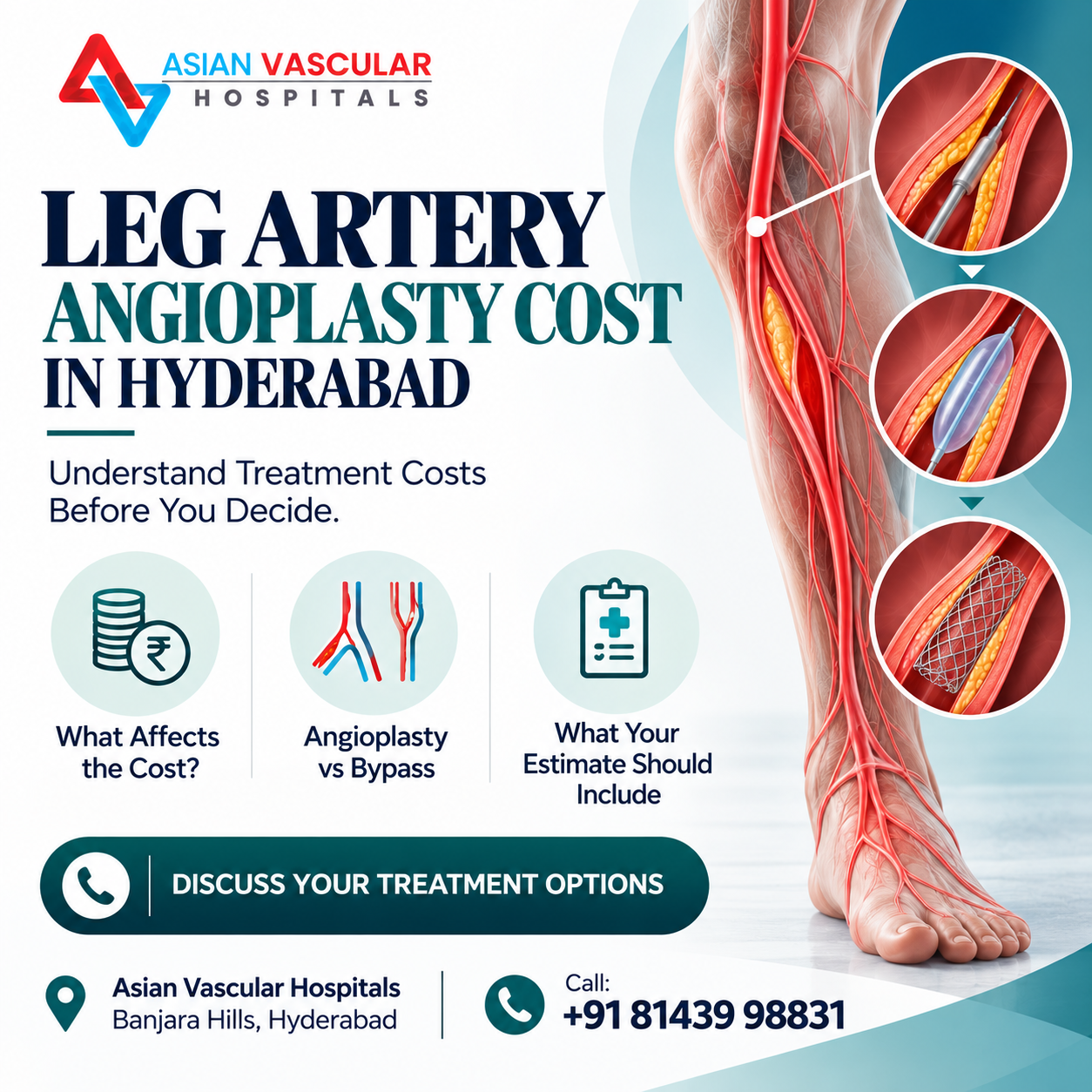
The cost of treatment depends on the procedure, number and location of blockages, devices or graft materials required, hospital stay and the patient’s medical needs.
For a clearer explanation of the factors involved, read leg artery angioplasty cost in Hyderabad.
A personalised estimate should be discussed with the hospital after reviewing the patient’s reports and proposed treatment plan. A fixed price cannot be reliably applied to every case.
4. Before You Agree to Bypass Surgery or Amputation: Why a Vascular Second Opinion Matters
Hearing the words “bypass surgery” or “amputation risk” can be overwhelming.
Families may feel they have to make an immediate decision without fully understanding the available options. Some become frightened of open surgery, while others worry that delaying a procedure could put the leg at risk.
The most useful next step is not to panic or assume that one procedure is always better. It is to understand the exact condition of the arteries and the realistic treatment options.
Could a minimally invasive approach be possible?
In selected patients, an endovascular procedure may be an option even when the initial recommendation is open surgery.
A vascular specialist can review the available investigations and assess:
- Where the artery is blocked.
- How long the blockage extends.
- Whether the blockage can be crossed safely with a catheter.
- Whether balloon angioplasty or stenting is technically suitable.
- Whether there is adequate blood flow beyond the blockage.
- Whether a bypass would provide a more appropriate result.
- Whether a combined or staged approach should be considered.
This assessment helps determine whether minimally invasive blocked leg artery treatment in Hyderabad may be appropriate for the individual patient.
However, angioplasty should not be forced into a situation where bypass is likely to offer a safer or more suitable result. The aim is to choose the right treatment, not simply the smallest procedure.
Can treatment help avoid amputation?
In selected patients with severe PAD, restoring blood flow can help relieve ischaemic pain, support wound healing and preserve a functional limb.
This is one of the main goals of limb salvage treatment.
The 2024 ACC/AHA PAD guideline recommends evaluating patients with chronic limb-threatening ischaemia for revascularisation options when feasible. It also recommends multidisciplinary evaluation before major amputation, except where an emergency such as life-threatening infection requires immediate action.
This does not mean every limb can be saved. The amount of tissue damage, extent of infection, arterial anatomy and overall health all affect what is possible.
A recommendation for amputation should be understood in the context of the patient’s complete clinical condition and available treatment options. When time and clinical stability allow, a specialist review of the imaging and limb condition can help clarify whether further revascularisation options exist.
What happens during a vascular second opinion?
At Asian Vascular Hospitals, Banjara Hills, a specialist evaluation can help patients and families understand the findings and discuss possible treatment approaches.
Bring your existing reports so the consultation can focus on the actual condition rather than starting the investigation process from the beginning.
Bring these documents if available:
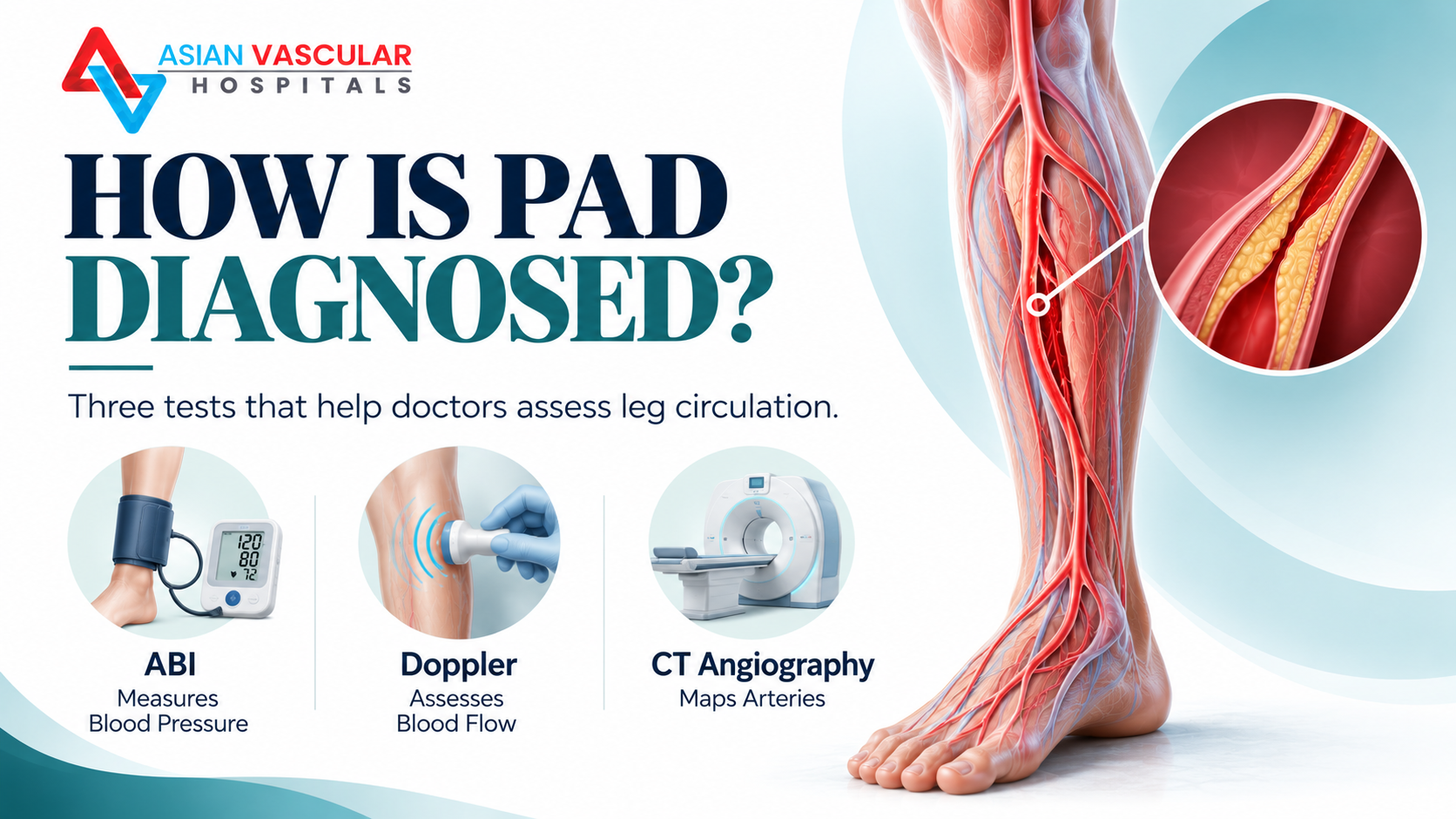
- Recent arterial Doppler or colour Doppler reports.
- CT angiography or catheter angiography images and reports.
- Previous angioplasty or bypass surgery records.
- Blood sugar and HbA1c reports.
- Kidney function reports.
- Heart evaluation or cardiac records.
- Current medication list.
- Foot wound photographs or wound-care records, if relevant.
Get clarity before making a major treatment decision
If bypass surgery has been recommended, or if your family has been told that amputation may be necessary, consider arranging a timely vascular review when clinically appropriate.
<box-placeholder> </box-placeholder>
SECOND OPINION FOR BLOCKED LEG ARTERIES
Bring your existing Doppler, angiogram and medical reports for specialist evaluation.
Asian Vascular Hospitals
Banjara Hills, Hyderabad
Call: +91 81439 98831
Book a vascular second opinion at Asian Vascular Hospitals in Hyderabad.
5. Your Three-Step Action Plan Before Choosing Angioplasty or Bypass
If you or a family member has been diagnosed with a blocked leg artery, a structured approach can make the next decision clearer.
Step 1: Gather your medical reports
Keep the following documents together:
- Arterial Doppler and CT angiography reports.
- Angiogram images, if an angiogram has already been performed.
- Blood sugar and kidney function reports.
- Heart-related investigation records.
- Previous procedure and hospital discharge summaries.
- Current medication list.
If the patient has a foot wound, also bring relevant wound-care records and details of any previous infection treatment.
Step 2: Get a focused vascular and blood-flow review
A vascular specialist can review the images, examine the leg and assess the extent of arterial disease.
The consultation should clarify whether angioplasty, bypass surgery, a hybrid procedure or continued medical management is worth considering.
Ask the specialist to explain:
- Which artery is blocked?
- How extensive is the blockage?
- Is angioplasty technically possible?
- Why is bypass being recommended, if applicable?
- What are the benefits and risks of each option?
- Is there an urgent threat to the foot or limb?
Step 3: Understand the treatment and follow-up plan
Before proceeding, make sure you understand the proposed treatment and what recovery may involve.
Discuss the expected hospital stay, wound care, medications, follow-up imaging, walking rehabilitation and management of diabetes or other risk factors.
A clear plan helps families prepare for treatment and understand what to expect after the procedure.
Book a Vascular Second Opinion at Asian Vascular Hospitals
A blocked leg artery does not automatically mean that every patient needs open bypass surgery. Equally, not every blockage can be safely treated with angioplasty.
The right decision starts with understanding the arterial anatomy, the patient’s medical condition and the goal of treatment.
At Asian Vascular Hospitals, Banjara Hills, Hyderabad, patients can seek specialist evaluation with Dr. G.V. Praveen Kumar, Founder Chairman and Chief Consultant in Vascular & Endovascular Surgery.
Discuss your existing reports and understand the treatment options before making a major decision.
Asian Vascular Hospitals
8-2-676 2/B, Road No. 12, Sri Ram Nagar Colony,
Banjara Hills, Hyderabad, Telangana – 500034.
Call: +91 81439 98831
Consultant: Dr. G.V. Praveen Kumar, MS, DNB (Vascular Surgery).
Read more about leg artery angioplasty cost in Hyderabad.
6. Frequently Asked Questions
- All Post
- blog
Related posts:
 Looking for a Vascular Surgeon Near You? Hyderabad’s Trusted Experts Are Here
 Top Vascular Surgeon in Hyderabad – Expert Care That Heals & Protects
 👣 Diabetic Foot Ulcer Symptoms: Don’t Miss These Early Warning Signs!
 👣 Find the Best Diabetic Foot Doctor Near Me – Advanced Care at Asian Vascular Hospitals
 Vascular Surgeon in Nellore: Advanced Vascular Care for Healthy Living
 Vascular Surgeon in Bhongir: Advanced Vein & Artery Care
 👣 Best Podiatrist Doctor in Hyderabad – Complete Foot Care Under One Roof
 🩸 Best Hospital for Varicose Veins Treatment in Hyderabad — Asian Vascular Hospitals