

Have you been advised to get a Doppler scan for your legs? Perhaps you have noticed swelling in one leg, recurring calf pain, visible varicose veins, or a wound that is taking longer than expected to heal.
You may be searching online for a venous Doppler scan for legs in Hyderabad, an arterial Doppler test, or simply a reliable leg blood flow test near you.
But before booking, it is important to understand that not all Doppler scans examine the same blood vessels. An arterial Doppler and a venous Doppler answer different medical questions, and the right investigation depends on your symptoms and your doctor’s assessment.
A plain X-ray can show bones and certain structural changes, but it cannot map blood flow through your leg arteries and veins. A colour Doppler ultrasound uses sound waves to assess blood movement, helping clinicians evaluate circulation without ionising radiation.
The purpose of a Doppler scan is not just to produce an image. It is to help identify what may be happening inside your blood vessels so that the next treatment decision is based on the findings.
At Asian Vascular Hospitals, Banjara Hills, Hyderabad, patients can seek specialist evaluation for vascular symptoms with Dr. G.V. Praveen Kumar, Founder Chairman and Chief Consultant in Vascular & Endovascular Surgery.
Need a vascular assessment?
Call +91 81439 98831 to enquire about appointments, the appropriate Doppler investigation and consultation arrangements.
1. Arterial vs. Venous Doppler Scan: What Does Each Test Check?
Your legs have two important blood vessel systems: arteries and veins.
Arteries carry blood from the heart towards the legs and feet. Veins return blood from the legs towards the heart.
Although both systems are essential for healthy circulation, the problems affecting them are different. This is why your doctor may recommend an arterial Doppler, a venous Doppler, or both.
Arterial Doppler vs. Venous Doppler: Quick Comparison
| Feature | Arterial Doppler | Venous Doppler |
|---|---|---|
| Primary focus | Blood flow through arteries supplying the legs and feet. | Blood flow through veins returning blood from the legs towards the heart. |
| Conditions evaluated | Peripheral artery disease (PAD), arterial narrowing, reduced circulation and selected causes of poor wound healing. | Deep vein thrombosis (DVT), venous obstruction, varicose veins and venous reflux. |
| Key findings looked for | Blood-flow patterns, changes in velocity, narrowing and possible arterial blockages. | Vein compressibility, blood flow, possible clots, obstruction and valve-related reflux. |
| Typical next step | Clinical assessment, risk-factor management, additional imaging or arterial treatment planning where appropriate. | Further assessment of clots or venous reflux, medical management or planning for selected vein treatments. |
What is an arterial Doppler ultrasound?
An arterial Doppler examines the arteries that carry oxygen-rich blood from the heart to your legs and feet.
When these arteries become narrowed or blocked, the muscles and tissues may not receive enough blood, particularly during physical activity.
One common cause is peripheral artery disease (PAD), which is often associated with atherosclerosis, or the build-up of fatty deposits within artery walls.
An arterial Doppler may help evaluate:
- Narrowing or blockage in leg arteries.
- Changes in blood-flow patterns.
- Reduced circulation towards the feet.
- Possible arterial causes of leg pain while walking.
- Circulation concerns in patients with non-healing foot wounds.
- Blood flow following selected vascular procedures.
Patients with PAD may experience calf pain while walking, cold feet, reduced walking distance, or wounds that heal slowly. Some people may have very few symptoms, particularly in the early stages.
If you have recurring walking-related pain, cold feet or suspected circulation problems, learn more about peripheral artery disease (PAD) treatment in Hyderabad.
What is a venous Doppler ultrasound?
A venous Doppler examines the veins that carry blood from your legs back towards your heart.
Vein-related problems can occur when blood flow is obstructed by a clot or when the valves inside the veins do not function properly.
A venous Doppler may be used to investigate:
- Deep vein thrombosis (DVT).
- Varicose veins.
- Venous reflux caused by faulty valves.
- Venous obstruction.
- Unexplained leg swelling.
- Certain causes of persistent leg heaviness and discomfort.
The ultrasound technique depends on the clinical question.
For suspected DVT, the examination commonly includes compression assessment of the veins to look for evidence of a clot. For varicose veins, a reflux assessment may be required to identify faulty valves and the direction of blood flow.
A scan designed to look for DVT is not necessarily the same examination as a detailed venous reflux mapping study. Tell the hospital or diagnostic team why the test was prescribed so that the appropriate examination can be arranged.
2. Why Should You Get a Doppler Scan Before Any Vein or Artery Treatment?
A patient may have leg pain, swelling, visible veins or a non-healing wound. However, these symptoms do not always reveal which blood vessels are affected.
Two people with similar symptoms may have completely different underlying conditions and require different treatment plans.
This is why vascular assessment and appropriate imaging are important before deciding on a procedure.
Doppler helps identify the location of the problem
In arterial disease, the specialist needs to understand where blood flow is reduced and how severe the circulation problem may be.
In venous disease, the specialist may need to identify which veins are affected, whether blood is flowing backwards, and whether there is evidence of obstruction.
This information can help guide further investigation and treatment planning.
It helps avoid treating the wrong problem
For example, a patient with leg swelling may have venous insufficiency, DVT, lymphatic problems or another medical condition.
Similarly, a patient with calf pain while walking may have PAD, but muscle, joint and nerve conditions can cause similar symptoms.
Treating visible veins without assessing the underlying venous problem may not address the actual cause of symptoms. Treating leg pain as a circulation problem without adequate assessment can also lead to unnecessary investigations or interventions.
It supports treatment planning
Doppler findings may help a vascular specialist determine whether further tests or a procedure should be considered.
Depending on the diagnosis, this may involve:
- Planning selected endovenous treatments for varicose veins.
- Assessing arterial disease before considering angioplasty or stenting.
- Investigating suspected DVT.
- Evaluating circulation in patients with diabetic foot wounds.
- Assessing blood flow after certain vascular procedures.
The scan and the clinical examination work together. A Doppler report should be interpreted in the context of your symptoms, medical history and physical examination. Not every abnormal scan finding requires surgery or another procedure.
3. Doppler Ultrasound for Varicose Veins and DVT: Why Are Both Important?
Varicose veins and deep vein thrombosis affect the venous system, but they are not the same condition.
Varicose veins usually involve enlarged superficial veins and faulty valves that allow blood to flow backwards. DVT involves a blood clot in a deep vein, commonly in the leg.
Both can cause discomfort or swelling, but their implications and treatment approaches differ.
How does Doppler help evaluate varicose veins?
A venous duplex ultrasound can help assess:
- Which superficial veins are affected.
- Whether vein valves are allowing backward flow.
- The location and extent of venous reflux.
- The relationship between superficial and deeper veins.
- Whether there are signs of venous obstruction.
- These findings can help the specialist decide whether conservative treatment, compression therapy or a procedure may be appropriate.
For patients with symptomatic varicose veins, treatment options may include endovenous laser treatment, radiofrequency ablation, sclerotherapy or other suitable approaches.
Learn more about painless laser varicose veins treatment and the available treatment options.
How does Doppler help detect DVT?
Deep vein thrombosis occurs when a blood clot forms in a deep vein.
It may cause:
- Swelling in one leg.
- Calf or thigh pain.
- Tenderness.
- Warmth in the affected area.
- Redness or changes in skin colour.
However, some patients with DVT have few noticeable symptoms.
A venous compression ultrasound is commonly used to investigate suspected DVT. It helps assess whether the relevant veins compress normally and whether there are findings suggestive of a clot.
A suspected DVT requires prompt medical assessment. Do not delay evaluation while waiting for routine scan availability.
For further information, visit the deep vein thrombosis (DVT) evaluation and care page.
4. Doppler Ultrasound and Non-Healing Foot Wounds: Why Circulation Matters
A wound on the foot or lower leg that does not heal as expected may have several underlying causes.
In people with diabetes, nerve damage can reduce sensation, making it difficult to notice small injuries. Poor circulation can also limit the blood supply required for tissue repair.
A Doppler examination may help assess whether reduced arterial blood flow is contributing to a wound.
When might an arterial Doppler be recommended for a foot wound?
A specialist may consider vascular testing if you have:
- A wound that is not healing.
- A foot that feels unusually cold.
- Reduced or absent foot pulses.
- Pain in the foot or toes while resting.
- Skin colour changes.
- A history of PAD or previous vascular intervention.
- Diabetes combined with a foot ulcer or suspected circulation problem.
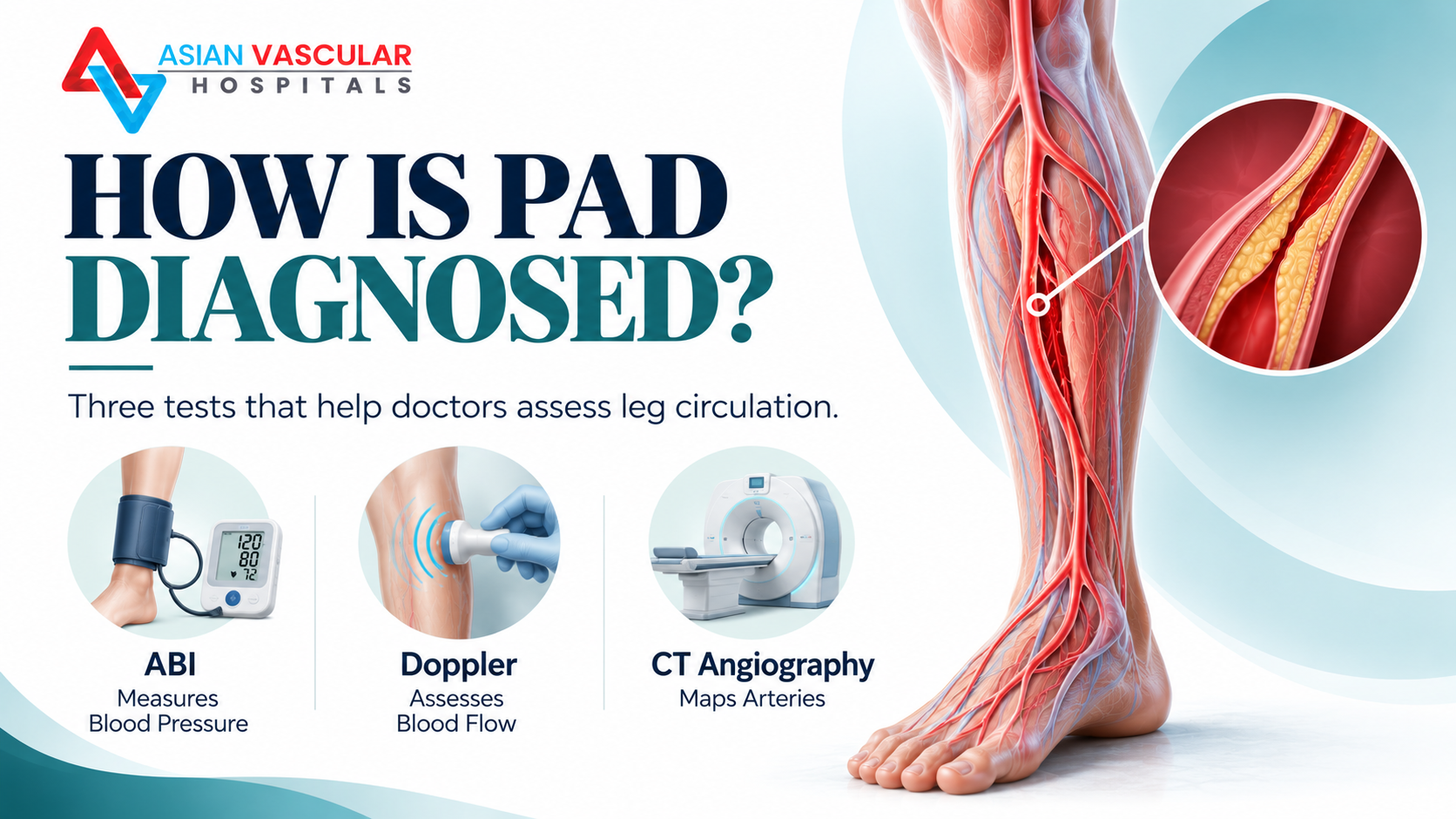
An arterial Doppler is one part of the assessment. Depending on the patient, additional tests may include ABI, toe pressure measurements, arterial duplex imaging or CT angiography.
A wound should not be treated as a skin problem alone when poor circulation may be contributing to it.
Patients who have diabetes or persistent foot wounds can learn more about advanced wound care and diabetic foot clinic in Hyderabad.
Early assessment is important because untreated circulation problems can contribute to delayed healing, tissue damage and, in severe cases, limb-threatening complications.
5. What Affects Arterial Doppler Test Cost in Hyderabad?
One of the most common questions patients ask before booking is: What is the arterial Doppler test cost in Hyderabad?
The cost can vary between diagnostic centres and hospitals. It also depends on the type and extent of the examination requested.
There is no single price that applies to every patient or every Doppler scan.
Factors that influence Doppler scan cost
1. One leg or both legs
A unilateral scan examines one leg, while a bilateral scan examines both legs. The examination scope and cost may differ.
2. Arterial Doppler or venous Doppler
An arterial Doppler and a venous Doppler assess different blood vessel systems. The cost may vary depending on the type of scan requested.
3. Combined arterial and venous Doppler
Some patients may require both arterial and venous assessment. A combined examination may involve a different scope of work from a single-system scan.
4. Type of venous examination
A venous study for suspected DVT may differ from a detailed reflux mapping examination for varicose veins. The clinical question determines the examination protocol.
5. Diagnostic centre or hospital setup
Pricing may vary according to the facility, equipment, reporting process and the scope of services included.
6. Specialist consultation
A scan fee and a vascular surgeon’s consultation fee may be charged separately. Some providers may offer packages, so patients should confirm exactly what is included.
What should you ask before booking?
When comparing the arterial Doppler test cost in Hyderabad, ask the hospital or diagnostic centre:
Is the scan for one leg or both legs?
Is it arterial, venous or a combined examination?
Is it a DVT assessment or a venous reflux study?
Is the scan report included?
Is a vascular specialist consultation included?
Are any additional investigations likely to be billed separately?
At Asian Vascular Hospitals, contact the hospital desk to confirm the current test availability, exact examination scope and applicable charges before visiting.
Call +91 81439 98831 to enquire about Doppler scan arrangements and vascular consultation appointments.
6. How to Prepare for a Leg Colour Doppler Scan
One advantage of Doppler ultrasound is that it is generally a non-invasive investigation.
For most routine leg arterial or venous Doppler examinations, special preparation is not usually required. However, preparation instructions may vary depending on the type of examination and the diagnostic facility.
Before your scan
A few practical steps can make the visit easier:
- Fasting: Most routine leg Doppler examinations do not require fasting, but follow the instructions provided when booking.
- Clothing: Wear loose-fitting trousers or clothing that can be comfortably adjusted to expose the legs.
- Previous reports: Carry earlier Doppler scans, prescriptions, discharge summaries and relevant investigation reports.
- Medication: Continue your regular medicines unless your treating doctor specifically advises otherwise.
- Medical history: Inform the team about previous blood clots, vascular procedures, diabetes or any relevant medical conditions.
- Symptoms: Explain when the pain or swelling began and whether it affects one leg or both.
Do not stop prescribed blood-thinning medicines or other regular medication simply because you are having an ultrasound.
What happens during a Doppler scan?
The examination is usually performed while you are lying down or positioned comfortably on an examination couch.
The sonographer or clinician applies ultrasound gel to the skin and moves a handheld probe over the area being examined.
The equipment uses sound waves to produce images and assess blood flow.
Depending on the examination, you may be asked to:
- Change your leg position.
- Hold still for short periods.
- Breathe normally or follow simple instructions.
- Stand during certain parts of a venous reflux assessment.
- Allow gentle pressure to be applied over selected veins during a DVT assessment.
The examination is generally painless, although some pressure may cause discomfort if the leg is already swollen or tender.
How long does a Doppler scan take?
The duration varies according to the type of scan, whether one or both legs are examined, and how detailed the assessment needs to be.
A focused examination may take less time than a detailed bilateral arterial study or venous reflux mapping.
Ask the hospital desk for an estimated appointment duration when confirming your scan.
Does a Doppler scan use radiation?
No. Doppler ultrasound uses sound waves rather than X-rays or other ionising radiation.
This makes it a commonly used imaging method for assessing blood flow in the arteries and veins.
7. What Happens After Your Doppler Report?
Receiving a Doppler report is not the end of the diagnostic process.
The next step is to understand what the findings mean for your symptoms and whether further investigation or treatment is needed.
A report may describe:
- Normal or altered blood-flow patterns.
- Areas of arterial narrowing.
- Evidence of venous reflux.
- Vein compressibility and possible signs of thrombosis.
- The location of affected blood vessels.
- Limitations of the examination, if any.
The findings need to be interpreted alongside your symptoms and clinical examination.
Does an abnormal Doppler report always mean surgery?
No.
An abnormal Doppler result does not automatically mean that you need angioplasty, stenting, laser treatment or surgery.
Depending on the diagnosis and severity, the specialist may recommend:
- Monitoring and follow-up.
- Lifestyle and risk-factor management.
- Medication where clinically indicated.
- Compression therapy for selected venous conditions.
- Additional vascular investigations.
- A minimally invasive procedure.
- Surgery in selected cases.
For example, a patient with PAD may require further assessment of arterial disease severity before an intervention is considered. A patient with varicose veins may need detailed reflux mapping before a vein procedure is planned.
The purpose of specialist review is to connect the imaging findings with the patient’s actual medical needs.
8. When Should You Book a Doppler Assessment Immediately?
Not every episode of leg pain or swelling is an emergency. However, certain symptoms require prompt medical attention.
Seek urgent medical assessment if you experience:
- Sudden swelling in one leg, especially with calf pain or tenderness.
- Warmth, redness or unexplained calf tightness, which may require assessment for DVT.
- Sudden severe leg or foot pain, particularly if the foot becomes cold or pale.
- New numbness or weakness in the affected leg or foot.
- Pain in the foot while resting, especially if it is worsening or associated with skin changes.
- A rapidly worsening foot wound or signs of infection.
- New blackening or discolouration of the toes.
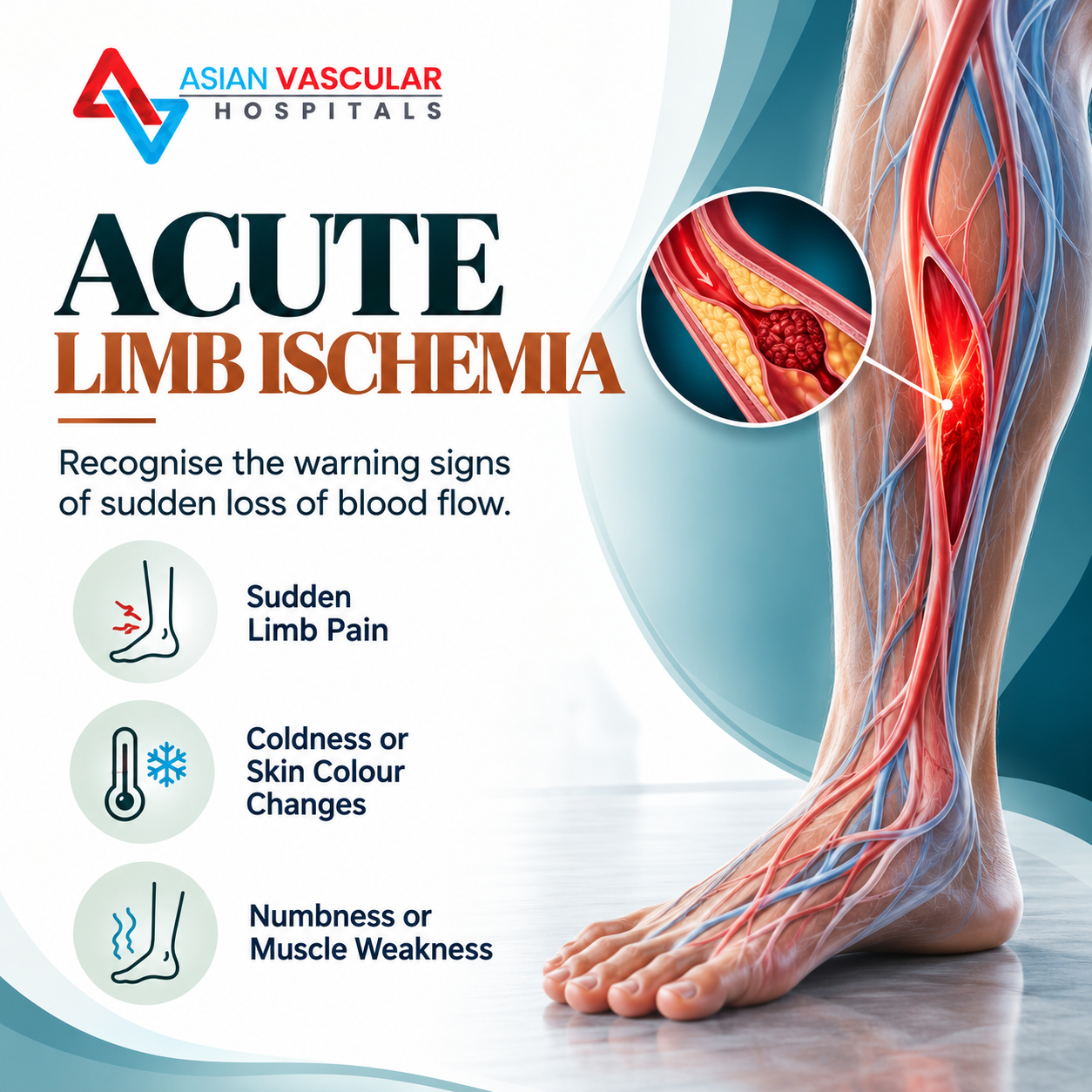
Sudden severe pain with a cold, pale or numb foot can indicate acute limb ischaemia, which is a medical emergency. Do not wait for a routine outpatient Doppler appointment in this situation.
Similarly, if you have one-sided leg swelling and develop sudden breathlessness, chest pain or coughing up blood, seek emergency medical care because a blood clot may have travelled to the lungs.
For recurring leg pain, visible varicose veins, persistent swelling or a non-healing wound, arrange a timely consultation with a vascular specialist.
9. Where to Get a Leg Blood Flow Test Near Me in Hyderabad?
If you are searching for a leg blood flow test near me, choosing a facility should involve more than comparing the scan price.
The examination needs to match your symptoms, and the report should answer the medical question your doctor is investigating.
Before booking, check whether the facility can arrange the appropriate arterial or venous examination, provide a clear report and support specialist review when needed.
Vascular Assessment at Asian Vascular Hospitals
Asian Vascular Hospitals is located in Banjara Hills, Hyderabad, and provides specialist vascular care under Dr. G.V. Praveen Kumar, Founder Chairman and Chief Consultant in Vascular & Endovascular Surgery.
If you have been advised to undergo a Doppler scan or are experiencing symptoms that may involve blood circulation, contact the hospital to confirm the appropriate investigation and appointment arrangements.
Book a vascular consultation at Asian Vascular Hospitals, Hyderabad.
Asian Vascular Hospitals
8-2-676 2/B, Road No. 12, Sri Ram Nagar Colony,
Banjara Hills, Hyderabad, Telangana – 500034.
Call: +91 81439 98831
Consultant: Dr. G.V. Praveen Kumar, MS, DNB (Vascular Surgery)
Founder Chairman & Chief Consultant – Vascular & Endovascular Surgery.
Schedule a vascular consultation at Asian Vascular Hospitals in Hyderabad.
Frequently Asked Questions About Arterial and Venous Doppler Scans
- All Post
- blog
Related posts:
 Looking for a Vascular Surgeon Near You? Hyderabad’s Trusted Experts Are Here
 Top Vascular Surgeon in Hyderabad – Expert Care That Heals & Protects
 👣 Diabetic Foot Ulcer Symptoms: Don’t Miss These Early Warning Signs!
 👣 Find the Best Diabetic Foot Doctor Near Me – Advanced Care at Asian Vascular Hospitals
 Vascular Surgeon in Nellore: Advanced Vascular Care for Healthy Living
 Vascular Surgeon in Bhongir: Advanced Vein & Artery Care
 👣 Best Podiatrist Doctor in Hyderabad – Complete Foot Care Under One Roof
 🩸 Best Hospital for Varicose Veins Treatment in Hyderabad — Asian Vascular Hospitals