

Medically reviewed by Dr. G.V. Praveen Kumar, MS, DNB (Vascular Surgery)
For someone living with diabetes, a tiny blister from a tight shoe, a small cut, or a crack in the heel can become much more serious than it initially appears. When sensation is reduced or blood circulation is impaired, a person may continue walking on an injury without realizing how much tissue damage is developing underneath.
A wound in foot due to diabetes should therefore never be dismissed as “just a scratch.” Diabetes can affect sensation, circulation, immune function, and the body’s ability to repair damaged tissue. A wound that remains open, becomes red or swollen, develops discharge, or changes colour needs timely medical assessment.
The goal of diabetic foot care is not simply to cover the wound. Doctors need to determine why it developed, whether infection is present, whether blood flow is adequate, and whether pressure or neuropathy is preventing healing. Early intervention can be important in reducing the risk of serious infection and tissue loss.

Why Does Diabetes Turn Minor Foot Cuts Into Dangerous Sores?
Diabetes can make foot wounds harder to heal because nerve damage, reduced circulation, increased infection risk, and repeated pressure can occur together.
A person may develop an injury without noticing it, continue putting pressure on the affected area, and then develop an ulcer that becomes progressively deeper.
Diabetic Neuropathy: The Silent Mask
Diabetic neuropathy can reduce the ability to feel pain, heat, pressure, or injury in the feet, allowing wounds to develop unnoticed.
Persistently elevated blood glucose can damage peripheral nerves over time. As sensation decreases, everyday injuries can go unnoticed.
For example, a person may:
- Develop a blister from a new pair of shoes
- Step on a small object
- Sustain a minor cut
- Develop a pressure point under the foot
- Burn the skin with hot water
- Continue walking on an injured area
Normally, pain would encourage a person to stop or protect the affected area. With significant neuropathy, that warning signal may be reduced or absent.
This is why neuropathy foot sores can sometimes appear surprisingly severe despite little or no pain.
Peripheral Artery Disease and Stalled Healing
Diabetes increases the risk of peripheral artery disease (PAD), in which narrowed or blocked arteries can reduce blood flow to the feet and interfere with wound healing.
Healing tissue needs adequate oxygen and nutrients delivered through the bloodstream. Blood flow is also important for supporting the body’s immune response and tissue repair.
When arterial circulation is severely reduced, a wound may remain open despite appropriate local wound care.
Possible warning signs of reduced circulation include:
- Cold feet
- Pale or bluish skin
- Reduced pulses
- Leg or foot pain while walking
- Pain in the foot at rest in advanced disease
- Slow-growing or absent hair on the lower legs
- Wounds that fail to improve
When a wound in foot due to diabetes occurs alongside signs of poor circulation, a vascular assessment becomes particularly important.
A Compromised Ability to Fight Infection
Diabetes can increase susceptibility to infection and can complicate the body’s response to an infected foot wound.
High blood glucose can affect several aspects of immune function. Once bacteria enter an open wound, infection can develop and spread into surrounding tissue.
An infected diabetic foot wound may show:
- Increasing redness
- Warmth
- Swelling
- Pain or tenderness
- Pus or other discharge
- Foul odour
- Increasing wound size
- Fever or chills in more serious infections
Not every diabetic foot wound becomes infected, but signs of infection should prompt timely medical evaluation.
Early Warning Signs of a Diabetic Foot Ulcer
Early changes in the foot should be taken seriously, particularly when a person has diabetes or reduced sensation.
Look for:
1. Redness, warmth or swelling
A localized area of redness, warmth, or swelling may indicate inflammation, pressure-related injury, or infection.
2. A blister, cut or open sore
Any break in the skin deserves attention. A small injury can worsen when repeated pressure continues.
3. Numbness or pins-and-needles
Persistent numbness, burning, tingling, or reduced sensation can indicate diabetic neuropathy.
4. Fluid or pus
Clear fluid may occur with some wounds, but cloudy discharge or pus can indicate infection.
5. Foul odour
A strong unpleasant smell from a wound can be a warning sign of infection or significant tissue breakdown.
6. Skin colour changes
Brown, purple, grey, or black areas require prompt assessment. Black tissue can indicate tissue death, although the underlying cause must be determined clinically.
7. Increasing pain—or no pain at all
Severe pain can signal inflammation, infection, or ischemia. However, the absence of pain does not mean the wound is harmless, particularly when neuropathy has reduced sensation.
What Happens If a Diabetic Foot Wound Is Ignored?
An untreated diabetic foot ulcer can progress from a superficial skin injury to deeper infection, tissue damage, and, in severe cases, limb-threatening complications.
The progression is not inevitable, but the risk increases when treatment is delayed.
Infection can spread into deeper tissue
A wound that becomes infected may extend beyond the skin into deeper soft tissues.
Infection can reach the bone
In some patients, a chronic or deep diabetic foot ulcer can become associated with osteomyelitis, an infection involving bone.
Doctors may need clinical examination, blood tests, imaging, and sometimes tissue or bone sampling to determine whether deeper infection is present.
Tissue can become non-viable
Severe infection or critically reduced blood supply can result in tissue death.
This may appear as black or grey tissue, but colour changes alone cannot establish the exact cause. A vascular and wound assessment is important.
Amputation can become necessary in severe cases
When infection, extensive tissue destruction, or severely compromised circulation cannot be adequately controlled, amputation may sometimes be required.
However, this is why early assessment matters. Treating infection, relieving pressure, and restoring adequate blood flow when necessary can form part of a limb-salvage strategy.
Why Basic Dressing May Not Be Enough
Wound dressing is an important component of care, but dressing alone cannot correct a blocked artery, severe venous disease, uncontrolled pressure, or an untreated deep infection.
A wound should therefore be approached systematically.
Doctors may need to assess:
- Blood circulation
- Nerve sensation
- Wound depth and location
- Signs of infection
- Foot pressure and footwear
- Blood glucose control
- Previous ulcers or amputations
- Arterial and venous disease
- Overall medical condition
This explains why a wound in foot due to diabetes may continue to deteriorate despite regular dressing if the underlying cause has not been identified.
Advanced Diabetic Wound Treatment Options at Asian Vascular Hospitals
Effective diabetic wound treatment focuses on the underlying cause as well as the wound itself. Depending on the patient’s condition, treatment may include wound care, infection management, pressure relief, and restoration of blood flow.
At Asian Vascular Hospitals in Banjara Hills, Hyderabad, vascular evaluation is an important part of managing diabetic foot problems where circulation may be contributing to delayed healing.
Restoring Blood Flow With Endovascular Treatment
When blocked or severely narrowed leg arteries are contributing to poor wound healing, revascularization may be considered to improve blood flow to the affected foot.
One minimally invasive option is angioplasty.
During angioplasty, a catheter is guided through the blood vessels to the narrowed or blocked segment. A balloon can then be used to widen the vessel.
In selected cases, a stent may also be required.
The objective is to improve blood flow to tissue that needs adequate oxygen and nutrients for healing.
Not every patient requires angioplasty. The decision depends on the location and severity of arterial disease, the wound, the patient’s overall health, and findings from vascular imaging.
Advanced Debridement and Infection Management
Debridement involves removing unhealthy or dead tissue when clinically appropriate so that the wound can be assessed and managed more effectively.
Depending on the wound, treatment may include:
- Removal of non-viable tissue
- Drainage of an abscess when necessary
- Appropriate wound dressings
- Infection assessment
- Antibiotic treatment when infection is diagnosed
- Pressure relief and offloading
- Monitoring for deeper infection
Antibiotics are not a substitute for correcting inadequate blood flow or removing infected/necrotic tissue when those problems are present.
Limb Salvage and Revascularization
Limb salvage involves a coordinated attempt to control infection, preserve viable tissue, improve circulation when needed, and support wound healing.
For a patient with a threatened diabetic foot, doctors may need to address several problems simultaneously.
A treatment plan can involve:
Assessing arterial circulation
Identifying and controlling infection
Removing non-viable tissue when indicated
Relieving pressure on the wound
Improving blood flow when appropriate
Providing ongoing wound care
Monitoring healing closely
This multidisciplinary approach is particularly important when diabetes, neuropathy, infection, and PAD occur together.
How Is a Diabetic Foot Wound Evaluated?
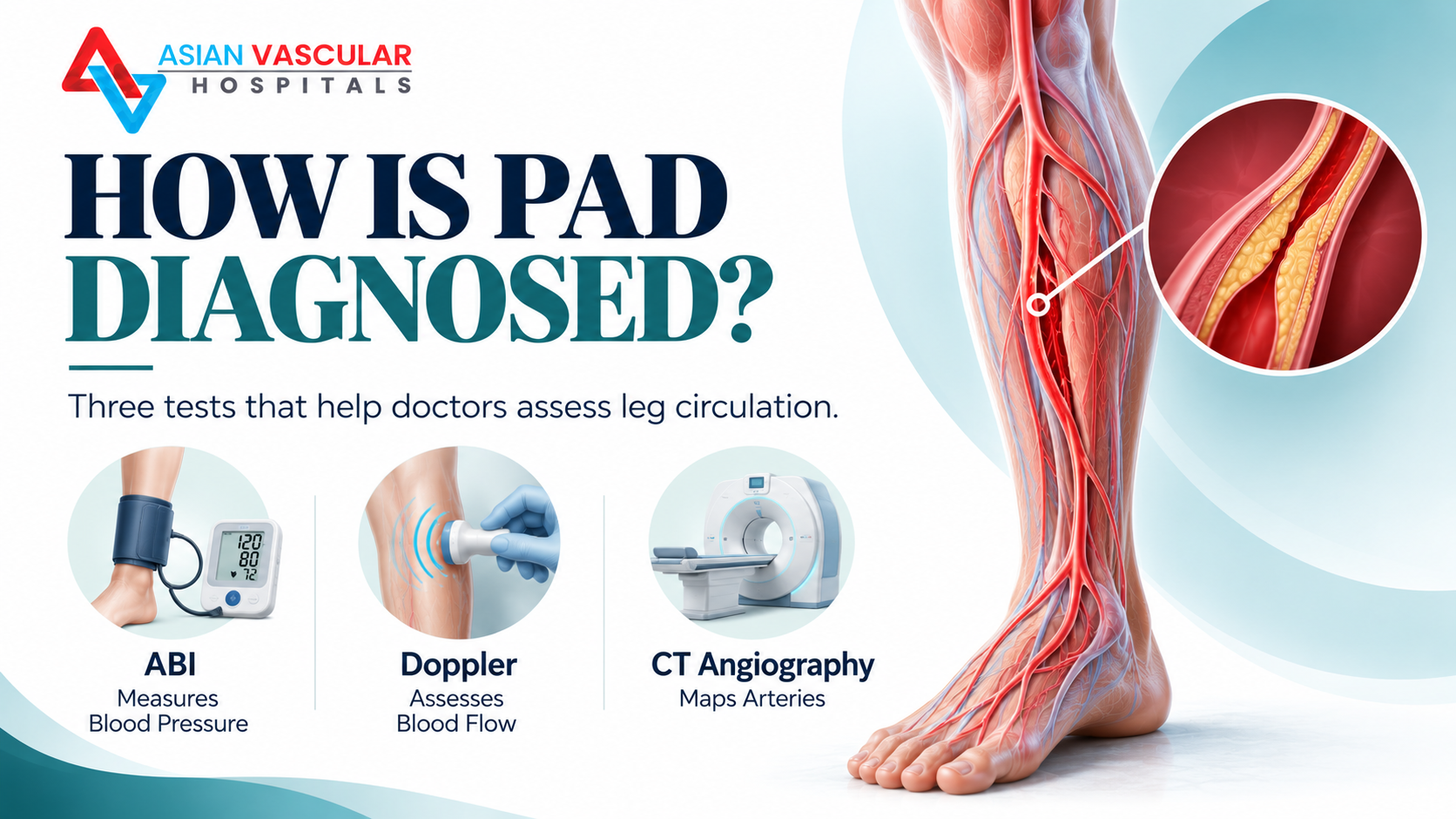
A vascular and wound evaluation starts with a physical examination and may include circulation testing and imaging depending on the clinical findings.
Doctors may assess:
Foot pulses
Checking pulses can provide important information about arterial circulation.
Doppler and vascular ultrasound
Doppler studies can help evaluate blood flow through arteries and veins.
Additional vascular imaging
When significant arterial disease is suspected, further imaging may be required to map the location and severity of blockages.
Neurological assessment
Testing sensation can help identify diabetic neuropathy and the risk of repeated unnoticed injury.
Wound assessment
The doctor evaluates:
- Location
- Size
- Depth
- Tissue condition
- Discharge
- Signs of infection
- Surrounding skin
- Pressure points
The combination of these findings helps determine the appropriate treatment strategy.
Why Choose Asian Vascular Hospitals for Diabetic Foot Care in Hyderabad?
Asian Vascular Hospitals focuses on vascular conditions and provides specialized evaluation for circulation-related problems that can complicate diabetic foot wounds.
The hospital is located in Banjara Hills, Hyderabad, and provides vascular and endovascular care under Dr. G.V. Praveen Kumar, MS, DNB (Vascular Surgery).
The hospital’s stated vascular services include diabetic foot ulcer care, peripheral artery disease management, wound healing and limb-salvage care, and endovascular procedures.
Vascular expertise
Dr. G.V. Praveen Kumar has more than 20 years of experience in vascular care and has been involved in more than 30,000 vascular procedures.
Diagnostic assessment
Depending on the clinical situation, vascular evaluation may involve Doppler studies and other imaging techniques to understand blood flow.
Advanced treatment options
When appropriate, treatment may include endovascular procedures, wound management, infection control, and limb-salvage strategies.
The objective is to treat the cause of delayed healing, not simply manage the visible wound.
Don’t Wait for a Diabetic Foot Wound to Become Severe
If you or a family member has a diabetic foot sore that is not improving, seek medical assessment rather than waiting for severe pain, black tissue, or extensive infection to appear.
Prompt evaluation is particularly important when there is:
- Increasing redness or swelling
- Pus or foul-smelling discharge
- Black or grey tissue
- Fever or chills
- Severe or increasing pain
- A cold or discoloured foot
- Rapid wound enlargement
- New or worsening numbness
- A wound that remains open despite appropriate care
If circulation is compromised, early vascular assessment can help determine whether revascularization or other specialized treatment is appropriate.
Looking for a diabetic foot ulcer specialist in Hyderabad?
Asian Vascular Hospitals provides specialized vascular and diabetic foot care at its Banjara Hills center.
Asian Vascular Hospitals
8-2-676 2/B, Road No. 12, Sri Ram Nagar Colony, Banjara Hills, Hyderabad, Telangana – 500034
Appointments: +91 81439 98831
Explore Advanced Wound Care & Diabetic Foot Treatment in Hyderabad
Frequently Asked Questions
Why is my diabetic foot ulcer not healing after weeks of medicine?
A diabetic foot ulcer may fail to heal if infection, pressure, neuropathy, or inadequate blood circulation has not been addressed.
Antibiotics can treat certain bacterial infections, but they do not correct a blocked artery or remove mechanical pressure from the wound.
If a wound continues to remain open, your doctor may need to reassess circulation, infection, wound depth, pressure, and diabetes-related complications.
Who is the best diabetic foot ulcer specialist in Hyderabad?
The appropriate specialist depends on the cause and severity of the ulcer, but a vascular surgeon is particularly important when poor arterial circulation or limb-threatening vascular disease is suspected.
Asian Vascular Hospitals in Banjara Hills provides vascular evaluation and treatment for diabetic foot ulcers, peripheral artery disease, and circulation-related wound complications under Dr. G.V. Praveen Kumar, MS, DNB (Vascular Surgery).
Rather than choosing a doctor based only on the word “best,” patients should consider relevant vascular expertise, diagnostic capabilities, treatment options, and experience managing complex wounds.
Can angioplasty prevent amputation in diabetic foot wounds?
Angioplasty may help improve blood flow in appropriately selected patients and can form part of a limb-salvage treatment strategy, but it cannot guarantee that amputation will be avoided.
Its role depends on whether significant arterial blockages are contributing to the threatened foot and whether the affected vessels can be treated.
Doctors may combine revascularization with infection control, debridement, pressure relief, and wound care when clinically appropriate.
Can a diabetic foot wound heal without surgery?
Some diabetic foot wounds can heal with appropriate non-surgical treatment, but the correct approach depends on the wound’s depth, infection status, circulation, pressure, and other medical factors.
Early treatment may involve wound care, offloading, glucose management, infection treatment, and close monitoring. Surgery or vascular intervention may become necessary when deeper infection, dead tissue, abscess, or inadequate blood flow is present.
Does a painless diabetic foot wound need treatment?
Yes. A painless wound can still be serious, particularly when diabetic neuropathy has reduced sensation.
Pain is not a reliable measure of wound severity in someone with significant neuropathy. Any new open sore, blister, or wound should be monitored closely and medically assessed if it does not promptly improve.
A Small Foot Wound Can Become a Big Problem—But Early Action Matters
A wound in foot due to diabetes deserves attention from the moment it appears.
The combination of neuropathy, pressure, infection, and poor circulation can make diabetic foot wounds behave very differently from ordinary cuts and scratches. The earlier these factors are identified, the sooner an appropriate treatment plan can be considered.
If the wound is not healing, don’t simply keep changing the dressing and hope it closes.
Find out why it isn’t healing.
For specialized vascular and diabetic foot evaluation in Hyderabad, contact Asian Vascular Hospitals, Banjara Hills at +91 81439 98831.
Medical Disclaimer
This article is intended for general educational purposes and does not replace an in-person medical examination, diagnosis, or individualized treatment plan. Diabetic foot wounds can vary significantly in severity and cause. Anyone with a worsening wound, signs of infection, tissue colour changes, significant circulation symptoms, or other concerning changes should seek prompt medical evaluation. Treatment decisions, including antibiotics, debridement, angioplasty, or surgery, should be made by qualified healthcare professionals after appropriate clinical assessment.
Medical Review:
Dr. G.V. Praveen Kumar, MS, DNB (Vascular Surgery)
Founder Chairman & Chief Consultant, Vascular & Endovascular Surgery
Asian Vascular Hospitals, Hyderabad
- All Post
- blog