

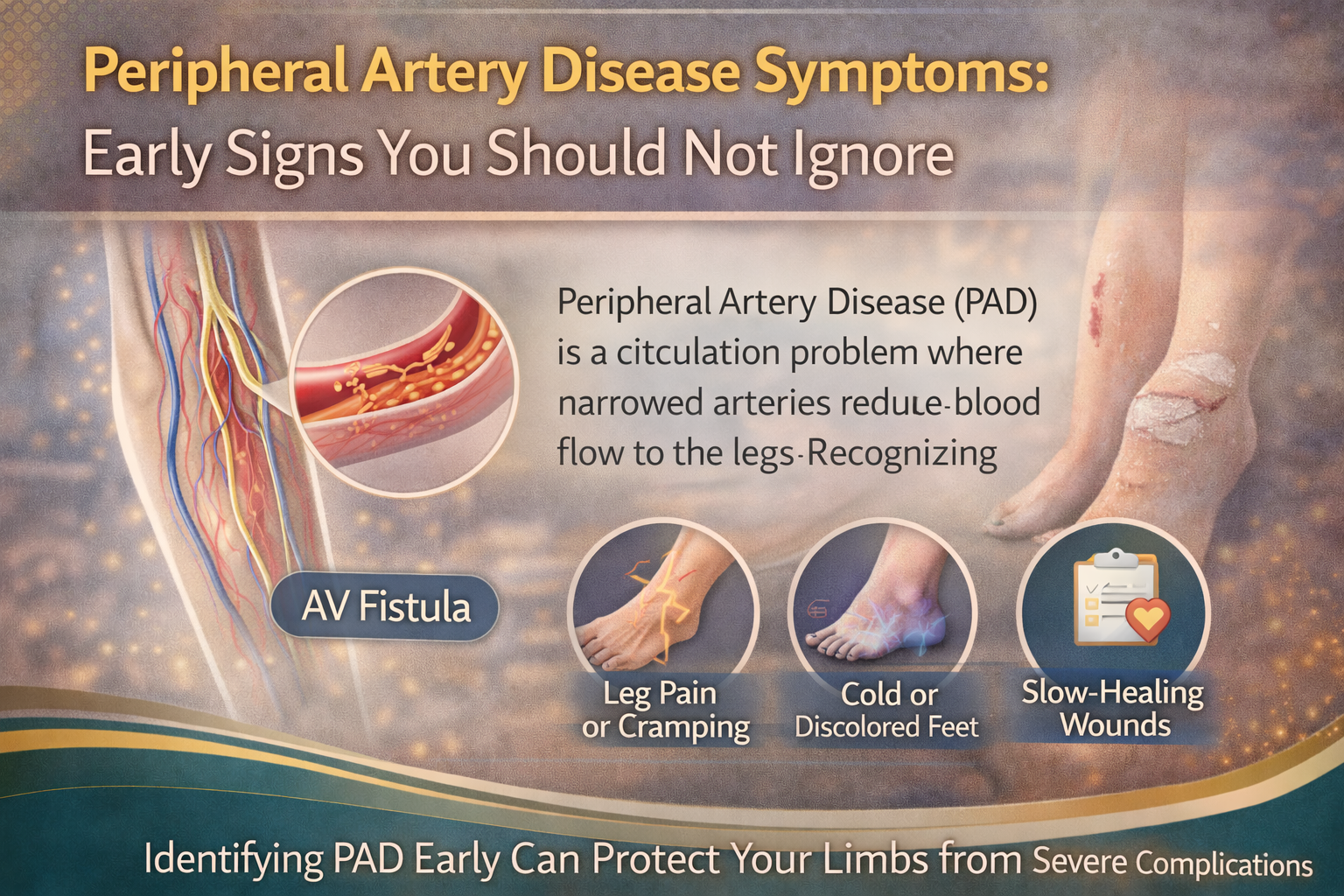
Peripheral Artery Disease (PAD) is a circulation problem where narrowed arteries reduce blood flow to the legs. Recognizing peripheral artery disease symptoms early can help prevent serious complications like non-healing wounds and limb loss.
What Are PAD Symptoms?
Peripheral artery disease symptoms commonly include leg pain while walking, cramps that stop with rest, cold feet, numbness, and slow-healing wounds. These symptoms indicate poor blood flow and should not be ignored.
Early Symptoms Most People Ignore
Many patients dismiss early peripheral artery disease symptoms as normal fatigue.
Watch for these warning signs:
- Leg pain while walking (comes and goes with activity)
- Calf cramps after short distances
- Numbness or weakness in legs
- Cold sensation in one foot
- Shiny skin or hair loss on legs
These are early pad signs that require evaluation.
Why Leg Pain While Walking Is a Red Flag
Not all leg pain is the same.
👉 PAD-related pain:
- Starts during walking
- Stops with rest
- Returns consistently
This pattern is a classic sign of reduced circulation and one of the most important poor circulation symptoms.
Advanced Symptoms You Should Never Ignore
As the condition worsens, peripheral artery disease symptoms become more serious:
- Pain even at rest
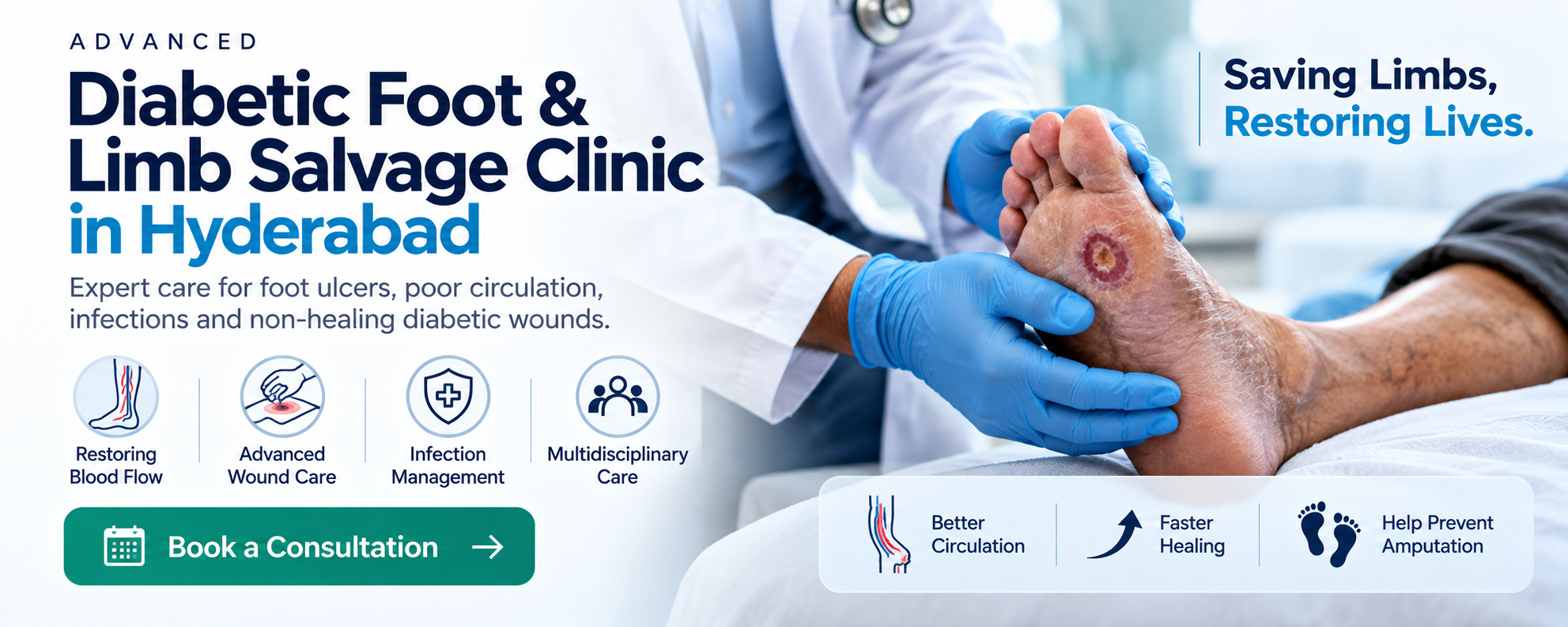
- Non-healing foot wounds
- Blackening of toes (gangrene)
- Severe weakness in legs
At this stage, urgent medical care is required.
Who Is at High Risk?
You are more likely to develop peripheral artery disease symptoms if you:
- Have diabetes
- Smoke
- Have high blood pressure
- Have high cholesterol
- Are above 50 years
High-risk patients should never ignore even mild pad signs.
When Should You See a Specialist?
Consult a vascular specialist if you notice:
- Repeated leg pain while walking
- Wounds not healing in 10–14 days
- Skin color changes in feet
- Increasing numbness
Early diagnosis can stop disease progression.
📊 Real Patient Scenario
A 58-year-old diabetic patient ignored mild leg pain while walking for months. What started as discomfort progressed into a non-healing toe wound. After timely vascular treatment, blood flow was restored and amputation was avoided.
👉 This shows how early detection of peripheral artery disease symptoms can save limbs.
❓ FAQs
1. What is the first symptom of PAD?
The earliest sign is usually leg pain while walking that improves with rest.
2. Can PAD go away on its own?
No, peripheral artery disease symptoms usually worsen without treatment.
3. Is PAD dangerous?
Yes, if untreated it can lead to ulcers, infections, and even amputation.
Get Early PAD Diagnosis in Hyderabad
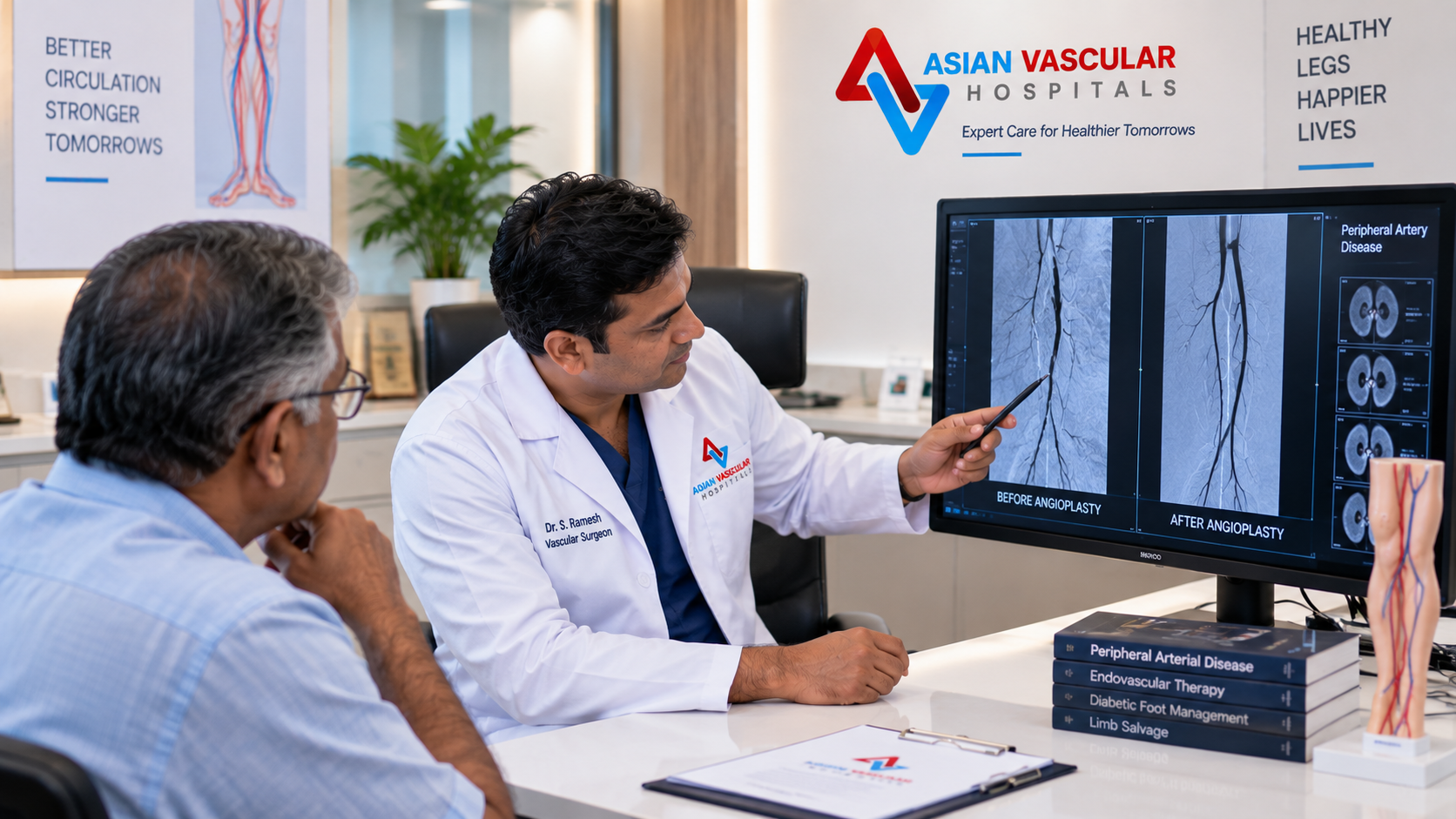
If you notice any peripheral artery disease symptoms, early treatment can prevent serious complications. At Asian Vascular Hospitals, advanced diagnostic and minimally invasive treatments are available.
Led by Dr. G. V. Praveen Kumar, the hospital specializes in limb-saving vascular care.
📞 Call: +91 81439 98831
🌐 Visit: asianvascularhospitals.com
🚑 24/7 emergency care available
- All Post
- blog
Related posts:
 Trusted Vascular Hospital in Hyderabad: Where Advanced Care Meets Compassion
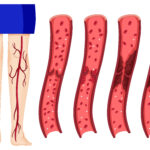 Best Vascular Surgeon Near Me – Expert Care at Asian Vascular Hospitals
 Surgical Treatment for Varicose Veins – Walk Pain-Free Again
 Peripheral Neuropathy Doctors Near Me: How to Find the Right Specialist
 Best Vascular Surgeon in Warangal: Advanced Vascular Care You Can Trust
 Vascular Surgeon in Vikarabad: Advanced Care for Vein & Artery Health
 👣 Diabetic Foot Ulcer Treatment – Save Limbs with Expert Care at Asian Vascular Hospitals
 👣 Foot Specialist Doctor in Hyderabad – Expert Foot & Vascular Care at Asian Vascular Hospitals