
If you have bulging veins, leg pain, heaviness, swelling, itching, skin discoloration, or persistent discomfort, varicose veins may be more than a cosmetic concern. The right treatment depends on identifying the underlying vein problem and selecting an approach appropriate for the severity, anatomy, and symptoms.
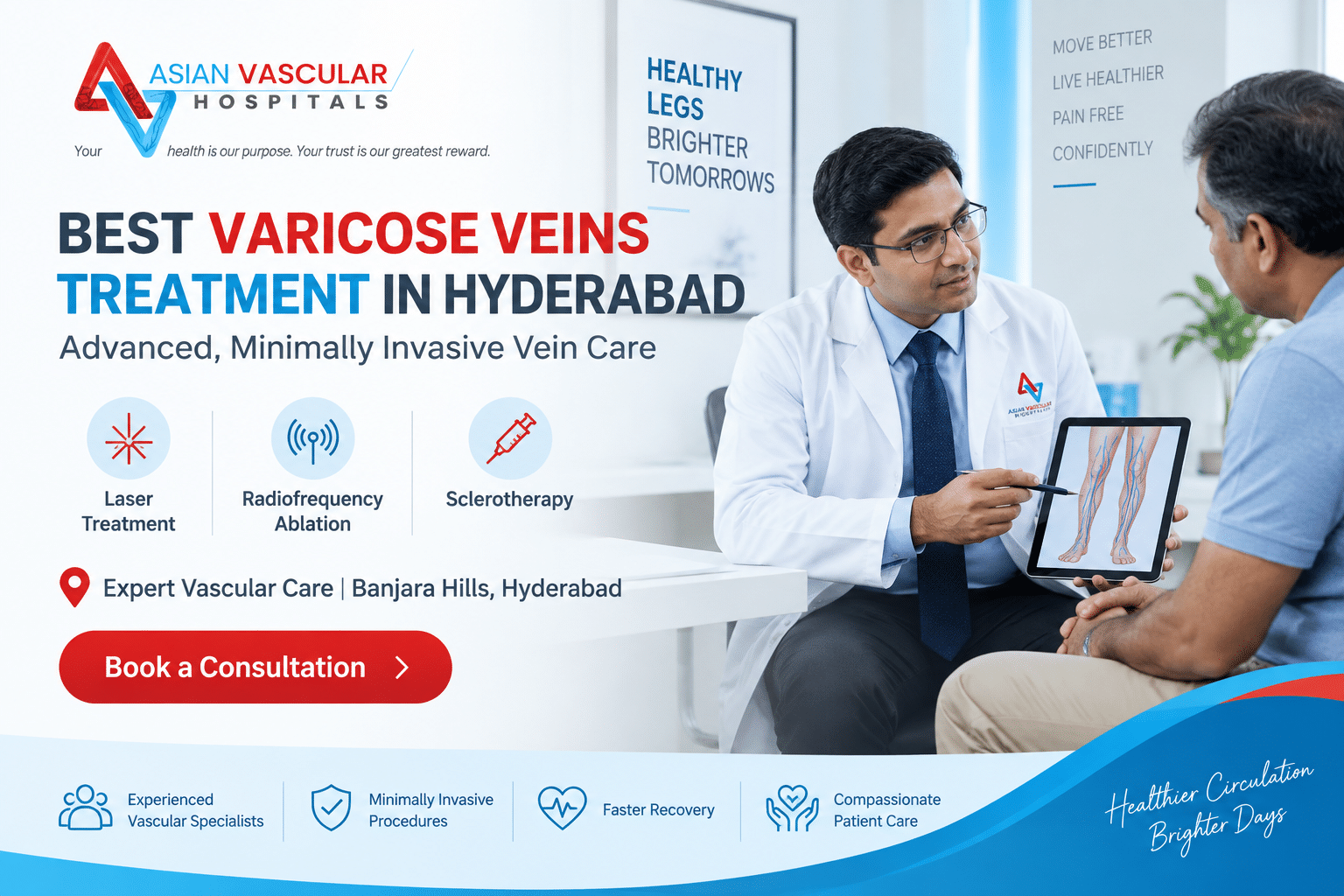
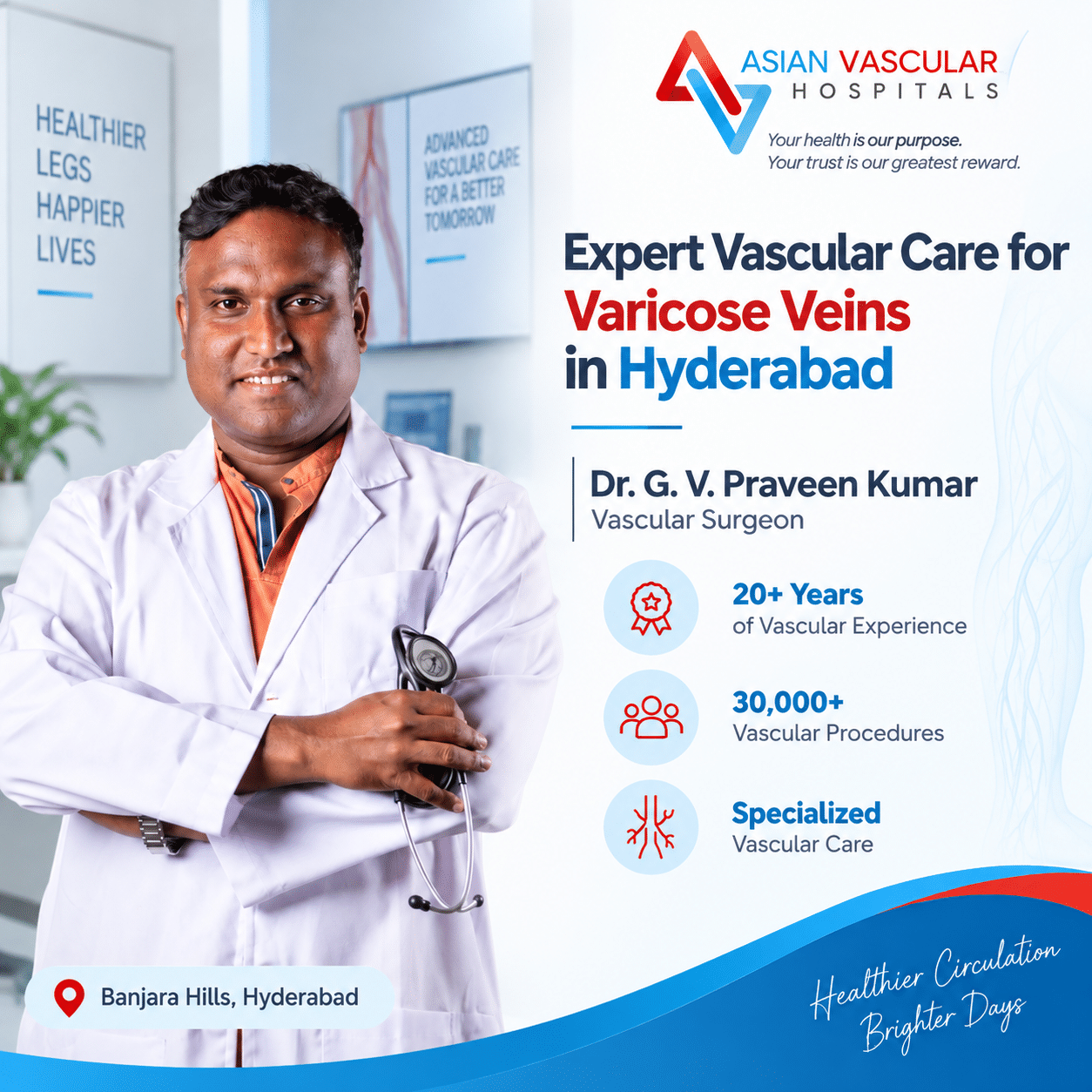
At Asian Vascular Hospitals in Banjara Hills, Hyderabad, varicose vein care is provided by an experienced vascular team led by Dr. G. V. Praveen Kumar, with the hospital’s supplied profile citing 20+ years of vascular experience and 30,000+ vascular procedures. The hospital offers minimally invasive approaches including endovenous laser treatment, radiofrequency vein closure, ultrasound-guided procedures, sclerotherapy, and hybrid treatment approaches.
What Is the Best Varicose Veins Treatment in Hyderabad?
There is no single procedure that is best for every patient with varicose veins. Treatment should be selected after clinical assessment and, when indicated, duplex ultrasound/Doppler evaluation to identify abnormal venous reflux and determine which veins require treatment. Current clinical guidance supports endothermal ablation for appropriate patients with confirmed truncal reflux, with ultrasound-guided foam sclerotherapy or surgery considered when endothermal treatment is unsuitable.
At Asian Vascular Hospitals, the treatment approach may include:
- Endovenous laser therapy (EVLT/EVLA)
- Radiofrequency ablation (RFA)
- Sclerotherapy
- Ultrasound-guided vein procedures
- Hybrid treatment approaches
- Surgical treatment in selected cases where minimally invasive approaches are unsuitable
The appropriate option depends on factors such as:
- The veins involved
- Severity of venous reflux
- Size and location of the affected veins
- Symptoms and complications
- Previous vein procedures
- Overall health and individual treatment requirements
Why Do Varicose Veins Develop?
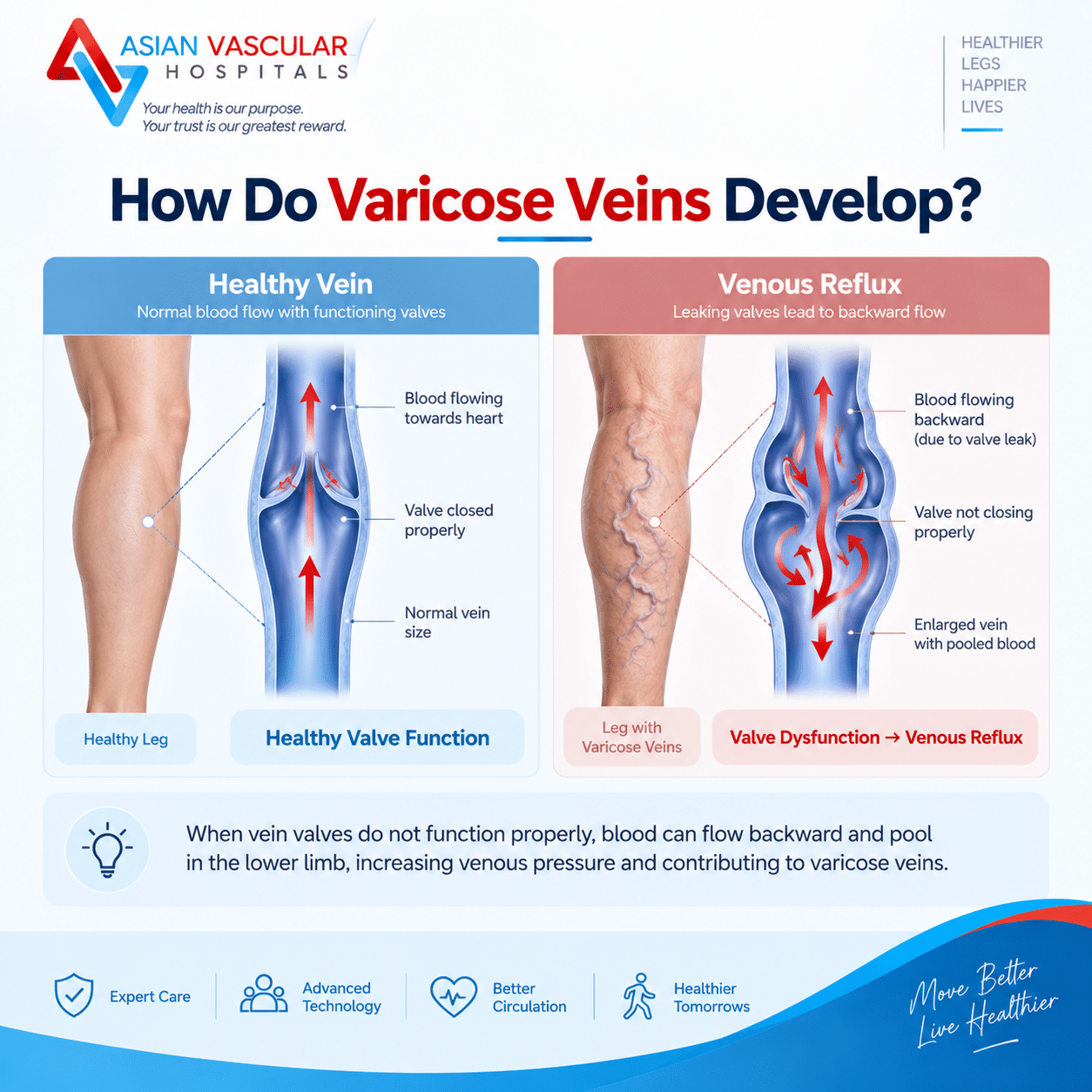
Varicose veins usually develop when the valves inside superficial veins do not function properly, allowing blood to flow backward and pool within the veins. Over time, this increased venous pressure can cause veins to become enlarged, twisted, and more visible.
Risk factors can include:
- Increasing age
- Family history of venous disease
- Prolonged standing or sitting
- Sedentary lifestyle
- Pregnancy
- Excess body weight
- Previous venous disease or procedures
Not every visible varicose vein requires an intervention. Treatment becomes more important when symptoms, skin changes, ulcers, bleeding, or other complications develop.
What Are the Symptoms of Varicose Veins?
The most common symptoms include visible enlarged veins, leg heaviness, aching, swelling, itching, cramps, and skin changes. Some people have visible veins without symptoms, while others develop significant discomfort or complications.
Watch for:
- Bulging or twisted veins
- Aching or throbbing legs
- A feeling of heaviness, particularly after prolonged standing
- Swelling around the ankles or legs
- Burning or itching
- Night-time leg cramps
- Skin discoloration
- Changes in skin texture
- Non-healing venous ulcers
Asian Vascular Hospitals’ patient information specifically highlights bulging veins, heaviness, burning or throbbing sensations, night cramps, ankle discoloration, and persistent swelling as symptoms that warrant evaluation.
When Should You See a Vascular Surgeon for Varicose Veins?
You should arrange a vascular evaluation when varicose veins are associated with persistent pain, swelling, skin changes, ulcers, bleeding, or other symptoms. Early assessment can help identify the underlying venous problem and determine whether treatment is appropriate.
It is particularly important to seek medical assessment if you have:
- Persistent or worsening leg pain
- Significant swelling
- Skin discoloration or hardening
- A non-healing wound or ulcer
- Bleeding from a varicose vein
- Recurrent symptoms after previous treatment
- A history of venous disease
Asian Vascular Hospitals specifically identifies diabetes, family history of vein disease, prolonged standing or sedentary work, obesity or pregnancy history, and previous vein surgery as factors that may warrant greater attention.
How Is Varicose Vein Treatment Diagnosed?
The first step is determining where abnormal venous reflux is occurring. A vascular specialist may use a clinical examination together with duplex ultrasound/Doppler imaging to assess blood flow and identify the veins responsible for the symptoms.
Current vascular guidance describes duplex scanning as an important part of evaluating superficial truncal reflux before selecting treatment.
The assessment can help determine:
- Which veins are affected
- Whether significant reflux is present
- The extent of venous disease
- Whether superficial or deeper veins are involved
- Which treatment approach is appropriate
This is why treatment should not be selected solely because one procedure is advertised as universally superior.
What Varicose Vein Treatments Are Available at Asian Vascular Hospitals?
Asian Vascular Hospitals provides several approaches to varicose vein treatment, allowing treatment to be tailored to the patient’s condition rather than relying on a single technique. The hospital’s supplied content specifically lists laser/endovenous procedures, radiofrequency treatment, ultrasound-guided procedures, injection-based vein treatment, and hybrid approaches.
1. Endovenous Laser Treatment
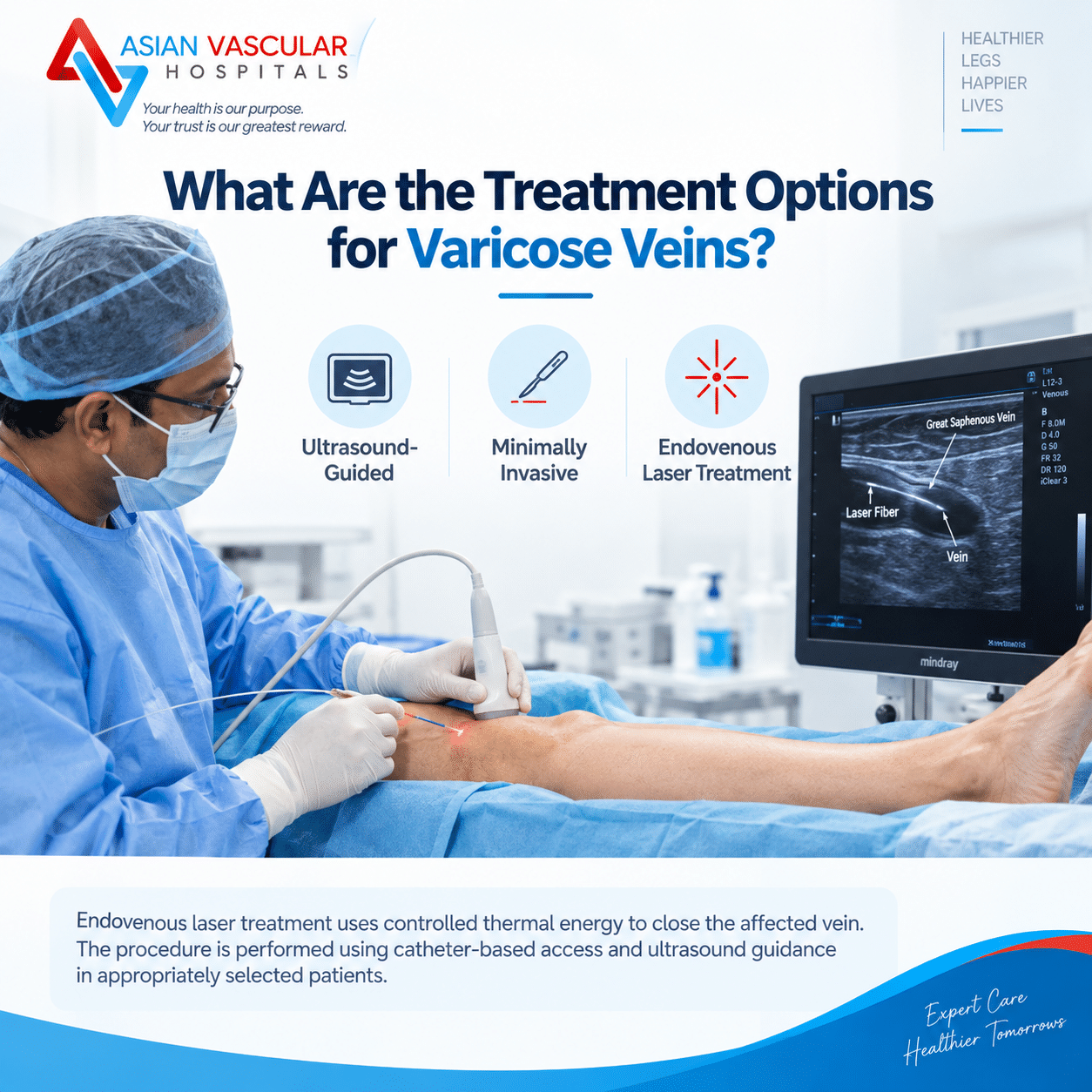
Endovenous laser treatment uses laser energy to close the diseased vein from inside the vessel. It is an endothermal technique performed using catheter-based access and ultrasound guidance.
The procedure generally involves:
- Identifying the target vein using ultrasound
- Accessing the vein through a small puncture
- Positioning a thin laser catheter
- Applying controlled thermal energy
- Closing the abnormal vein
- Allowing blood flow to redirect through healthier veins
Endovenous laser treatment is an established endothermal treatment for appropriate patients with venous reflux.
2. Radiofrequency Ablation
Radiofrequency ablation uses controlled radiofrequency energy to heat and close the affected vein. Like laser ablation, it is a minimally invasive endovenous treatment used for selected patients with superficial venous reflux.
A thin catheter is introduced into the target vein under ultrasound guidance. Radiofrequency energy is then delivered to the vein, causing it to close.
Asian Vascular Hospitals lists radiofrequency vein closure among its minimally invasive varicose vein treatment options.
3. Sclerotherapy
Sclerotherapy involves injecting a sclerosant into selected abnormal veins to close them. It is particularly useful for appropriately selected smaller veins and varicose tributaries.
Ultrasound guidance can be used when treating veins that are not adequately visible from the skin. Current vascular guidance includes sclerotherapy among established treatment options for varicose veins.
4. Ultrasound-Guided Vein Procedures
Ultrasound guidance allows the vascular specialist to see the veins and guide treatment with greater anatomical precision. It can be used during diagnostic assessment and during selected minimally invasive procedures.
The Society for Vascular Surgery describes duplex ultrasound as part of the evaluation of pathological superficial truncal reflux and discusses ultrasound-guided endovenous therapies in current varicose-vein management.
5. Hybrid Treatment for Complex Varicose Veins
Some patients have more than one type or level of venous abnormality. A combination of procedures may therefore be considered when clinically appropriate, rather than treating every patient with the same technique.
Asian Vascular Hospitals specifically lists hybrid treatment approaches for severe cases.
Is Laser Treatment Better Than Surgery for Varicose Veins?
For patients who are appropriate candidates for endothermal treatment, modern guidelines generally place endothermal ablation among the preferred interventional options, while surgery remains an option when less invasive approaches are unsuitable.
The important point is that the decision should be based on the patient’s anatomy and venous disease rather than choosing a procedure simply because it is newer.
Factors considered may include:
- Location of venous reflux
- Vein anatomy
- Severity of disease
- Previous procedures
- Associated complications
- Overall medical condition
- Patient preferences after informed discussion
Is Varicose Vein Treatment Painful?
Most modern minimally invasive treatments are designed to minimize discomfort, but the experience varies between patients and procedures. Local or other forms of anesthesia may be used depending on the treatment.
Asian Vascular Hospitals’ treatment information emphasizes minimally invasive procedures and minimal discomfort as features of its modern varicose vein treatment approach.
Patients should nevertheless understand that temporary bruising, tenderness, tightness, swelling, or discomfort can occur after venous procedures. Your vascular surgeon should explain the expected recovery and potential complications before treatment.
How Long Does It Take to Recover After Varicose Vein Treatment?
Recovery depends on the procedure performed and the extent of venous disease. Many minimally invasive treatments allow patients to walk soon after treatment and return to normal activities relatively quickly, although individual instructions may vary.
Asian Vascular Hospitals’ published material describes same-day discharge, minimal discomfort, faster healing, and improvement over the following weeks as features of its modern treatment approach.
After endovenous treatment, vascular guidance commonly encourages early ambulation, with follow-up assessment used to monitor recovery and complications.
Your recovery plan may include:
- Walking as advised by your doctor
- Following wound-care instructions
- Wearing compression when specifically recommended
- Avoiding strenuous activity for the period advised
- Attending follow-up appointments
- Reporting unusual or worsening symptoms promptly
Can Varicose Veins Come Back After Treatment?
Treatment closes or removes the veins responsible for the current problem, but it does not make a person immune to future venous disease. New varicose veins or recurrent reflux can develop over time, which is why appropriate diagnosis and follow-up matter.
Treatment planning should therefore focus on identifying the underlying reflux and managing the affected venous system rather than simply removing visible veins. Asian Vascular Hospitals describes its approach as focusing on treating root vein reflux, preserving healthy veins, and reducing recurrence.
What Makes Asian Vascular Hospitals a Vascular Care Center in Hyderabad?
Asian Vascular Hospitals is a dedicated vascular-care facility in Banjara Hills, Hyderabad, providing care across a broad range of arterial and venous conditions.
The hospital states that it has performed 30,000+ successful vascular procedures, provides 10 years of exclusive vascular care, and manages conditions including varicose veins, arterial disease, aneurysms, AV fistula problems, vascular malformations, diabetic foot conditions, and limb-threatening vascular disease.
The hospital’s supplied information also highlights:
- Dedicated vascular expertise
- Advanced diagnostic evaluation
- Minimally invasive vascular procedures
- Limb-salvage expertise
- Management of complex vascular conditions
- Patient-focused care
- Experienced vascular surgeons
Its published profile identifies Dr. G. V. Praveen Kumar as a key vascular specialist, citing 20+ years of experience and 30,000+ procedures.
Can Patients From Jubilee Hills, Gachibowli, Madhapur and Kukatpally Visit?
Yes. Asian Vascular Hospitals is located in Banjara Hills, Hyderabad, making it a potential option for patients seeking specialist vascular evaluation from across Hyderabad.
Patients researching varicose vein treatment may search from areas such as:
- Banjara Hills
- Jubilee Hills
- Gachibowli
- Madhapur
- Kukatpally
- Other parts of Hyderabad and Telangana
For patients travelling from outside Banjara Hills, the most important consideration remains access to appropriate vascular assessment and treatment rather than geographic proximity alone.
What Should You Expect During a Varicose Vein Consultation?
A consultation typically begins with an assessment of your symptoms, medical history, visible veins and previous treatments. Where clinically indicated, vascular imaging such as duplex ultrasound may then be used to identify abnormal blood flow and guide treatment planning.
You may be asked about:
- How long you have had the veins
- Pain, swelling or heaviness
- Previous vein procedures
- Previous blood clots
- Family history
- Pregnancy history
- Daily standing or sitting
- Existing medical conditions
- Medications
The goal is to determine whether treatment is required and, if so, which treatment is appropriate for your particular venous anatomy.
Why Choose Specialist Vascular Care for Varicose Veins?
Varicose veins are part of a broader venous circulation problem, and specialist assessment can help distinguish a primarily cosmetic concern from clinically significant venous disease.
At Asian Vascular Hospitals, vascular care covers both venous and arterial conditions, including varicose veins, DVT, peripheral artery disease, aneurysms, diabetic foot conditions, vascular malformations and other vascular disorders.
This broader vascular expertise can be particularly relevant for patients who have:
- Diabetes
- Previous vascular procedures
- Complex or recurrent varicose veins
- Non-healing wounds
- Significant swelling
- Multiple vascular risk factors
When Should Varicose Veins Be Treated Urgently?
Varicose veins accompanied by sudden or significant changes should be medically assessed promptly. Severe or rapidly worsening swelling, significant pain, bleeding, skin breakdown, or a non-healing ulcer should not be ignored.
Seek urgent medical attention if you experience concerning symptoms such as:
- Sudden significant leg swelling
- Severe or unexplained leg pain
- Bleeding from a varicose vein
- A rapidly worsening wound
- Significant skin changes
- Symptoms suggesting a blood clot or infection
Not every complication can be assessed safely online, so concerning symptoms should be evaluated by an appropriate medical professional.
Frequently Asked Questions About Varicose Veins Treatment in Hyderabad
1. What is the best treatment for varicose veins in Hyderabad?
The appropriate treatment depends on the patient’s vein anatomy, severity, symptoms and underlying venous reflux. Options can include endovenous laser treatment, radiofrequency ablation, sclerotherapy, ultrasound-guided procedures, hybrid treatment and, in selected cases, surgery.
2. Is laser treatment for varicose veins safe?
Endovenous laser treatment is an established minimally invasive treatment for appropriately selected patients with venous reflux. As with any medical procedure, potential risks and suitability should be discussed with a vascular specialist before treatment.
3. How long does varicose vein treatment take?
The duration depends on the treatment selected and the number and location of veins being treated. Many minimally invasive procedures are performed without a prolonged hospital stay, but the treating vascular specialist should provide the expected procedure and recovery timeline for the individual patient.
4. Can I walk after varicose vein treatment?
Patients undergoing endovenous vein treatment are commonly encouraged to walk soon after the procedure, subject to their doctor’s instructions. Early ambulation is included in vascular postoperative guidance for vein ablation.
5. Can varicose veins come back after laser treatment?
A treated vein can be successfully closed, but new venous reflux or other varicose veins can develop later. Long-term management therefore depends on the underlying venous disease, appropriate treatment selection and follow-up.
6. Do all varicose veins require surgery?
No. Many patients can be managed with minimally invasive procedures when intervention is clinically appropriate. Current NICE guidance recommends endothermal ablation for suitable patients with confirmed truncal reflux, followed by ultrasound-guided foam sclerotherapy when endothermal ablation is unsuitable and surgery when those approaches are unsuitable.
7. Where can I get varicose vein treatment in Hyderabad?
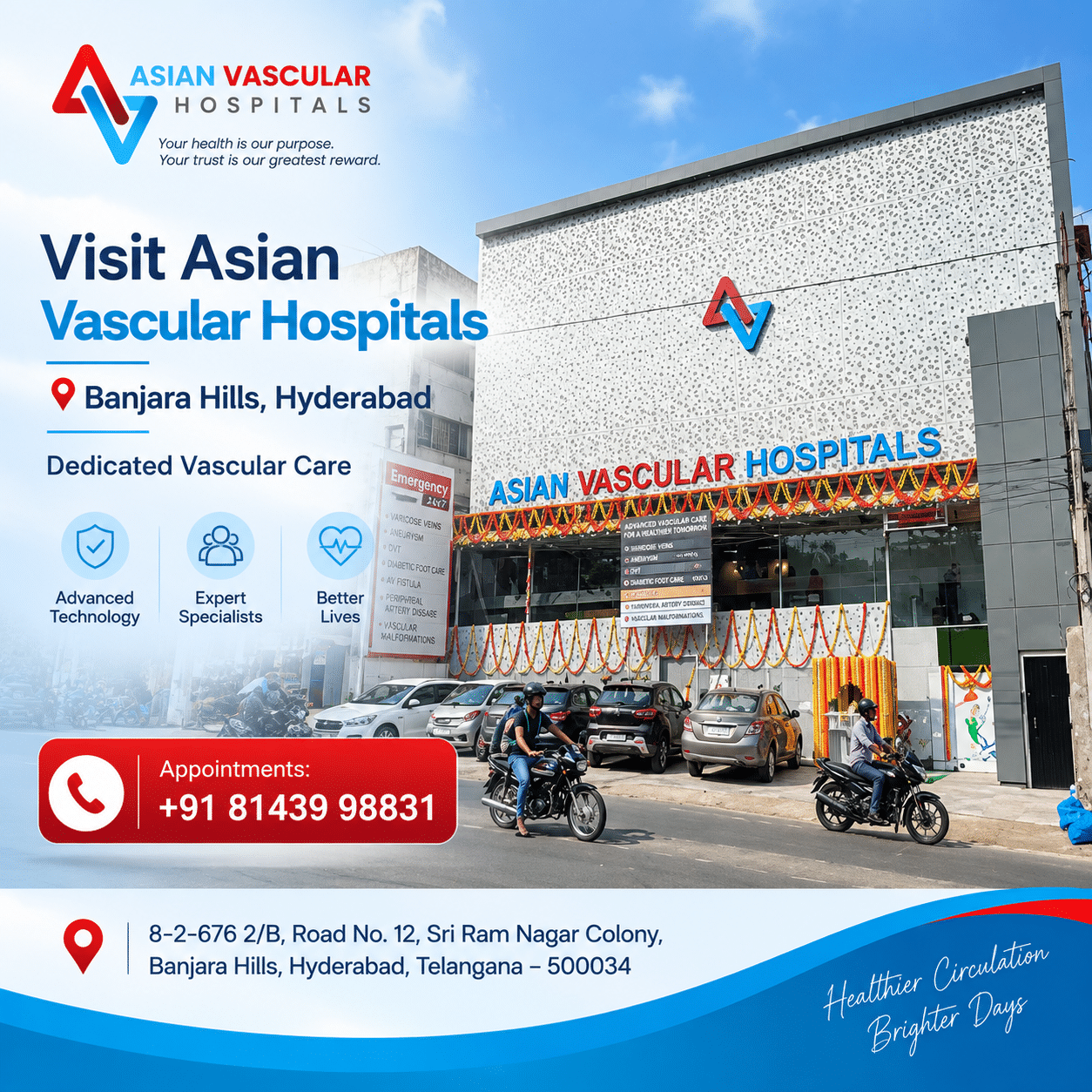
Asian Vascular Hospitals provides vascular care in Banjara Hills, Hyderabad, including minimally invasive varicose vein procedures. The hospital’s listed appointment number is +91 81439 98831, and its published address is 8-2-676 2/B, Road No. 12, Sri Ram Nagar Colony, Banjara Hills, Hyderabad, Telangana – 500034.
Recent Posts
- All Post
- blog
Diabetic Foot Treatment Hyderabad: Specialist Care for Non-Healing Foot Wounds
Best Varicose Veins Treatment in Hyderabad: Modern Procedures, Recovery &…
Peripheral Vascular Surgery Hyderabad: PAD Treatment Options & When Surgery…
Infection in Diabetic Foot: Warning Signs You Should Never Ignore
When Does a Diabetic Foot Need Surgery? Understanding the Right…
Best Treatment for Diabetic Foot Ulcers: Advanced Care That Can…
When Does an Aneurysm Need Surgery? Understanding the Real Risk…
How to Improve Blood Circulation in Legs: Expert Tips for…
When Does PAD Require Surgery? Understanding Your Treatment Options Before…
How to Care for Your AV Fistula After Surgery: A…
Get Expert Varicose Vein Evaluation in Hyderabad
If varicose veins are causing pain, heaviness, swelling, visible vein changes, skin discoloration or difficulty with everyday activities, a vascular evaluation can help identify the underlying problem and determine whether treatment is appropriate.
At Asian Vascular Hospitals, Banjara Hills, patients can access specialist vascular assessment and minimally invasive treatment options including laser/endovenous procedures, radiofrequency treatment, sclerotherapy and ultrasound-guided interventions.
Call +91 81439 98831 to schedule a consultation.
Asian Vascular Hospitals
8-2-676 2/B, Road No. 12,
Sri Ram Nagar Colony, Banjara Hills,
Hyderabad, Telangana – 500034
Related posts:
 Aneurysm Treatment in Hyderabad: Expert Care for Your Vascular Health
 Best Vascular Surgeon – Everything You Need to Know Before Choosing One
 Varicose Veins Treatment Cost – Affordable Laser Surgery in Hyderabad
 Peripheral Neuropathy: Causes, Symptoms, and Treatment Options
 🦶 Diabetic Foot Care at Asian Vascular Hospitals, Hyderabad
 Vascular Surgeon in Karimnagar: Advanced Vascular Care for Healthier Living
 Vascular Surgeon in Bhuvanagiri: Advanced Vein & Artery Care
 Varicose Veins Medical Treatment – Advanced Options for Lasting Relief