

Deep Vein Thrombosis Treatment in Hyderabad
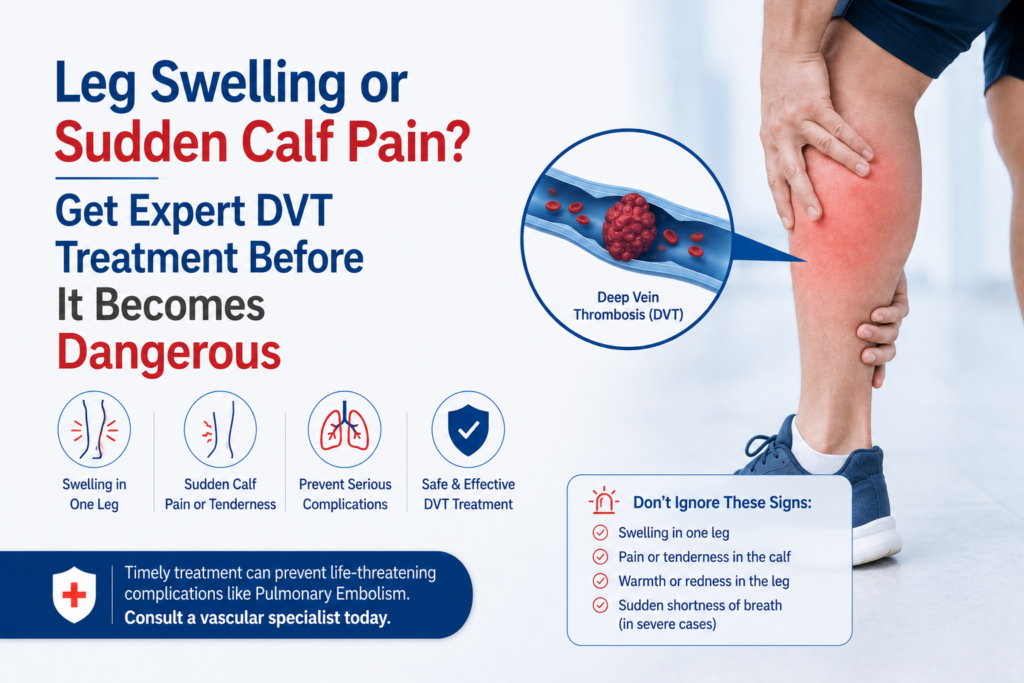
Advanced Blood Clot Care with Fast Diagnosis & Limb-Saving Treatment A blood clot in the leg should never be ignored. Sudden swelling, calf pain, or unexplained heaviness in one leg may be signs of Deep Vein Thrombosis (DVT)—a serious condition that can become life-threatening if the clot travels to the lungs. At Asian Vascular Hospitals, patients receive rapid deep vein thrombosis treatment using advanced imaging, minimally invasive clot removal, and emergency vascular care designed to prevent complications early. 📞 Call Now for Immediate DVT Evaluation: +91 81439 98831 When Should You Worry About DVT? You should seek immediate deep vein thrombosis treatment if you have: Swelling in one leg Persistent calf pain Warmth or redness in the leg Sudden difficulty walking Shortness of breath with leg swelling Early treatment can prevent pulmonary embolism, vein damage, and long-term circulation problems. Why Patients Choose Our DVT Treatment Specialists Choosing the right hospital for blood clot treatment can make a major difference in recovery and complication prevention. At Asian Vascular Hospitals, patients benefit from: ✔ Dedicated vascular-only specialists✔ Same-day Doppler diagnosis✔ Minimally invasive clot removal procedures✔ 24/7 emergency vascular care✔ Advanced catheter-based DVT treatment✔ Expertise in complex and high-risk cases Patients searching for dvt treatment near me often need urgent care—and fast access to experienced specialists matters. Meet the Deep Vein Thrombosis Specialists Dr. G. V. Praveen Kumar 20+ years of vascular expertise 30,000+ vascular procedures Specialist in complex clot management Expertise in minimally invasive vascular interventions As one of the trusted deep vein thrombosis specialists, Dr. Praveen Kumar focuses on rapid diagnosis, circulation restoration, and preventing long-term complications. What Makes Early DVT Treatment So Important? A delayed diagnosis can allow the clot to grow or travel to the lungs. Untreated DVT may lead to: Pulmonary embolism Severe circulation damage Chronic swelling Venous ulcers Long-term leg pain Early dvt treatment helps restore blood flow before serious complications develop. Signs You Should Not Ignore Common DVT symptoms include: Swelling in one leg Calf pain or tenderness Warm skin over the affected area Tightness while walking Red or dark skin discoloration These symptoms often require immediate blood clot treatment. What Is Deep Vein Thrombosis (DVT)? Deep Vein Thrombosis occurs when a blood clot forms in a deep vein, usually in the legs. This clot can: Restrict circulation Cause severe swelling and pain Break loose and travel to the lungs This is why specialized deep vein thrombosis treatment is essential. Common Causes of DVT Several risk factors increase clot formation: Long travel or prolonged sitting Recent surgery Smoking Obesity Cancer Pregnancy Diabetes Reduced mobility High-risk individuals should consult dvt treatment specialists early if symptoms appear. Stages of Deep Vein Thrombosis Early Stage Mild swelling Minor calf discomfort Progressive Stage Increased pain Visible swelling Walking difficulty Advanced Stage Major clot burden Severe circulation compromise Pulmonary embolism risk Timely deep vein thrombosis treatment prevents progression. How DVT Is Diagnosed At a specialized dvt treatment hospital, accurate diagnosis is critical. Diagnostic tools include: Doppler ultrasound D-Dimer blood testing CT venography Advanced vascular imaging Fast imaging allows doctors to begin blood clot treatment without delay. Advanced Deep Vein Thrombosis Treatment Options Treatment depends on clot size, location, and severity. 1. Anticoagulant Therapy Blood thinners help: Prevent clot growth Reduce clot recurrence Lower pulmonary embolism risk This is the most common first-line dvt treatment. 2. Catheter-Directed Thrombolysis Specialized catheter techniques dissolve clots directly inside the vein. Benefits: Faster clot clearance Improved circulation Reduced long-term vein damage This minimally invasive procedure is performed by experienced deep vein thrombosis specialists. 3. Mechanical Clot Removal In severe cases, advanced catheter devices physically remove the clot. Recommended when: Swelling is severe Blood flow is critically reduced Limb circulation is threatened This is considered among the best dvt treatment options for selected patients. 4. IVC Filter Placement An IVC filter prevents clots from traveling to the lungs in high-risk patients. Used when: Blood thinners are unsafe Pulmonary embolism risk is high Is Surgery Needed for DVT? Most modern deep vein thrombosis treatment procedures are minimally invasive. Open surgery is reserved for: Extensive clot burden Failed catheter procedures Limb-threatening complications Recovery After DVT Treatment Most patients recover gradually with: Reduced swelling Better walking ability Improved circulation Recovery recommendations: Compression stockings Regular movement Medication adherence Follow-up vascular scans FAQs About Deep Vein Thrombosis Treatment 1. Is DVT dangerous? Yes. Untreated DVT can lead to pulmonary embolism and circulation damage. 2. What is the best treatment for DVT? The best deep vein thrombosis treatment depends on clot severity and patient condition. 3. Can DVT be treated without surgery? Yes. Most patients improve with medications and minimally invasive procedures. 4. How quickly should treatment begin? Immediate evaluation is recommended once symptoms appear. 📞 Book an Immediate DVT Consultation in Hyderabad If you notice swelling, calf pain, or signs of a possible clot, early treatment can prevent life-threatening complications. At Asian Vascular Hospitals, advanced diagnostics and emergency blood clot treatment are available with expert vascular care. 📞 Call: +91 81439 98831🌐 Visit: asianvascularhospitals.com🚑 24/7 Emergency Vascular Support Available Recent Posts All Post blog Leg Pain While Walking: Is It PAD? What Happens If an AV Fistula Gets Blocked? Blood Clot in Leg: When Should You Worry? Peripheral Artery Disease Treatment: Latest Options for Better Circulation Best AV Fistula Surgeon for Dialysis Access in Hyderabad Peripheral Artery Disease Symptoms: Early Signs You Should Not Ignore What Is an AV Fistula and Why Is It Needed… AV Fistula Surgery for Dialysis: Complete Patient Guide Deep Vein Thrombosis Treatment: Latest Medical Options Explained Deep Vein Thrombosis: Early Symptoms You Should Never Ignore
Leg Pain While Walking: Is It PAD?
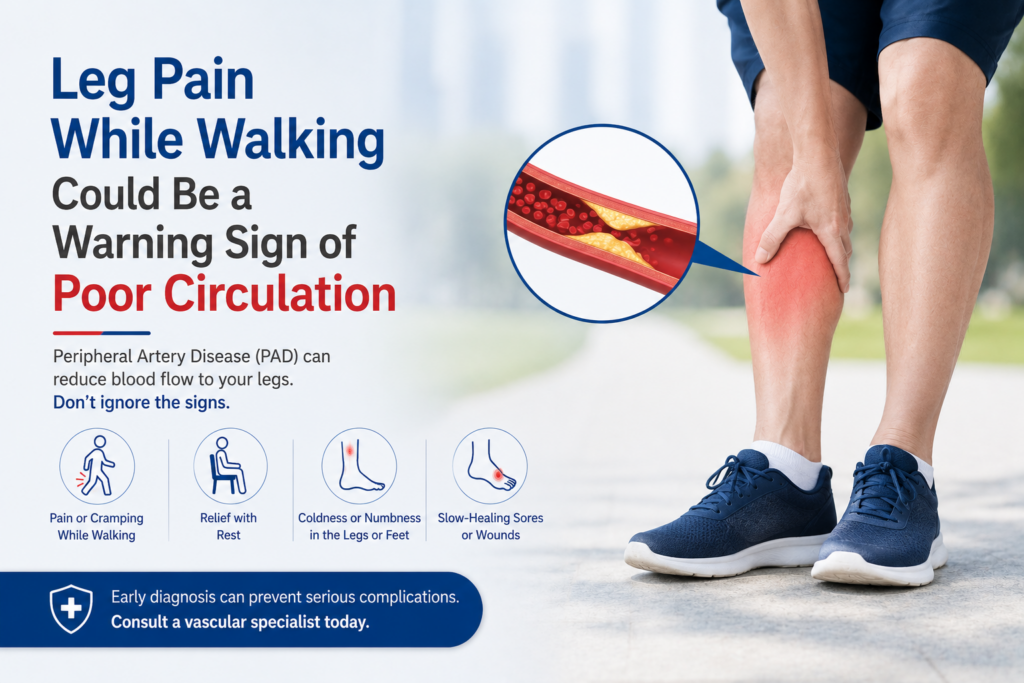
Experiencing leg pain during walking is often dismissed as muscle fatigue or aging. However, persistent discomfort can sometimes signal Peripheral Artery Disease (PAD)—a circulation disorder caused by reduced blood flow to the legs. Understanding leg pain while walking causes can help detect PAD early and prevent serious complications. Can Leg Pain While Walking Be PAD? Yes. One of the most common leg pain while walking causes is PAD, where narrowed arteries reduce oxygen supply to leg muscles. This typically causes cramping or tightness that improves with rest and returns during activity. What Does PAD-Related Leg Pain Feel Like? PAD pain is different from ordinary muscle soreness. Common claudication symptoms include: Cramping in calves, thighs, or buttocks Pain that starts during walking Relief within minutes of resting Repeated discomfort after walking again These leg pain while walking causes are linked to poor circulation rather than joint or muscle problems. Why PAD Causes Pain During Walking When arteries narrow, muscles do not receive enough oxygen-rich blood during physical activity. As a result: Muscles tire quickly Pain develops after short walking distances Symptoms worsen as blockages progress This pattern is one of the most important claudication symptoms doctors look for during PAD diagnosis. Other Possible Causes of Leg Pain While Walking Not all leg pain while walking causes are related to PAD. Other conditions may include: Arthritis Muscle strain Nerve compression (sciatica) Varicose veins However, when pain consistently improves with rest, PAD becomes more likely. Warning Signs You Should Not Ignore Seek medical evaluation if you experience: Repeated calf pain while walking Cold feet or numbness Slow-healing wounds on toes or feet Weak pulses in legs Reduced walking distance over time These may indicate advanced PAD and require immediate pad diagnosis. Who Is at Higher Risk of PAD? Certain factors increase the likelihood of PAD-related leg pain while walking causes: Diabetes Smoking High cholesterol High blood pressure Obesity Age above 50 High-risk patients should never ignore recurring claudication symptoms. How PAD Is Diagnosed A proper pad diagnosis usually includes: Clinical examination Doppler ultrasound Ankle-Brachial Index (ABI) test CT angiography in advanced cases Early pad diagnosis helps prevent worsening circulation problems. Can PAD Be Treated Successfully? Yes. Modern treatments can restore circulation and reduce symptoms. Treatment options include: Lifestyle changes and walking programs Medications to improve blood flow Angioplasty for blocked arteries Stent placement in severe cases Early treatment improves mobility and reduces complications. 📊 Real Patient Insight A diabetic patient initially ignored calf pain while walking short distances, assuming it was aging-related. A vascular evaluation later confirmed PAD. After minimally invasive treatment, circulation improved and walking became pain-free again. ❓ FAQs 1. Is leg pain while walking always PAD? No, but recurring pain that improves with rest is a common sign of PAD. 2. What are claudication symptoms? These are cramps or pain in the legs during walking caused by poor circulation. 3. Can PAD become serious? Yes. Untreated PAD can lead to ulcers, infections, and even limb loss. 📞 CTA – Get Early PAD Evaluation in Hyderabad If you are experiencing recurring leg pain, early evaluation can identify serious circulation problems before complications develop. At Asian Vascular Hospitals, advanced testing and minimally invasive treatment are available for PAD and circulation disorders. Led by Dr. G. V. Praveen Kumar, the hospital specializes in accurate pad diagnosis and limb-saving vascular care. 📞 Call Now: +91 81439 98831🌐 Visit: asianvascularhospitals.com🚑 24/7 vascular emergency care available Don’t ignore recurring leg pain—early treatment can restore circulation and protect your mobility. Recent Posts All Post blog Blood Clot in Leg: When Should You Worry? Peripheral Artery Disease Treatment: Latest Options for Better Circulation Best AV Fistula Surgeon for Dialysis Access in Hyderabad Peripheral Artery Disease Symptoms: Early Signs You Should Not Ignore What Is an AV Fistula and Why Is It Needed… AV Fistula Surgery for Dialysis: Complete Patient Guide Deep Vein Thrombosis Treatment: Latest Medical Options Explained Deep Vein Thrombosis: Early Symptoms You Should Never Ignore Cost of Varicose Veins Treatment in India: What Influences the… Varicose Veins Treatments in Hyderabad: Which Option Is Right for…
What Happens If an AV Fistula Gets Blocked?
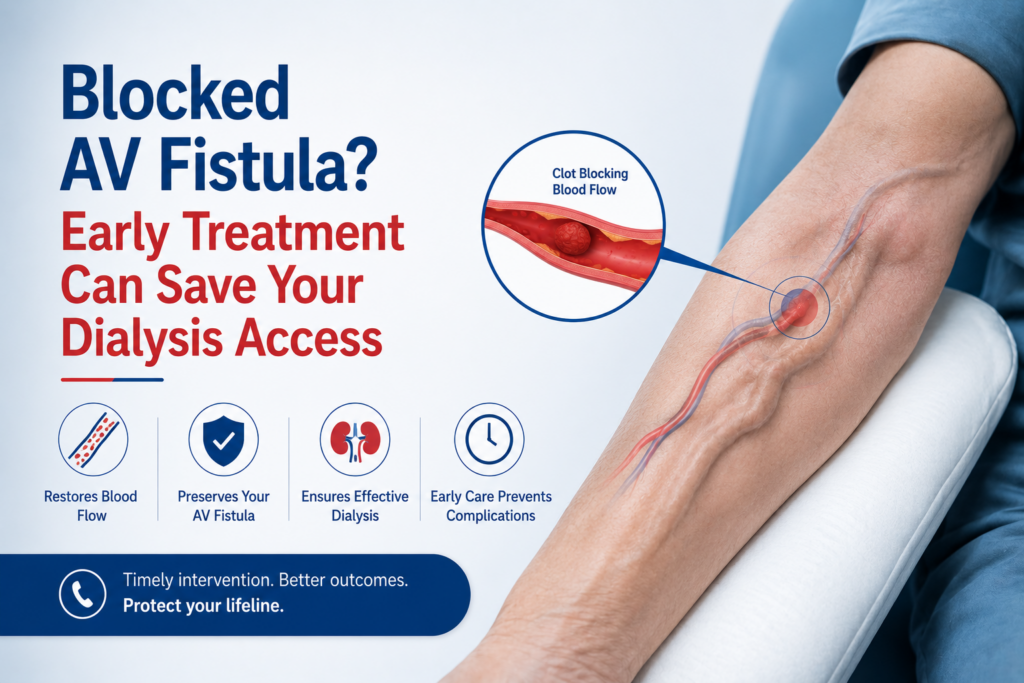
A blocked AV fistula is a serious problem for dialysis patients because it can interrupt treatment and reduce blood flow needed for effective dialysis. Early detection and timely treatment are critical to restore function and prevent permanent access failure. What Is a Blocked AV Fistula? A blocked AV fistula occurs when blood flow through the fistula becomes partially or completely obstructed, usually due to clot formation or narrowing of the vessel. This condition requires urgent medical evaluation to save the dialysis access. How Does an AV Fistula Become Blocked? The most common cause of a blocked AV fistula is fistula thrombosis, where a blood clot forms inside the access vessel. Other causes include: Narrowing of veins (stenosis) Low blood flow through the fistula Repeated needle injury Delayed fistula monitoring Without timely treatment, a dialysis access blockage can stop the fistula from functioning completely. Early Signs of a Blocked AV Fistula Recognizing symptoms early can help prevent permanent damage. Common warning signs: Weak or absent vibration (“thrill”) Difficulty during dialysis sessions Swelling in the arm Pain around the fistula site Reduced blood flow during dialysis Many patients ignore these signs until the blocked AV fistula becomes an emergency. Why Immediate Treatment Matters A blocked AV fistula should never be ignored because dialysis depends on proper blood flow. Delayed treatment may lead to: Complete fistula failure Emergency catheter placement Repeated surgeries Increased infection risk Early management of fistula thrombosis often allows the access to be saved without creating a new fistula. How Is a Blocked AV Fistula Diagnosed? Doctors evaluate a blocked AV fistula using: Physical examination Doppler ultrasound Vascular imaging These tests help identify the exact location and severity of the dialysis access blockage. Treatment Options for Blocked AV Fistula Modern treatment focuses on restoring blood flow quickly. 1. Fistula Repair A minimally invasive or surgical fistula repair may be performed to reopen the blocked area. 2. Clot Removal (Thrombectomy) Doctors remove the clot causing fistula thrombosis using catheter-based or surgical methods. 3. Balloon Angioplasty A balloon is used to widen narrowed sections and improve flow. Early treatment significantly improves the success of fistula repair procedures. Can a Blocked Fistula Be Prevented? Yes—routine monitoring helps reduce the risk of a blocked AV fistula. Important preventive steps: Check fistula thrill daily Avoid pressure on the fistula arm Attend regular vascular follow-ups Report changes in dialysis flow immediately Preventing dialysis access blockage is easier than treating complete failure. 📊 Real Patient Insight A dialysis patient noticed reduced vibration in his fistula but delayed evaluation. Within days, the access completely stopped functioning due to fistula thrombosis. After urgent fistula repair, blood flow was restored and dialysis continued without needing a new access site. ❓ FAQs 1. Can a blocked AV fistula be repaired? Yes, many cases of blocked AV fistula can be successfully treated with clot removal or angioplasty. 2. What causes fistula thrombosis? Reduced blood flow and vein narrowing are common causes of fistula thrombosis. 3. Is blocked fistula an emergency? Yes, delayed treatment can result in permanent dialysis access failure. Expert AV Fistula Repair in Hyderabad If you notice signs of a blocked AV fistula, immediate treatment can help save your dialysis access. At Asian Vascular Hospitals, advanced care is available for fistula thrombosis, dialysis access blockage, and emergency fistula repair. Led by Dr. G. V. Praveen Kumar, the hospital specializes in vascular access salvage and minimally invasive fistula treatments. 📞 Call Now: +91 81439 98831🌐 Visit: asianvascularhospitals.com🚑 24/7 vascular emergency care available Early treatment can save your fistula and avoid dialysis interruptions. Recent Posts All Post blog Blood Clot in Leg: When Should You Worry? Peripheral Artery Disease Treatment: Latest Options for Better Circulation Best AV Fistula Surgeon for Dialysis Access in Hyderabad Peripheral Artery Disease Symptoms: Early Signs You Should Not Ignore What Is an AV Fistula and Why Is It Needed… AV Fistula Surgery for Dialysis: Complete Patient Guide Deep Vein Thrombosis Treatment: Latest Medical Options Explained Deep Vein Thrombosis: Early Symptoms You Should Never Ignore Cost of Varicose Veins Treatment in India: What Influences the… Varicose Veins Treatments in Hyderabad: Which Option Is Right for…
Blood Clot in Leg: When Should You Worry?
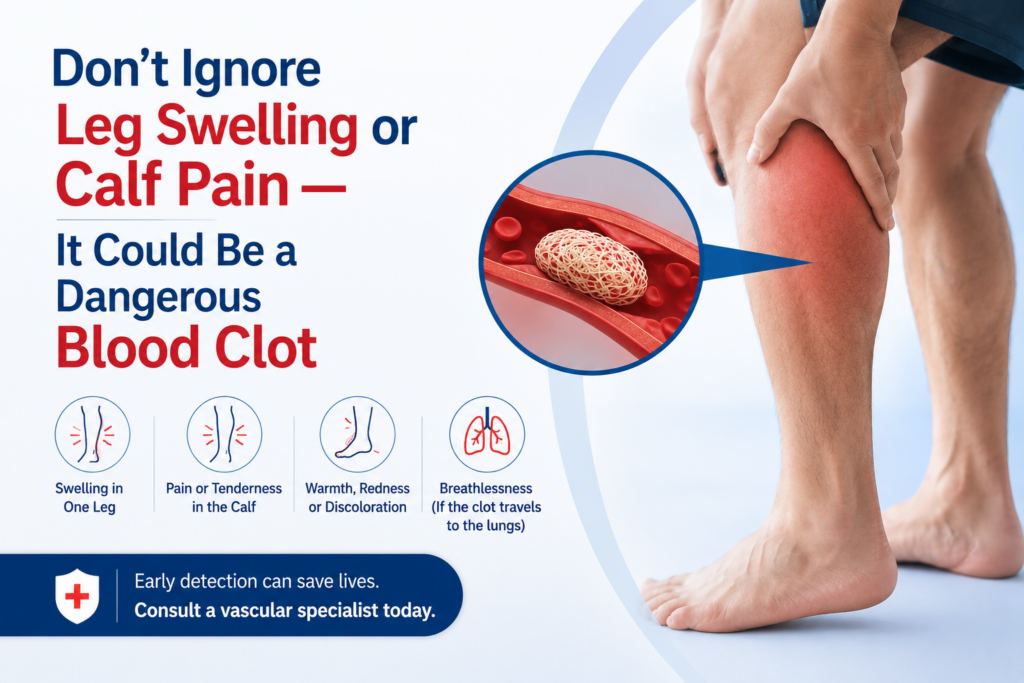
A blood clot in leg can become dangerous if ignored. While some leg pain or swelling may seem harmless, certain symptoms can indicate a deep vein thrombosis (DVT)—a condition where a clot blocks blood flow inside a deep vein. Early diagnosis is critical because a blood clot in leg can travel to the lungs and become life-threatening. When Is a Blood Clot in Leg Dangerous? A blood clot in leg becomes serious when it causes sudden swelling, persistent calf pain, warmth, redness, or breathing difficulty. These signs may indicate DVT and require immediate medical attention. What Does a Blood Clot in Leg Feel Like? The symptoms of a blood clot in leg often develop gradually, but they can also appear suddenly. Common warning signs include: Swelling in one leg Calf pain or tenderness Warm skin over the affected area Red or darkened skin color Tightness while walking Many people mistake early dvt symptoms in leg for muscle strain or fatigue. How to Differentiate a Blood Clot from Normal Leg Pain Not every leg cramp is dangerous. However, a blood clot in leg usually has specific patterns. Typical clot-related symptoms: Pain in only one leg Swelling that does not improve Pain worsening while standing or walking Persistent calf tightness Unlike routine soreness, leg pain clot symptoms often continue even after rest. What Causes Blood Clots in the Leg? Several conditions increase the risk of developing a blood clot in leg. Common causes include: Long travel or prolonged sitting Recent surgery or hospitalization Smoking Obesity Pregnancy Diabetes or vascular disease In many patients, unexplained swelling in calf causes concern only after symptoms worsen. Why You Should Never Ignore DVT Symptoms Ignoring a blood clot in leg can lead to serious complications. Risks include: Pulmonary embolism (clot reaching lungs) Chronic leg swelling Skin damage and ulcers Long-term circulation problems Early recognition of dvt symptoms in leg can prevent emergency situations. When Should You See a Specialist Immediately? Seek urgent medical care if you have: Sudden swelling in one leg Severe calf pain without injury Warmth and redness in the leg Shortness of breath with leg pain These symptoms may indicate a dangerous blood clot in leg requiring immediate treatment. How Is a Blood Clot Diagnosed? Doctors diagnose a blood clot in leg using: Doppler ultrasound Blood tests CT imaging in selected cases Early imaging helps confirm dvt symptoms in leg and guides the right treatment quickly. A middle-aged office worker ignored persistent calf pain after a long flight, assuming it was muscle fatigue. A Doppler scan later confirmed a blood clot in leg. Early treatment prevented the clot from reaching the lungs. ❓ FAQs 1. Can a blood clot in leg go away on its own? Some clots may stabilize, but untreated DVT can become dangerous. Medical evaluation is essential. 2. Is calf pain always a blood clot? No, but persistent one-sided pain with swelling should be checked for dvt symptoms in leg. 3. What is the first sign of a blood clot in leg? Swelling and calf discomfort are often the earliest warning signs. Get Immediate DVT Evaluation in Hyderabad If you notice symptoms of a blood clot in leg, early diagnosis can prevent life-threatening complications. At Asian Vascular Hospitals, advanced Doppler evaluation and emergency vascular care are available for DVT and circulation disorders. Led by Dr. G. V. Praveen Kumar, the hospital specializes in rapid diagnosis and minimally invasive clot management. 📞 Call Now: +91 81439 98831 🌐 Visit: asianvascularhospitals.com 🚑 24/7 emergency vascular care available Don’t ignore warning signs—early treatment can save your life. Recent Posts All Post blog Blood Clot in Leg: When Should You Worry? Peripheral Artery Disease Treatment: Latest Options for Better Circulation Best AV Fistula Surgeon for Dialysis Access in Hyderabad Peripheral Artery Disease Symptoms: Early Signs You Should Not Ignore What Is an AV Fistula and Why Is It Needed… AV Fistula Surgery for Dialysis: Complete Patient Guide Deep Vein Thrombosis Treatment: Latest Medical Options Explained Deep Vein Thrombosis: Early Symptoms You Should Never Ignore Cost of Varicose Veins Treatment in India: What Influences the… Varicose Veins Treatments in Hyderabad: Which Option Is Right for…
Peripheral Artery Disease Treatment: Latest Options for Better Circulation
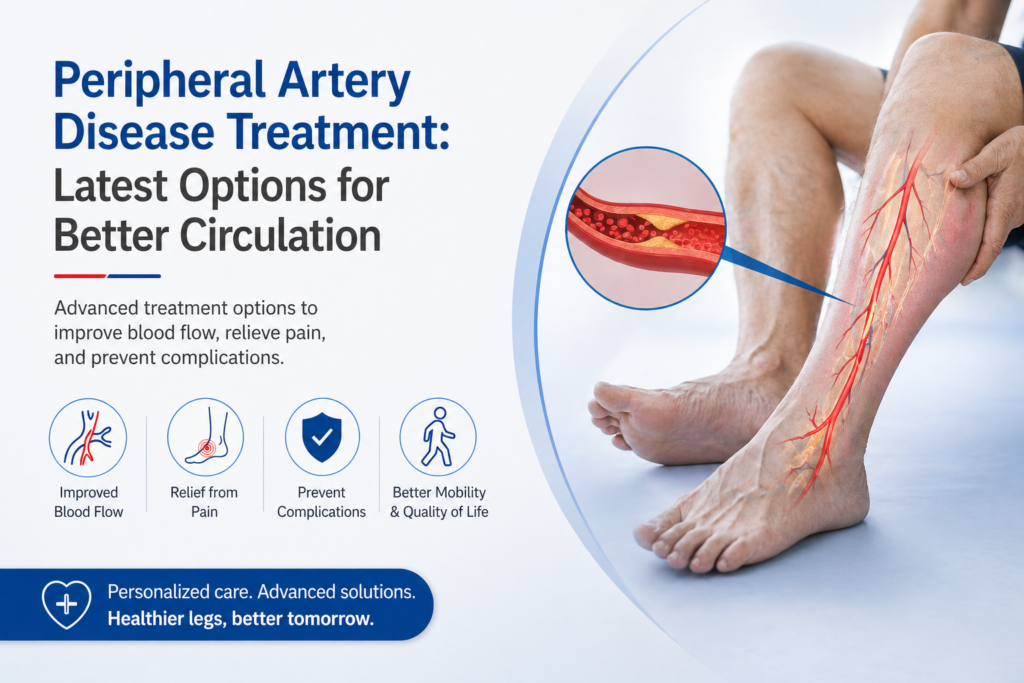
Peripheral Artery Disease (PAD) reduces blood flow to the legs due to blocked arteries. Timely peripheral artery disease treatment can relieve pain, heal wounds, and prevent serious complications like limb loss. What Is the Best Treatment for PAD? The best peripheral artery disease treatment depends on severity. Early stages can be managed with medication and lifestyle changes, while advanced cases may require procedures like angioplasty or stent placement to restore blood flow. How Peripheral Artery Disease Treatment Works Peripheral artery disease treatment focuses on improving circulation and preventing further blockage. Main goals: Restore blood flow to legs Reduce pain and discomfort Heal wounds and ulcers Prevent progression and complications A structured pad treatment plan is tailored based on individual condition and risk factors. Non-Surgical PAD Treatment Options In early stages, peripheral artery disease treatment may not require surgery. 1. Lifestyle Modifications Walking exercise programs Smoking cessation Diet control for cholesterol 2. Medications Blood thinners Cholesterol-lowering drugs Medicines to improve blood flow These methods form the foundation of pad treatment for mild to moderate cases. Minimally Invasive Procedures (Advanced Treatment) When blockages are significant, advanced peripheral artery disease treatment is required. Angioplasty for Leg Arteries A small balloon is used to open blocked arteries. Minimally invasive Quick recovery Immediate blood flow improvement Stent in Leg A tiny mesh tube is placed to keep the artery open. Prevents re-narrowing Long-term effectiveness These procedures are widely used in modern pad treatment and offer faster recovery compared to traditional surgery. When Is Surgery Required? In severe cases, peripheral artery disease treatment may involve bypass surgery. Creates a new pathway for blood flow Used when arteries are heavily blocked Recommended when other treatments are not suitable However, most patients today are treated with minimally invasive pad treatment options. Recovery and Results With timely peripheral artery disease treatment, patients can expect: Relief from leg pain Improved walking ability Faster wound healing Reduced risk of amputation Minimally invasive procedures like angioplasty for leg arteries allow patients to return to normal activities quickly. Why Early Treatment Is Critical Delaying peripheral artery disease treatment can lead to: Chronic pain Non-healing ulcers Infections Tissue damage (gangrene) Early diagnosis ensures better outcomes and simpler pad treatment options. 📊 Real Patient Insight A diabetic patient with severe leg pain and a non-healing foot ulcer underwent angioplasty for leg arteries. Blood flow was restored within hours, and the wound healed over weeks—avoiding amputation. ❓ FAQs 1. Can PAD be treated without surgery? Yes, early peripheral artery disease treatment includes medication and lifestyle changes. 2. Is angioplasty safe for PAD? Yes, angioplasty for leg arteries is a safe and commonly used minimally invasive procedure. 3. How long does recovery take? Most patients recover quickly, especially after minimally invasive pad treatment. Get Advanced PAD Treatment in Hyderabad If you are experiencing symptoms of poor circulation, early peripheral artery disease treatment can prevent serious complications. At Asian Vascular Hospitals, advanced pad treatment options including angioplasty for leg arteries and stent in leg procedures are performed with high success rates. Led by Dr. G. V. Praveen Kumar, with 20+ years of experience and 30,000+ procedures, the hospital specializes in minimally invasive and limb-saving vascular care. 📞 Call Now: +91 81439 98831🌐 Visit: asianvascularhospitals.com🚑 24/7 emergency vascular care available Don’t wait—early treatment can restore circulation and save your limb. Recent Posts All Post blog Peripheral Artery Disease Treatment: Latest Options for Better Circulation Best AV Fistula Surgeon for Dialysis Access in Hyderabad Peripheral Artery Disease Symptoms: Early Signs You Should Not Ignore What Is an AV Fistula and Why Is It Needed… AV Fistula Surgery for Dialysis: Complete Patient Guide Deep Vein Thrombosis Treatment: Latest Medical Options Explained Deep Vein Thrombosis: Early Symptoms You Should Never Ignore Cost of Varicose Veins Treatment in India: What Influences the… Varicose Veins Treatments in Hyderabad: Which Option Is Right for… Vascular Surgery Hospital in Hyderabad: How to Choose the Right…
Best AV Fistula Surgeon for Dialysis Access in Hyderabad
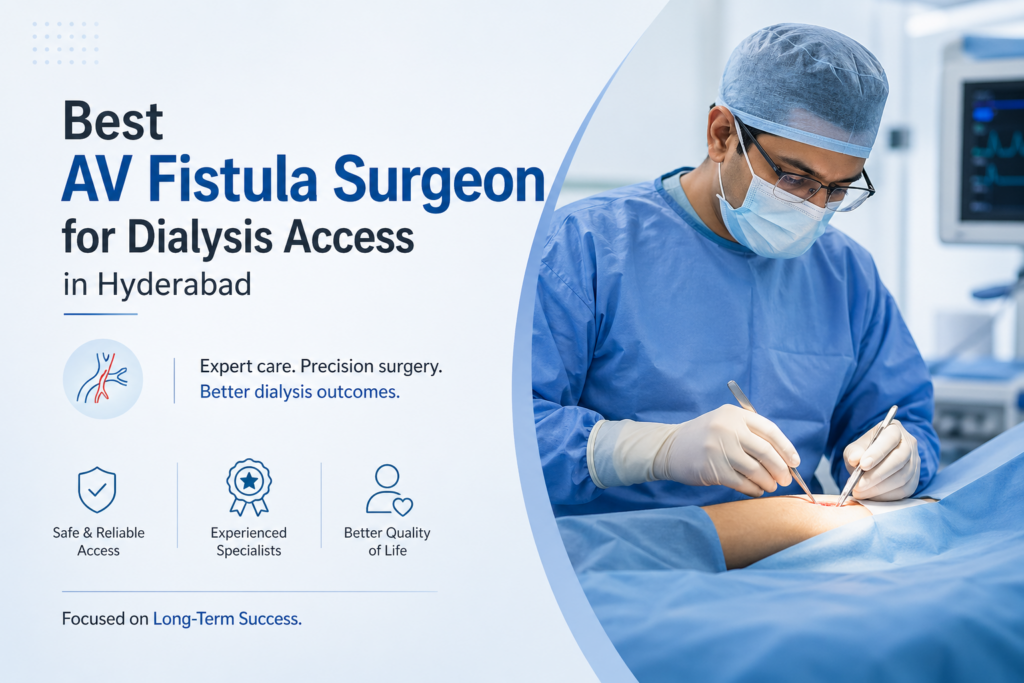
If you or your loved one is preparing for dialysis, choosing the right av fistula surgeon is critical. A well-planned fistula ensures safe, long-term dialysis with fewer complications and better quality of life. At Asian Vascular Hospitals, patients receive expert care from a dedicated dialysis access specialist focused on precision, safety, and long-term success. Why Choose an AV Fistula for Dialysis? An AV fistula is the safest and most reliable dialysis access. It offers better blood flow, lower infection risk, and long-term durability when created by an experienced av fistula surgeon. Why Choosing the Right AV Fistula Surgeon Matters Not all fistulas are the same. The success of your dialysis depends heavily on the skill of the vascular surgeon for fistula creation. With the right specialist, you get: Accurate vein selection using advanced imaging Higher fistula success and maturation rates Reduced risk of blockage or failure Long-lasting dialysis access Choosing an experienced av fistula surgeon reduces the chances of repeat procedures. 👨⚕️ Meet Your Dialysis Access Specialist At the core of successful treatment is expertise. Dr. G. V. Praveen Kumar 20+ years of experience 30,000+ vascular procedures Specialist in complex and failed fistula cases As a leading dialysis access specialist, he focuses on long-term fistula performance—not just surgery. Who Needs AV Fistula Surgery? You should consult an av fistula surgeon if: You are diagnosed with advanced kidney disease Dialysis is expected soon You are currently using a catheter You had a failed fistula previously Early planning with a vascular surgeon for fistula improves outcomes and avoids emergency access. Our Approach to AV Fistula Creation At Asian Vascular Hospitals, every procedure is personalized. Step-by-step care: Detailed vascular evaluation (Doppler scan) Selection of best vessels Precision fistula creation Post-surgery monitoring Maturation tracking for dialysis readiness This structured approach ensures your av fistula surgeon delivers consistent, reliable results. Advanced & Patient-Friendly Procedure Performed under local anesthesia Day-care procedure (no long hospital stay) Minimal discomfort Faster recovery An experienced vascular surgeon for fistula ensures both safety and comfort. Recovery & Long-Term Benefits With proper care and expert surgery: Fistula matures in 4–8 weeks Provides long-term dialysis access Reduces infection risk Improves dialysis efficiency A skilled dialysis access specialist ensures your fistula lasts for years. ⭐ Why Patients Choose Us Dedicated vascular-only hospital High success rate in fistula creation Expertise in complex & failed cases Advanced imaging & modern operation theatres Focus on long-term patient outcomes Patients trust an experienced av fistula surgeon for reliable dialysis access. 📞 Book Your Consultation Today If you’re searching for a trusted av fistula surgeon, early consultation can prevent complications and improve dialysis outcomes. 👉 Call Now: +91 81439 98831👉 Visit: asianvascularhospitals.com👉 24/7 Emergency Support Available At Asian Vascular Hospitals, your dialysis journey starts with the right access—planned by an expert vascular surgeon for fistula. Recent Posts All Post blog Peripheral Artery Disease Treatment: Latest Options for Better Circulation Best AV Fistula Surgeon for Dialysis Access in Hyderabad Peripheral Artery Disease Symptoms: Early Signs You Should Not Ignore What Is an AV Fistula and Why Is It Needed… AV Fistula Surgery for Dialysis: Complete Patient Guide Deep Vein Thrombosis Treatment: Latest Medical Options Explained Deep Vein Thrombosis: Early Symptoms You Should Never Ignore Cost of Varicose Veins Treatment in India: What Influences the… Varicose Veins Treatments in Hyderabad: Which Option Is Right for… Vascular Surgery Hospital in Hyderabad: How to Choose the Right…
Peripheral Artery Disease Symptoms: Early Signs You Should Not Ignore
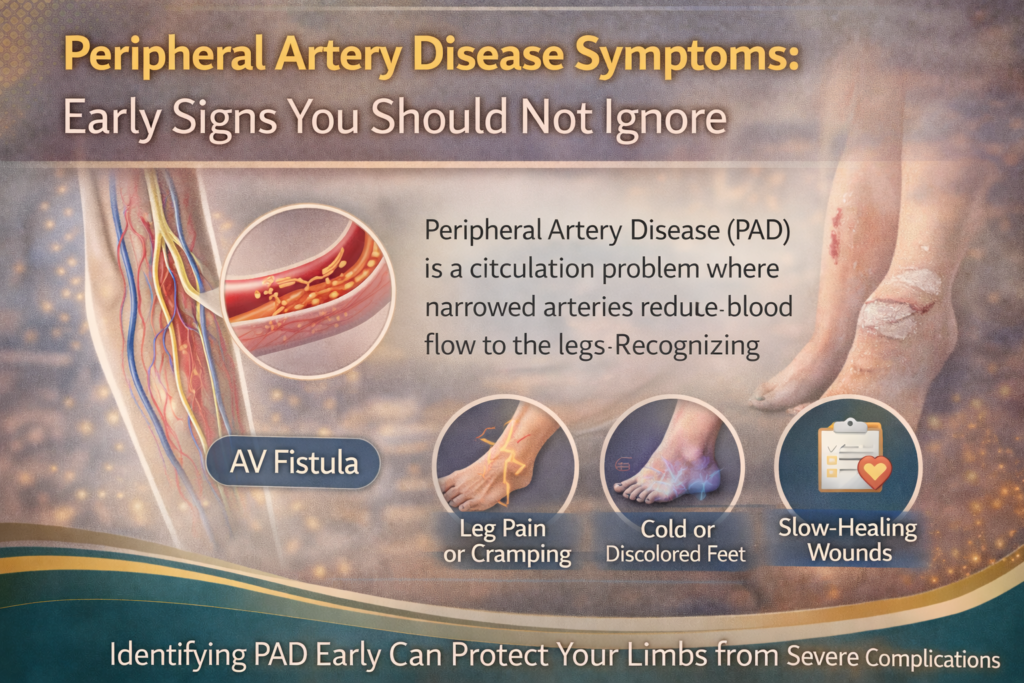
Peripheral Artery Disease (PAD) is a circulation problem where narrowed arteries reduce blood flow to the legs. Recognizing peripheral artery disease symptoms early can help prevent serious complications like non-healing wounds and limb loss. What Are PAD Symptoms? Peripheral artery disease symptoms commonly include leg pain while walking, cramps that stop with rest, cold feet, numbness, and slow-healing wounds. These symptoms indicate poor blood flow and should not be ignored. Early Symptoms Most People Ignore Many patients dismiss early peripheral artery disease symptoms as normal fatigue. Watch for these warning signs: Leg pain while walking (comes and goes with activity) Calf cramps after short distances Numbness or weakness in legs Cold sensation in one foot Shiny skin or hair loss on legs These are early pad signs that require evaluation. Why Leg Pain While Walking Is a Red Flag Not all leg pain is the same. 👉 PAD-related pain: Starts during walking Stops with rest Returns consistently This pattern is a classic sign of reduced circulation and one of the most important poor circulation symptoms. Advanced Symptoms You Should Never Ignore As the condition worsens, peripheral artery disease symptoms become more serious: Pain even at rest Non-healing foot wounds Blackening of toes (gangrene) Severe weakness in legs At this stage, urgent medical care is required. Who Is at High Risk? You are more likely to develop peripheral artery disease symptoms if you: Have diabetes Smoke Have high blood pressure Have high cholesterol Are above 50 years High-risk patients should never ignore even mild pad signs. When Should You See a Specialist? Consult a vascular specialist if you notice: Repeated leg pain while walking Wounds not healing in 10–14 days Skin color changes in feet Increasing numbness Early diagnosis can stop disease progression. 📊 Real Patient Scenario A 58-year-old diabetic patient ignored mild leg pain while walking for months. What started as discomfort progressed into a non-healing toe wound. After timely vascular treatment, blood flow was restored and amputation was avoided. 👉 This shows how early detection of peripheral artery disease symptoms can save limbs. ❓ FAQs 1. What is the first symptom of PAD? The earliest sign is usually leg pain while walking that improves with rest. 2. Can PAD go away on its own? No, peripheral artery disease symptoms usually worsen without treatment. 3. Is PAD dangerous? Yes, if untreated it can lead to ulcers, infections, and even amputation. Get Early PAD Diagnosis in Hyderabad If you notice any peripheral artery disease symptoms, early treatment can prevent serious complications. At Asian Vascular Hospitals, advanced diagnostic and minimally invasive treatments are available. Led by Dr. G. V. Praveen Kumar, the hospital specializes in limb-saving vascular care. 📞 Call: +91 81439 98831 🌐 Visit: asianvascularhospitals.com 🚑 24/7 emergency care available Recent Posts All Post blog Deep Vein Thrombosis: Early Symptoms You Should Never Ignore Cost of Varicose Veins Treatment in India: What Influences the… Varicose Veins Treatments in Hyderabad: Which Option Is Right for… Vascular Surgery Hospital in Hyderabad: How to Choose the Right… Peripheral Vascular Surgery Hyderabad: When Do You Need It? 👉 Who Is the Right Candidate for Advanced Varicose Veins… 👉 Traditional Surgery vs Laser Treatment for Varicose Veins 👉 Cost of Varicose Veins Treatment in India: What Influences… 👉 Recovery After Varicose Veins Treatment: What Patients Should Expect Diabetic Foot Risks That Need Specialist Attention
What Is an AV Fistula and Why Is It Needed for Dialysis?
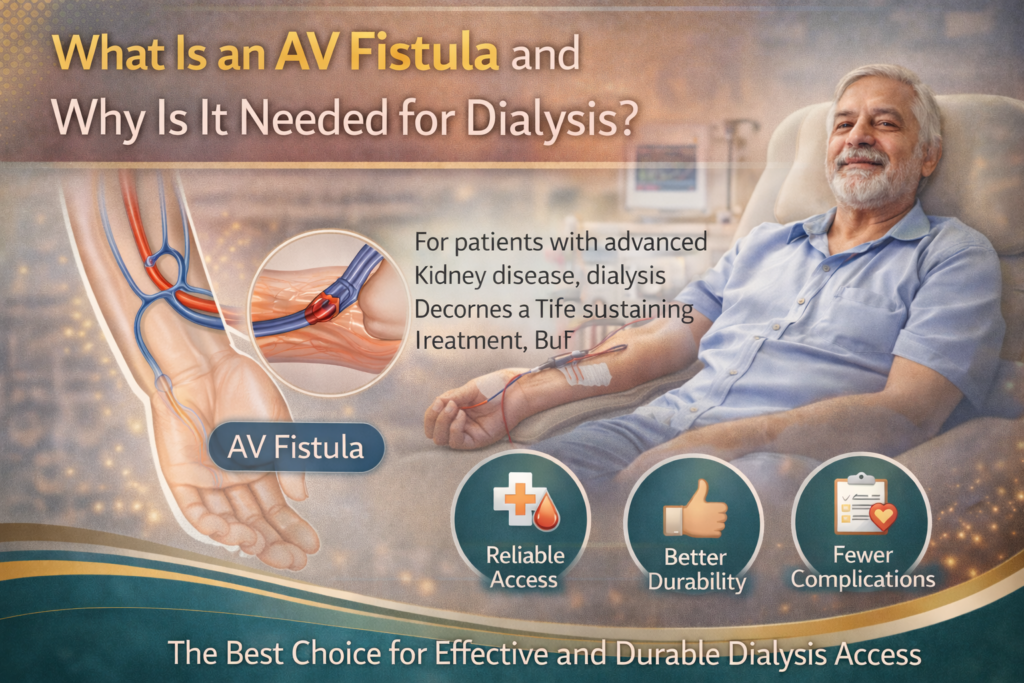
For patients with advanced kidney disease, dialysis becomes a life-sustaining treatment. But dialysis requires a safe and reliable way to access the bloodstream. That’s where an AV fistula for dialysis plays a crucial role—it is the most preferred and long-lasting access option. What Is an AV Fistula for Dialysis? An AV fistula for dialysis is a surgically created connection between an artery and a vein, usually in the arm. This connection increases blood flow, making the vein stronger and suitable for repeated needle access during dialysis. Unlike temporary solutions, an AV fistula for dialysis provides a durable, low-risk pathway for efficient blood filtration. Why Is an AV Fistula Needed for Dialysis? Dialysis requires blood to flow out of the body, get filtered, and return safely. An AV fistula for dialysis supports this process by providing: High blood flow for effective dialysis Strong veins that can handle repeated use Lower risk of infection compared to catheters Because of these benefits, doctors consider an AV fistula for dialysis the best long-term option for patients undergoing regular dialysis. What Are the Different Dialysis Access Types? There are three main dialysis access types used in kidney failure treatment: 1. AV Fistula Created using your own blood vessels Long-lasting and safest option Preferred by specialists 2. AV Graft Uses a synthetic tube to connect artery and vein Faster to use than fistula Slightly higher risk of infection 3. Dialysis Catheter Temporary access placed in a large vein Used in emergencies Higher complication risk Among all dialysis access types, an AV fistula for dialysis offers the best long-term outcomes. Fistula vs Graft: What’s the Difference? Patients often ask about fistula vs graft options. AV Fistula: Made from natural vessels Lower infection risk Longer lifespan AV Graft: Synthetic connection Can be used sooner Higher maintenance needed While both are used in kidney failure treatment, doctors usually recommend an AV fistula for dialysis whenever possible. When Should You Get an AV Fistula? An AV fistula for dialysis should ideally be created before dialysis starts. Early placement allows: Time for the fistula to mature (4–8 weeks) Better preparation for long-term dialysis Reduced need for temporary catheters Planning ahead improves outcomes in kidney failure treatment. Benefits of Choosing AV Fistula Choosing an AV fistula for dialysis offers: Lower infection risk Better dialysis efficiency Fewer hospital visits Long-term reliability These benefits make it the most recommended option among all dialysis access types. Expert Dialysis Access Care in Hyderabad If you or your loved one is preparing for dialysis, early planning is essential. At Asian Vascular Hospitals, specialized care is available for AV fistula for dialysis, including advanced evaluation and fistula creation. Led by Dr. G. V. Praveen Kumar, the team provides expert guidance on choosing the right access type for safe and effective treatment. 📞 Call: +91 81439 98831🌐 Visit: asianvascularhospitals.com🚑 24/7 vascular care available Plan early—better dialysis outcomes start with the right access. Recent Posts All Post blog Deep Vein Thrombosis: Early Symptoms You Should Never Ignore Cost of Varicose Veins Treatment in India: What Influences the… Varicose Veins Treatments in Hyderabad: Which Option Is Right for… Vascular Surgery Hospital in Hyderabad: How to Choose the Right… Peripheral Vascular Surgery Hyderabad: When Do You Need It? 👉 Who Is the Right Candidate for Advanced Varicose Veins… 👉 Traditional Surgery vs Laser Treatment for Varicose Veins 👉 Cost of Varicose Veins Treatment in India: What Influences… 👉 Recovery After Varicose Veins Treatment: What Patients Should Expect Diabetic Foot Risks That Need Specialist Attention
AV Fistula Surgery for Dialysis: Complete Patient Guide
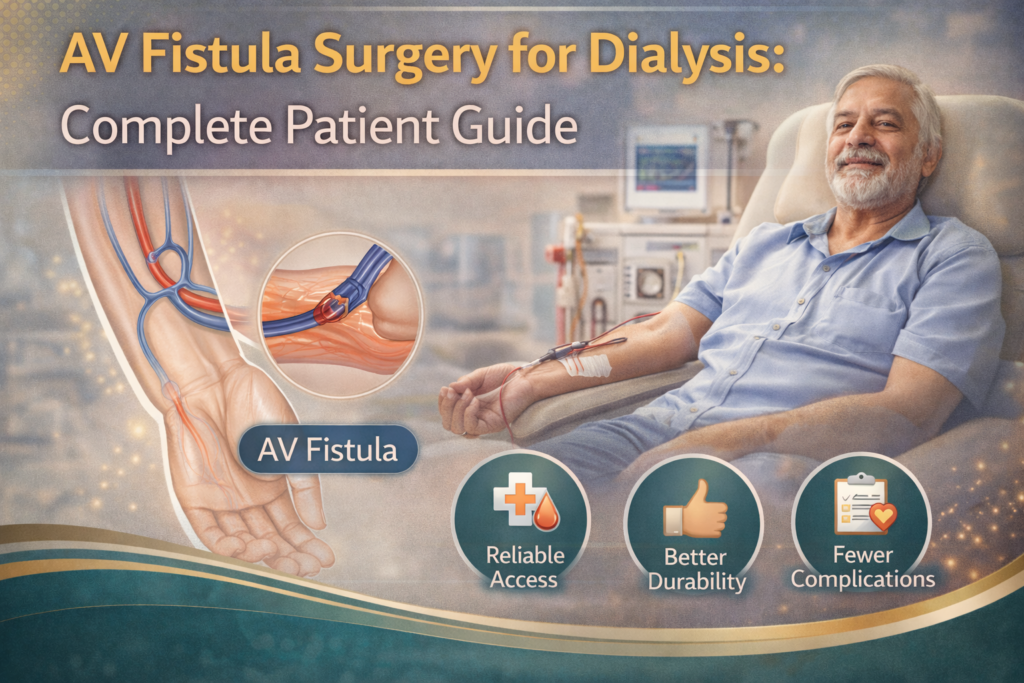
For patients with kidney failure, long-term dialysis requires a reliable access point to the bloodstream. AV fistula surgery is the most preferred and safest method for this purpose, offering better durability and fewer complications compared to other options. What Is AV Fistula Surgery? AV fistula surgery is a minor vascular access surgery where an artery and vein are connected—usually in the arm—to create a strong, high-flow vessel for dialysis. This connection (called fistula creation) allows: Efficient blood flow during dialysis Repeated needle access Lower risk of infection compared to catheters It is considered the gold standard dialysis fistula procedure for long-term kidney care. Why Is AV Fistula Preferred for Dialysis? Among all access types, AV fistula surgery offers the best long-term outcomes. Key advantages: Lower infection risk Better blood flow efficiency Longer lifespan (years vs months) Fewer complications This makes AV fistula surgery the most recommended option for patients starting or planning dialysis. How the Procedure Is Performed AV fistula surgery is usually done under local anesthesia and takes about 1–2 hours. Step-by-step overview: A vascular surgeon identifies suitable blood vessels The artery and vein are surgically connected Blood flow increases through the vein The vein gradually strengthens over time This dialysis fistula procedure is typically a day-care surgery, meaning patients can go home the same day. What Happens After Surgery? (Maturation Phase) After AV fistula surgery, the fistula needs time to mature before it can be used. Typical timeline: 4 to 8 weeks for full maturation Vein becomes thicker and stronger Regular monitoring is required Proper care after fistula creation ensures long-term success and smooth dialysis sessions. Possible Risks and How They Are Managed Like any vascular access surgery, AV fistula surgery carries some risks, though complications are relatively low. Possible issues include: Infection Clotting (blockage) Poor maturation Swelling or pain Early detection and follow-up help manage these effectively. Care Tips After AV Fistula Surgery To protect your fistula after AV fistula surgery, follow these simple guidelines: Avoid heavy lifting with the affected arm Keep the area clean and dry Do not allow blood pressure checks on that arm Check for pulse (thrill) daily Report swelling or redness immediately Proper care improves the success of your dialysis fistula procedure. When Should You Consider AV Fistula Surgery? Doctors recommend AV fistula surgery when: You are diagnosed with advanced kidney failure Dialysis is planned in the near future Long-term vascular access is required Early fistula creation is important to avoid emergency catheter use. Expert AV Fistula Surgery in Hyderabad If you or your loved one needs dialysis access, choosing the right team is critical. At Asian Vascular Hospitals, advanced AV fistula surgery is performed with precision and long-term success in mind. Led by Dr. G. V. Praveen Kumar, the hospital specializes in vascular access surgery and complex fistula creation procedures. 📞 Call: +91 81439 98831🌐 Visit: asianvascularhospitals.com🚑 24/7 vascular care available Plan early for dialysis—safe access begins with expert care. Recent Posts All Post blog Deep Vein Thrombosis: Early Symptoms You Should Never Ignore Cost of Varicose Veins Treatment in India: What Influences the… Varicose Veins Treatments in Hyderabad: Which Option Is Right for… Vascular Surgery Hospital in Hyderabad: How to Choose the Right… Peripheral Vascular Surgery Hyderabad: When Do You Need It? 👉 Who Is the Right Candidate for Advanced Varicose Veins… 👉 Traditional Surgery vs Laser Treatment for Varicose Veins 👉 Cost of Varicose Veins Treatment in India: What Influences… 👉 Recovery After Varicose Veins Treatment: What Patients Should Expect Diabetic Foot Risks That Need Specialist Attention
Deep Vein Thrombosis Treatment: Latest Medical Options Explained
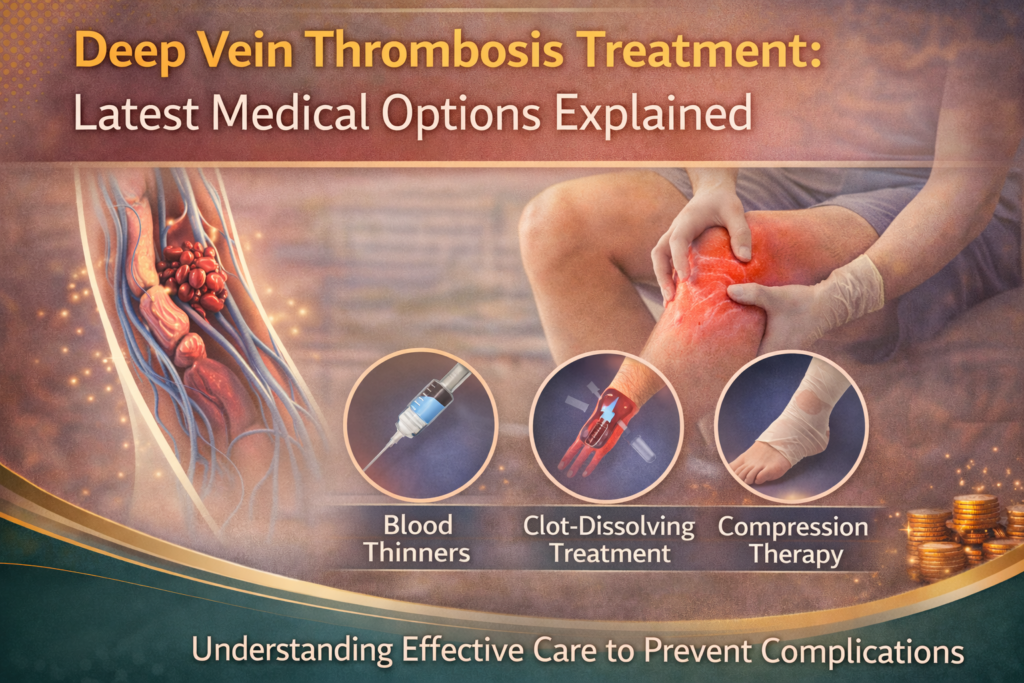
Deep vein thrombosis (DVT) requires prompt, targeted care to prevent complications like pulmonary embolism. Modern deep vein thrombosis treatment focuses on stopping clot growth, restoring blood flow, and reducing long-term damage—often without major surgery. What Is the Goal of Deep Vein Thrombosis Treatment? Deep vein thrombosis treatment aims to prevent the clot from enlarging or traveling to the lungs, relieve symptoms, and avoid recurrence. Most patients start therapy immediately after diagnosis to stabilize the condition and reduce risk. First-Line Treatment: Anticoagulant Therapy The backbone of deep vein thrombosis treatment is anticoagulant therapy (blood thinners). These medications don’t dissolve the clot instantly but prevent it from growing while the body gradually breaks it down. Common approaches include: Initial injections (heparin) Oral dvt medication (DOACs like apixaban/rivaroxaban or warfarin) Treatment duration based on risk (often 3–6 months or longer) This is the most widely used option among dvt treatment options for stable patients. Advanced Options for Faster Clot Resolution When symptoms are severe or there’s a high risk to the limb, doctors may escalate deep vein thrombosis treatment. Catheter-Directed Thrombolysis A catheter delivers clot-dissolving drugs directly into the blockage. Faster symptom relief Preserves vein function Used in selected cases Mechanical Thrombectomy Special devices physically remove the clot. Useful for large or acute clots Reduces long-term complications These advanced dvt treatment options are chosen after careful evaluation. Supportive Care That Improves Outcomes Alongside medications, supportive measures are essential in deep vein thrombosis treatment: Compression stockings to reduce swelling Early, guided walking to improve circulation Leg elevation to ease discomfort These steps enhance recovery and reduce post-thrombotic syndrome. How Doctors Choose the Right Treatment The best deep vein thrombosis treatment depends on: Location and size of the clot Symptom severity Risk of bleeding Patient’s overall health A personalized plan ensures safe and effective blood clot treatment leg strategies with minimal complications. Recovery and What to Expect With timely deep vein thrombosis treatment, most patients experience: Gradual reduction in pain and swelling Stabilization within days Full recovery over weeks to months Regular follow-ups ensure the dvt medication is working well and adjusted if needed. When to Seek Urgent Care Get immediate medical attention if you have: Sudden leg swelling with pain Breathlessness or chest pain Rapid increase in leg discomfort Early diagnosis and deep vein thrombosis treatment can be life-saving. Get Expert DVT Care in Hyderabad If you suspect a blood clot or have been diagnosed with DVT, don’t delay treatment. At Asian Vascular Hospitals, advanced deep vein thrombosis treatment is available—from anticoagulant therapy to catheter-based clot removal. Led by Dr. G. V. Praveen Kumar, the team offers rapid diagnosis and personalized dvt treatment options focused on safety and long-term outcomes. 📞 Call: +91 81439 98831🌐 Visit: asianvascularhospitals.com🚑 24/7 emergency vascular care available Early treatment prevents complications—act fast for better recovery. Recent Posts All Post blog Deep Vein Thrombosis: Early Symptoms You Should Never Ignore Cost of Varicose Veins Treatment in India: What Influences the… Varicose Veins Treatments in Hyderabad: Which Option Is Right for… Vascular Surgery Hospital in Hyderabad: How to Choose the Right… Peripheral Vascular Surgery Hyderabad: When Do You Need It? 👉 Who Is the Right Candidate for Advanced Varicose Veins… 👉 Traditional Surgery vs Laser Treatment for Varicose Veins 👉 Cost of Varicose Veins Treatment in India: What Influences… 👉 Recovery After Varicose Veins Treatment: What Patients Should Expect Diabetic Foot Risks That Need Specialist Attention