

Top Summary Answer
If you’re looking for a vascular hospital in Hyderabad, choose a center where vascular and endovascular specialists can evaluate both arterial and venous conditions, provide appropriate imaging, and offer treatment ranging from medicines and lifestyle management to minimally invasive procedures or open vascular surgery when necessary.
For conditions such as Peripheral Arterial Disease (PAD), varicose veins, Deep Vein Thrombosis (DVT), diabetic foot complications, arterial blockages, aneurysms, and dialysis access problems, specialist vascular assessment can help determine the safest treatment approach.
Asian Vascular Hospitals in Banjara Hills, Hyderabad, is a dedicated vascular-care center led by Dr. G.V. Praveen Kumar, MBBS, MS, DNB (Vascular Surgery). The hospital’s listed areas of care include PAD, varicose veins, DVT, diabetic foot management, AV fistula procedures, endovascular interventions, and aneurysm repair.
Quick answer: The right vascular hospital isn’t simply the one advertising the newest procedure. It should have qualified vascular specialists, appropriate diagnostic facilities, multiple treatment options and a clear plan for follow-up.
What Is a Vascular Hospital?
A vascular hospital is a healthcare facility that specializes in diagnosing and treating disorders affecting the body’s arteries, veins, and, in some cases, lymphatic vessels.
Unlike a general surgical center, a dedicated vascular facility is designed around conditions involving blood circulation. Treatment may include conservative management, medication, wound care, minimally invasive endovascular procedures, laser-based vein treatments, angioplasty, stenting, thrombectomy, bypass surgery, and other vascular interventions.
Vascular specialists commonly manage conditions such as:
- Peripheral Arterial Disease (PAD)
- Varicose veins and chronic venous disease
- Deep Vein Thrombosis (DVT)
- Diabetic foot ulcers associated with poor circulation
- Arterial blockages
- Aneurysms
- Carotid artery disease
- Vascular malformations
- Dialysis access and AV fistula problems
- Acute limb ischemia
- Non-healing vascular wounds
The appropriate treatment depends on the affected blood vessel, severity of disease, symptoms, imaging findings, and the patient’s overall health.
Why You May Need a Vascular Hospital in Hyderabad
Not every leg or circulation problem requires surgery. However, persistent symptoms should not automatically be attributed to aging, diabetes, prolonged sitting, or simple muscle pain.
Symptoms that deserve vascular evaluation
Consider consulting a vascular specialist if you experience:
- Leg pain while walking that improves after resting
- Persistent leg swelling
- Enlarged or twisted veins
- Changes in skin color or temperature
- Numbness or unusual coldness in the foot
- Recurrent leg cramps
- A wound that isn’t healing normally
- Foot ulcers, particularly with diabetes
- Sudden swelling or pain in one leg
- A known arterial blockage
- Previous DVT or vascular surgery
For example, someone in Hyderabad with diabetes who develops a small toe wound that remains open for weeks may need more than routine wound dressing. Poor arterial circulation can interfere with healing, so vascular assessment may be an important part of limb-preservation care.
Similarly, recurring calf pain during walking that disappears after a few minutes of rest can be a symptom of PAD and shouldn’t simply be dismissed as muscle fatigue.
The National Heart, Lung, and Blood Institute notes that PAD treatment may involve lifestyle changes, exercise, medicines, and, when appropriate, procedures to open or bypass blocked arteries.
Conditions Treated at a Vascular Surgery Hospital in Hyderabad
A good vascular surgery hospital in Hyderabad should be able to evaluate both common vein problems and more complex arterial disease.
1. Peripheral Arterial Disease
PAD occurs when arteries supplying the limbs become narrowed or blocked, reducing blood flow.
Common symptoms include:
- Leg pain while walking
- Reduced walking distance
- Numbness or weakness
- Cold feet
- Changes in skin color
- Slow-healing wounds
- In advanced cases, severe pain at rest or tissue damage
Treatment depends on disease severity. Some patients benefit from lifestyle changes and medicines, while others may require angioplasty, stenting, or bypass surgery.
Related internal link opportunity: Peripheral Arterial Disease Treatment in Hyderabad
2. Varicose Veins
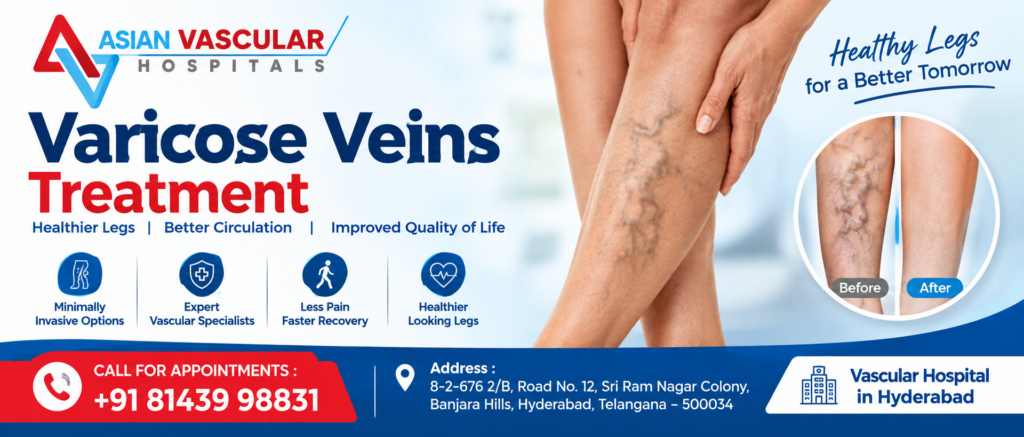
Varicose veins are enlarged, twisted veins that commonly appear on the legs.
They may cause:
- Aching or heaviness
- Leg swelling
- Burning or itching
- Skin changes
- Night-time discomfort
- Venous ulcers in advanced cases
Modern treatment can include endovenous laser treatment, radiofrequency ablation, sclerotherapy, adhesive closure, and, in selected cases, conventional surgery. The appropriate treatment should be based on clinical assessment and venous duplex ultrasound rather than simply choosing the newest technique.
3. Diabetic Foot and Non-Healing Wounds
Diabetes can increase the risk of foot ulcers and circulation problems. When blood supply is inadequate, a wound may struggle to heal.
A vascular specialist may assess arterial circulation and determine whether revascularization or other treatment is necessary alongside wound care, infection management, and pressure relief.
Early assessment can be particularly important when a patient develops:
- A non-healing wound
- Blackened tissue
- Increasing foot pain
- Color changes
- Coldness of the foot
- Signs of infection
4. Deep Vein Thrombosis
DVT occurs when a blood clot forms in a deep vein, usually in the leg.
Symptoms can include:
- One-sided leg swelling
- Pain or tenderness
- Warmth
- Skin color changes
A suspected DVT requires prompt medical assessment because a clot can potentially lead to serious complications.
5. Dialysis Access and AV Fistula Problems
Patients undergoing hemodialysis depend on reliable vascular access.
Vascular surgeons can create, monitor, and revise arteriovenous fistulas (AV fistulas) and address complications such as narrowing, thrombosis, or access failure.
Asian Vascular Hospitals lists AV fistula creation, revisions, and vascular access management among its services.
How to Choose the Best Vascular Hospital in Hyderabad
Searching for the best vascular hospital in Hyderabad can produce dozens of results. Instead of judging a hospital only by its ranking, advertisements, or patient reviews, evaluate the actual clinical capability.
1. Check the vascular surgeon’s qualifications.
Look for a specialist with formal training in vascular surgery and appropriate experience in the condition being treated.
For example, the medical reviewer for this article, Dr. G.V. Praveen Kumar, holds an MBBS, an MS, and a DNB (Vascular Surgery) and specializes in vascular and endovascular surgery.
2. Look for appropriate diagnostic facilities.
Depending on the condition, assessment may require:
- Clinical vascular examination
- Doppler or duplex ultrasound
- CT angiography
- MR angiography
- Other vascular imaging
The investigation should answer a clinical question rather than being ordered simply because it is available.
3. Ask about both minimally invasive and open options.
A hospital should be able to explain why one treatment is more appropriate than another.
Endovascular procedures use small access points and imaging guidance, while open vascular surgery involves a surgical incision. Neither approach is automatically better for every patient.
4. Check emergency capability
Acute limb ischemia, severe bleeding, certain aneurysm complications, and some vascular injuries can require urgent treatment.
If you have a potentially serious vascular emergency, don’t delay care while comparing hospitals online.
5. Understand follow-up care
Vascular treatment doesn’t necessarily end when the procedure is completed.
Depending on the condition, follow-up may include wound care, medication management, walking or exercise recommendations, compression therapy for selected venous conditions, vascular imaging, and lifestyle modification.
Asian Vascular Hospital Hyderabad: Specialist Vascular Care
For patients specifically searching for Asian Vascular Hospital Hyderabad, the center is located in Banjara Hills, Hyderabad, and focuses on vascular and endovascular care.
Its published clinical services include:
- Peripheral Arterial Disease management
- Varicose vein treatment
- DVT management
- Diabetic foot care
- Limb-salvage procedures
- AV fistula creation and management
- Angioplasty and stenting
- Thrombectomy
- Embolization
- Aneurysm repair
- Laser and endovenous procedures
Dr. G.V. Praveen Kumar is identified by the hospital as its founder and chief vascular surgeon. His published profile states that he has more than 20 years of hands-on experience in vascular and endovascular surgery.
Hospital location:
8-2-676 2/B, Road No. 12, Sri Ram Nagar Colony,
Banjara Hills, Hyderabad, Telangana – 500034.
When choosing any hospital, patients should independently discuss their diagnosis, treatment alternatives, expected recovery, potential complications, and costs with the treating specialist.
What to Expect During a Vascular Consultation
Your first consultation doesn’t necessarily mean you’ll need surgery.
A vascular specialist may begin by discussing:
- Your symptoms—when they started, what makes them better or worse, and whether they’re getting worse.
- Medical history—diabetes, hypertension, smoking history, previous clots, kidney disease, vascular procedures, and other relevant conditions.
- Physical examination—including pulses, skin condition, swelling, wounds, and circulation.
- Vascular imaging—when clinically indicated.
- Treatment options—ranging from observation and medical management to minimally invasive procedures or surgery.
- Follow-up plan—including monitoring and prevention of recurrence or complications.
Bring previous scan reports, prescriptions, discharge summaries, and relevant medical records to the appointment. This can make the consultation more efficient.
When Is Vascular Surgery Necessary?
Vascular surgery isn’t automatically required because a blood vessel has a problem.
Treatment decisions depend on the severity of disease, symptoms, risk to the limb or organ, anatomy of the blockage, overall health, and expected benefit of intervention.
For PAD, treatment may begin with risk-factor management, exercise, and medicines. More advanced disease or limb-threatening complications may require revascularization through an endovascular procedure or bypass surgery.
For varicose veins, minimally invasive treatments may be appropriate for selected patients, while some cases require different approaches.
This is why a specialist consultation is more useful than choosing a procedure based solely on an online price or advertisement.
Questions to Ask Before Choosing a Vascular Hospital
Before proceeding with treatment, consider asking:
- What is the exact vascular diagnosis?
- Which blood vessel is affected?
- Do I need treatment now, or can it be monitored?
- What tests confirm the diagnosis?
- Are there non-surgical options?
- Why are you recommending this particular procedure?
- What are the possible risks?
- How long is recovery expected to take?
- Will I need follow-up imaging?
- What symptoms should make me seek urgent medical attention?
- What is included in the estimated treatment cost?
These questions can help you make a decision based on your actual medical needs rather than marketing claims.
FAQ: Vascular Hospital in Hyderabad
What does a vascular hospital treat?
A vascular hospital treats disorders affecting arteries and veins, including PAD, varicose veins, DVT, diabetic foot circulation problems, aneurysms, arterial blockages, and dialysis vascular access problems.
When should I see a vascular surgeon in Hyderabad?
You should consider vascular evaluation for persistent leg pain while walking, unexplained swelling, varicose veins with symptoms, non-healing wounds, circulation changes, suspected DVT, or a known arterial blockage.
Is vascular surgery always necessary for PAD?
No. PAD treatment can include lifestyle changes, exercise, medicines, and risk-factor management. Some patients with significant blockages or limb-threatening disease may require angioplasty, stenting, or bypass surgery.
Can varicose veins be treated without traditional surgery?
Yes. Depending on the vein problem, minimally invasive treatments such as endovenous laser treatment, radiofrequency ablation, sclerotherapy, or adhesive closure may be considered. A vascular assessment and appropriate ultrasound help determine suitability.
Which vascular hospital is suitable for complex vascular conditions in Hyderabad?
Look for a hospital with qualified vascular surgeons, appropriate vascular imaging, endovascular and surgical capabilities, emergency support where needed, and structured follow-up. Asian Vascular Hospitals in Banjara Hills publishes services covering arterial, venous, diabetic foot, and endovascular conditions.
Author & Medical Review Information
Medically Reviewed By
Dr. G.V. Praveen Kumar
Qualifications: MBBS, MS, DNB (Vascular Surgery)
Specialty: Vascular & Endovascular Surgery
Practice Location: Hyderabad, Telangana, India
Medical Review Date: September 2026
This article has been medically reviewed for accuracy and relevance to patients researching vascular conditions, vascular surgery, and endovascular treatment options in Hyderabad and Telangana.
Medical information should be interpreted in the context of an individual’s symptoms, diagnosis, medical history, and vascular imaging. Patients should consult a qualified vascular specialist for personalized evaluation and treatment recommendations.
Published: September 6, 2026
Last Updated: September 6, 2026
Conclusion
Finding the right vascular hospital in Hyderabad is about more than selecting a hospital with a strong online presence. Look for specialist vascular expertise, appropriate diagnostic facilities, a range of treatment options, and proper follow-up.
Whether you’re dealing with peripheral arterial disease, varicose veins, DVT, diabetic foot problems, arterial blockages, or dialysis access issues, an early assessment can help clarify what is happening and whether you need medical management, a minimally invasive procedure, or surgery.
If you’re experiencing persistent leg pain, swelling, circulation changes, or a non-healing wound, consider arranging an evaluation with a qualified vascular specialist rather than waiting for symptoms to worsen.